BE
@Ben Popadak
Did they give a reason why you couldn't photograph the number plate, but they let you hold it?
A very historic automobile and they didn't want a lot of newer pretenders to the throne. I did get a photograph of the plate while in conversation with a steam historian years later but I'm slow in sharing it in respect to the present care takers of the car.
The no photo thing is strange.
I'm with Ben. I'm kind of a professional skeptic in these matters, too much research on too much baloney, but I believe this to be accurate. The car was located many, many years ago by Edwin Battison, who was a meticulous researcher.
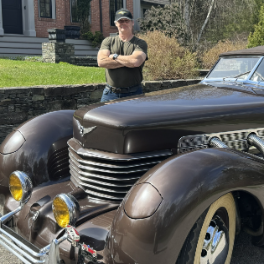
The middle photo was taken on a steam tour in Vermont a few years ago, and I was there that day and able to examine the car.
I've also seen that plate, which I was also asked not to photograph.
Unfortunately some effort has been made on restoration, which has diminished the vehicle's effectiveness as a historical document. Nevertheless, this is a remarkable artifact, of a class that is essentially nonexistent otherwise.
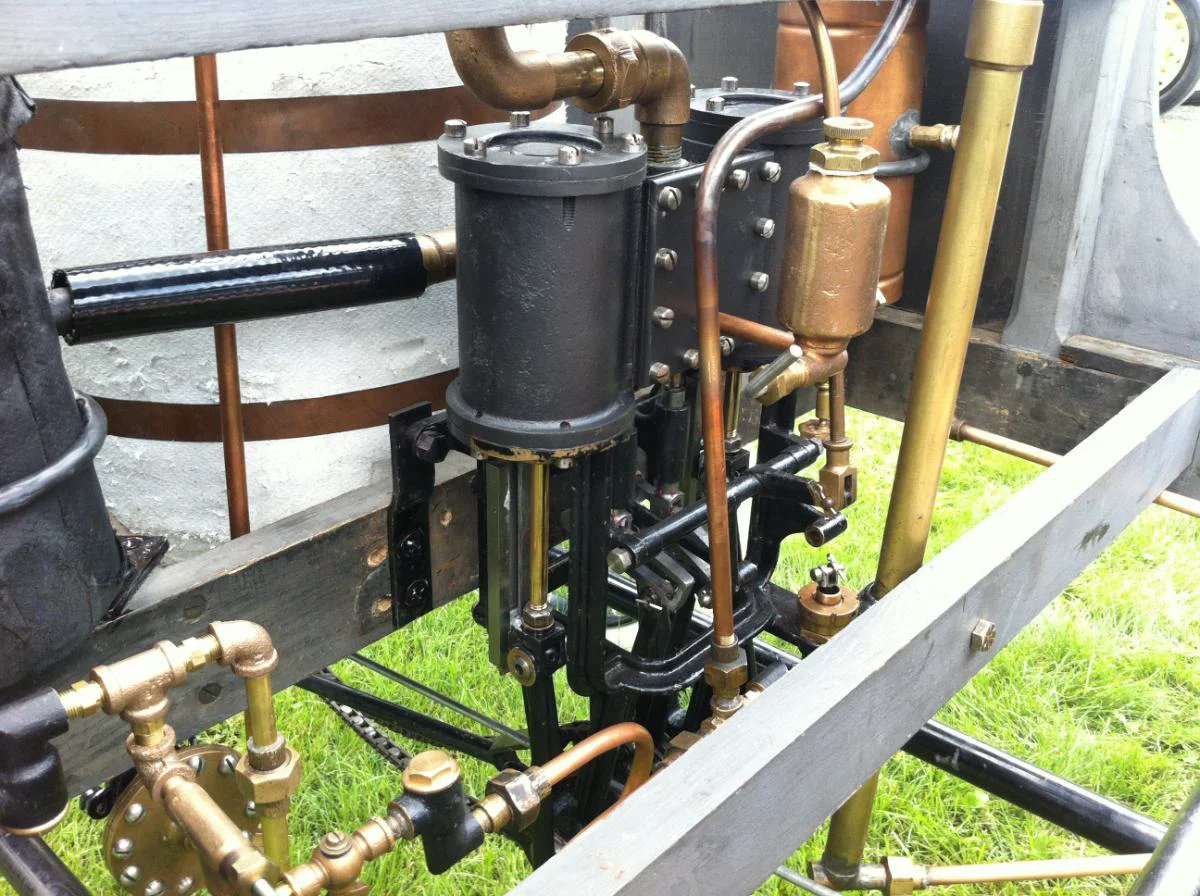

What a nice piece of earliest Locomobile Americana! Is much of the historical provenance available?
Al
Locomobile No.1 was acquired by Edwin Battison in 1948. Battison for some years was with the Smithsonian.
The serial number plate of No.1 matches the serial number plate of No.87 in France and No. 122 in California.
1899 Locomobiles used up Stanley Motor Company pressure gauges. The old name of the company before the company was bought out and became Locomobile. Don't believe there are a handful of Locomobiles with these gauges.
The first couple hundred 1899s had a slightly different engine lower frame and the first of those engines also didn't have any engine numbers. No.1 has the early 1899 engine with no numbers, I checked.
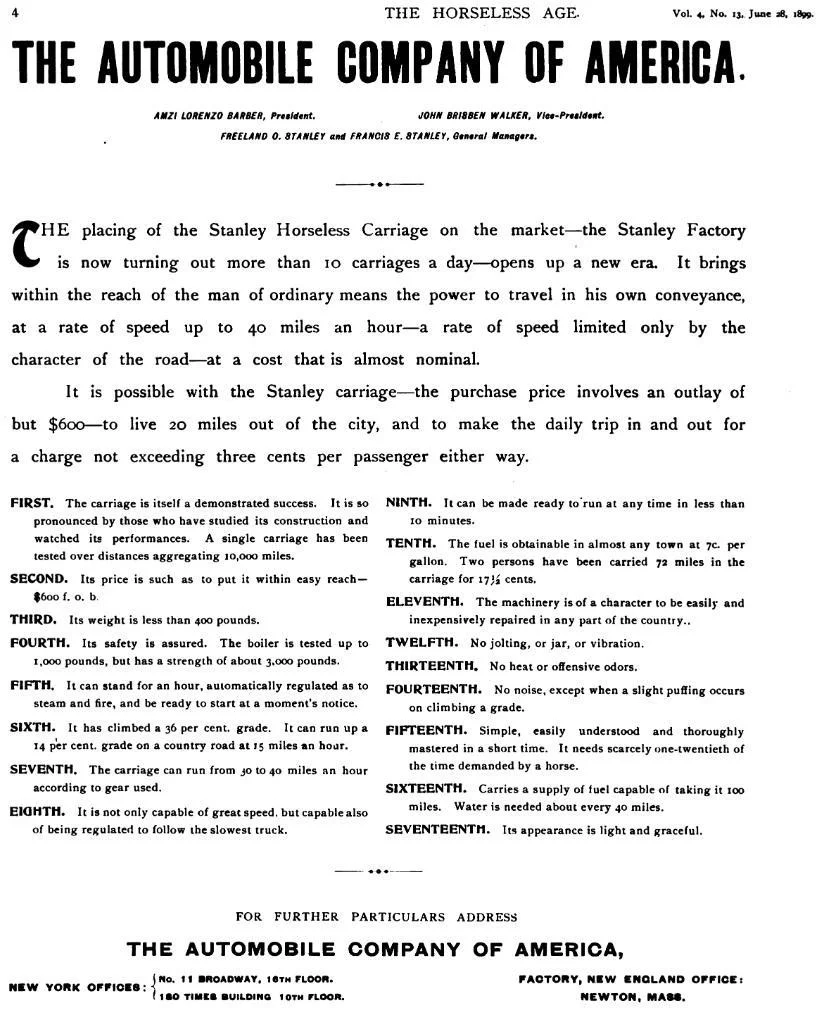
Tom, That is an interesting bit of original literature that I haven't seen before.
Thanks,
Alan
alsfarmsFeb 10, 2025Tom, That is an interesting bit of original literature that I haven't seen before.
Thanks,
Alan
This is a great topic. There is so much history left to know.
The Stanley and Locomobile Steamer technology are most certainly the foundation of the great Locomobile organization.
Al
alsfarmsFeb 10, 2025The Stanley and Locomobile Steamer technology are most certainly the foundation of the great Locomobile organization.
Al
The only thing that the Stanley's "made" that was included in the production Locomobile car was the boiler/ burner. I assume that they made it because I haven't been able to find out who did make it, yet.
The Stanley's bought a lot of their parts, absolutely. The Stanley's, later Locomobile, assembled their cars which allowed them to go from nothing to 350 automobiles in 1899. They were not a Whitney who was a master machinist and liked to make "stuff" before an industry geared up to make automobiles and automobile parts.
But then the earliest Ford had it's chassis built by the biggest machine shop in the Detroit area, the Dodge brothers. I don't remember the name of the body builder but the same factory made both the early Ford and Cadillac bodies. Ford fought against the Selden patents and largely eventually won as they were denied entry into the Selden group. Ford was determined by Selden to be an assembler of automobiles and not an automobile manufacturer though the Ford was made to Ford's drawings.
Speaking of Cadillac, AO Smith made Cadillac frames in 1903. I don't know about the earliest Cadillac axles but in the 190#'s, ABB and Weston Mott made axles for Cadillac.
The 1904 Buick almost didn't come into being as the Flint river flooded in 1904 and hammered a significant number of the local part makers.
buickcity.blogspot.com/2013/01/barker-hamel-and-1904-flood.html
Whitney made a handful of automobiles, Locomobile made 5000 steamers and then internal combustion engine automobiles. The Stanley's and then Locomobile fired up an industry in the Boston area. If Locomobile never moved to Bridgeport Connecticut, a lot of other parts suppliers would have jumped on board and more Boston area automobiles would have found the source of parts too compelling. Success often breeds success. But Locomobile did move away and American automobiles eventually called Detroit home.
I didn’t mean to imply that any part of the Stanley car was continued to the Locomobile, other than the boiler/ burner.
Sometime before February 28, 1898, the Stanley's bought a complete car, (that they told everyone that they built) that was actually built by the American Waltham Co. in Waltham Ma.
F. E. Stanley crashed that first American Waltham car on July 9, 1898, in Kennebunkport Maine.
(This is why there is only one picture of the Stanley’s in it.)
The carriage wreckage was brought to the Stanley Dry Plate Factory in Newton Ma. where William Mason salvaged the two engines that he had built for this car. I don't know what happened to the 200 lb. boiler that was built by Roberts Iron Works Co. of Cambridge Ma.
In late July 1898, the American Waltham Co. delivered to the Stanley's, a rolling chassis with body. The Stanley brothers installed the J. W. Penney & Sons built engine, and a boiler / burner, that they said that they designed and built, into this rolling chassis.
This is the car that they took to the Charles River race track on November 9, 1898.
This is the car that John Walker was seen driving around in NY in June 1899.
This is also the car that S. T. Davis of Locomobile lent to the Madison Square Garden for the 1901 auto show.
That's it. They bought and installed one engine. They never built any cars before selling to Locomobile.
The body, chassis, engine, and pumps were all new.
The Penney engine had no reverse, so Locomobile used a Mason improved version.
The American Waltham Co. chassis had no suspension. The Locomobile had springs.
The buggy shop of P. A. Murray & Co. in Newton Ma. couldn’t build enough wood bodies so Locomobile used the
Currier, Cameron & Co. designed body.
This is very interesting history! I am glad that you, who have knowledge, share here of the first steps of Locomobile. I am sure that Riker did many technical improvements to the early steam cars. Did he ever release and 10-20-30 HP versions to the general public?
Al
Hello Tom, Hello Al,
Having money, a shop and employees, does help!
Nobody says Mason didn't make his own 1898 automobile even though his automobile is the same frame and body. He also had money, a shop and employees.
Now going by memory alone, haven't seen my book in years. According to Fraser's Made in Maine book, in an early 1930s article, the Stanley's said they started a steam carriage in 1880s Lewiston Maine after seeing the French steam carriage running around the Lewiston fairgrounds but no mention after that.
Kip Foster in his Stanley book said the Stanley's built 4 pre-Locomobile automobiles. The first got wrecked in Kennebunkport, one for FE, one for FO, and a four seater that was cannibalized as I guess it wasn't that good. The FO automobile I guess got sold early. They were industrialists, not historians. Ford bought any and all early cars from his development history he could still find. Whitney was a great steam guy, engineer, machinist, but a luke warm industrialist at best.
Al, Riker was the early electric automobile guru of his time. I know of no contribution of his to the steam Locomobile that I'm aware of. When he did go to Locomobile, he was an internal combustion new convert and took Locomobile away from steam.
Tom, educate me. Do you know what became of the FE Stanley automobile?
You know this conversation wouldn't be near as interesting if we collected stamps.
Ben
Hello Tom,
I thoroughly enjoy talking steam with you. I am always amazed at the information you keep digging up and I see for the first time.
Not sure what I'm seeing. I would think that the photo is of maybe a Stanley Whitney, the company that used Whitney's designs and sold their cars as McKays.
The piping on the top looks similar to a Whitney, or Whitney off shoot I think I've seen. There's a small flywheel? to the side and it looks like a Stephenson? link for reversing?? Stanley's were known for not wanting reverse.
PS: I've seen it several times in print were Henry Ford invented the automobile.
Ben

Ben PopadakApr 8, 2025 I don't remember the name of the body builder but the same factory made both the early Ford and Cadillac bodies.
From memory, I believe it was Wilson that supplied both Ford and Cadillac with their bodies in 1903 and for some time later.
I tried to "fact check" through google whose not so brilliant AI said "no" and followed with a bunch of nonsense and said it was the "Fisher body company" supplying both Ford and Cadillac. The Fisher body company was founded about five years later.
To join in the conversation, you must be a club member.
You’re welcome to read and like every post. Members can reply and start topics of their own.