

@prewarnut
That is cool. Is there any pictures of this engine?
Was the displacement 2x525??….

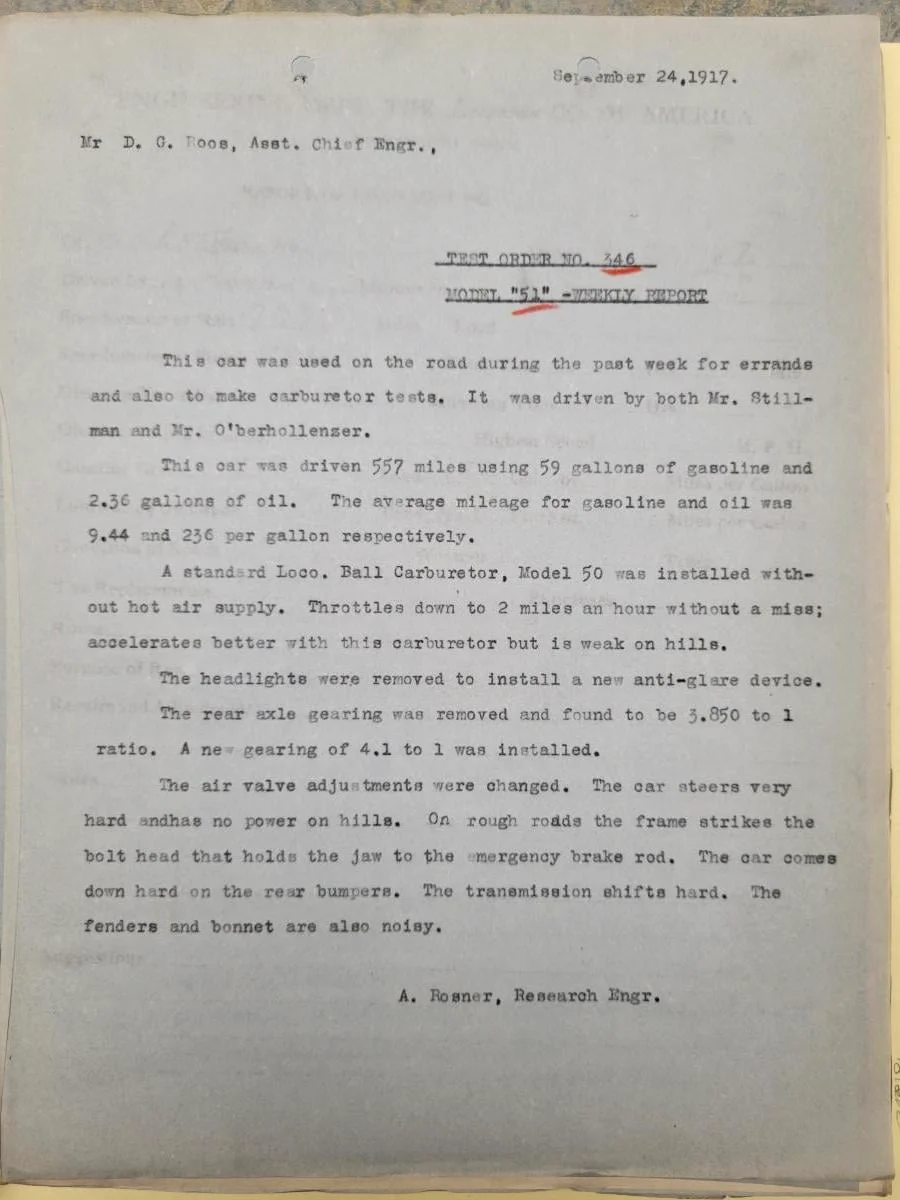
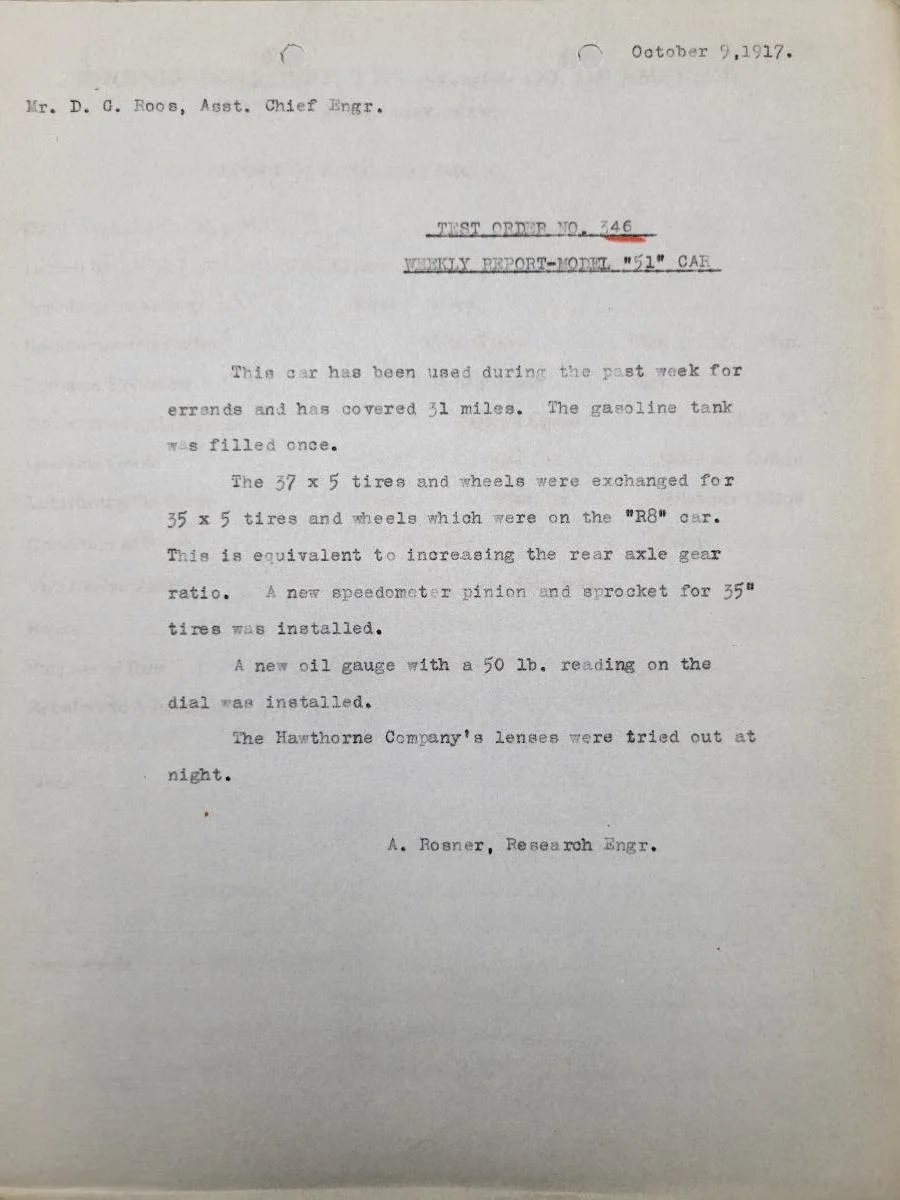
There were no photos or technical diagrams in this stack, just reports and details regarding some of the changes they made. I really, really want to find a diagram. I imagine 525 c.i. x 2 as they seemed to be putting more effort into the model 48 engine.
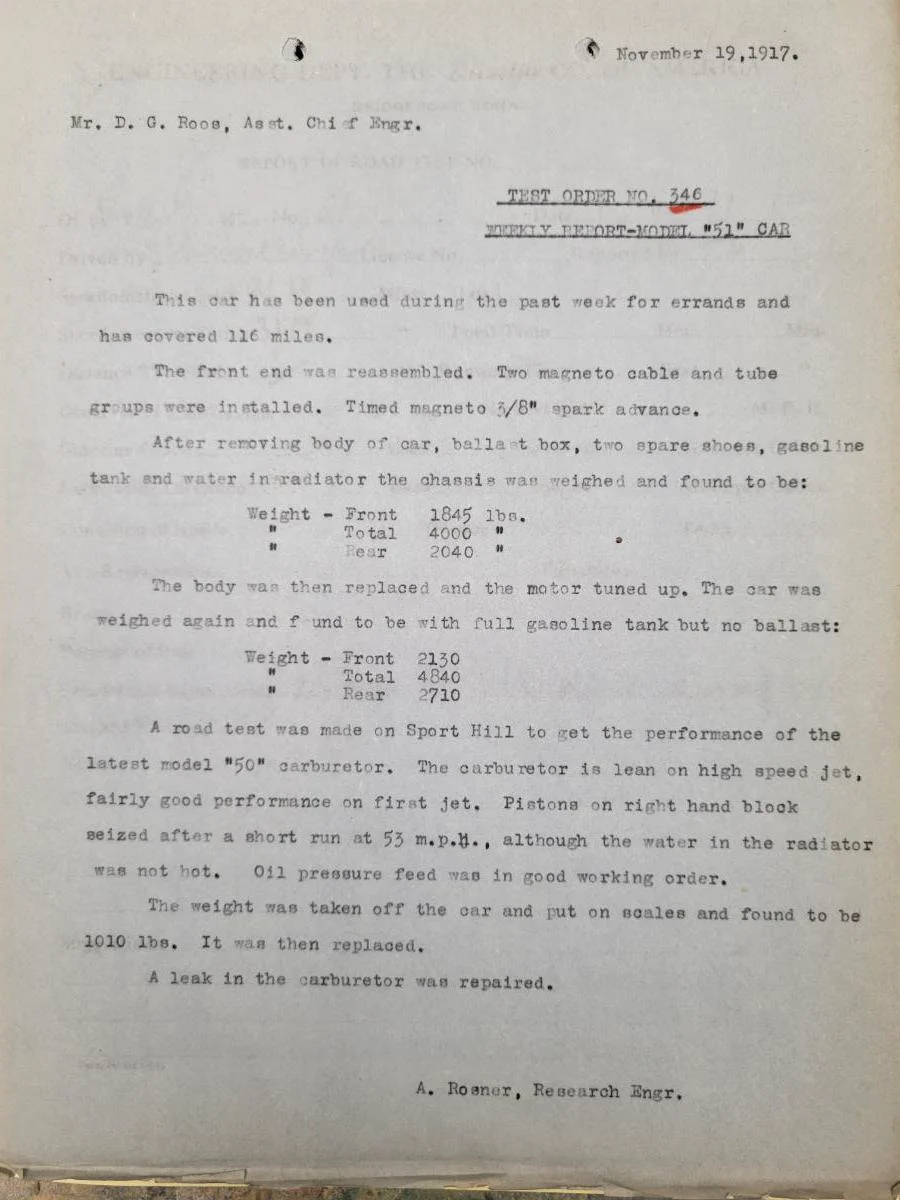
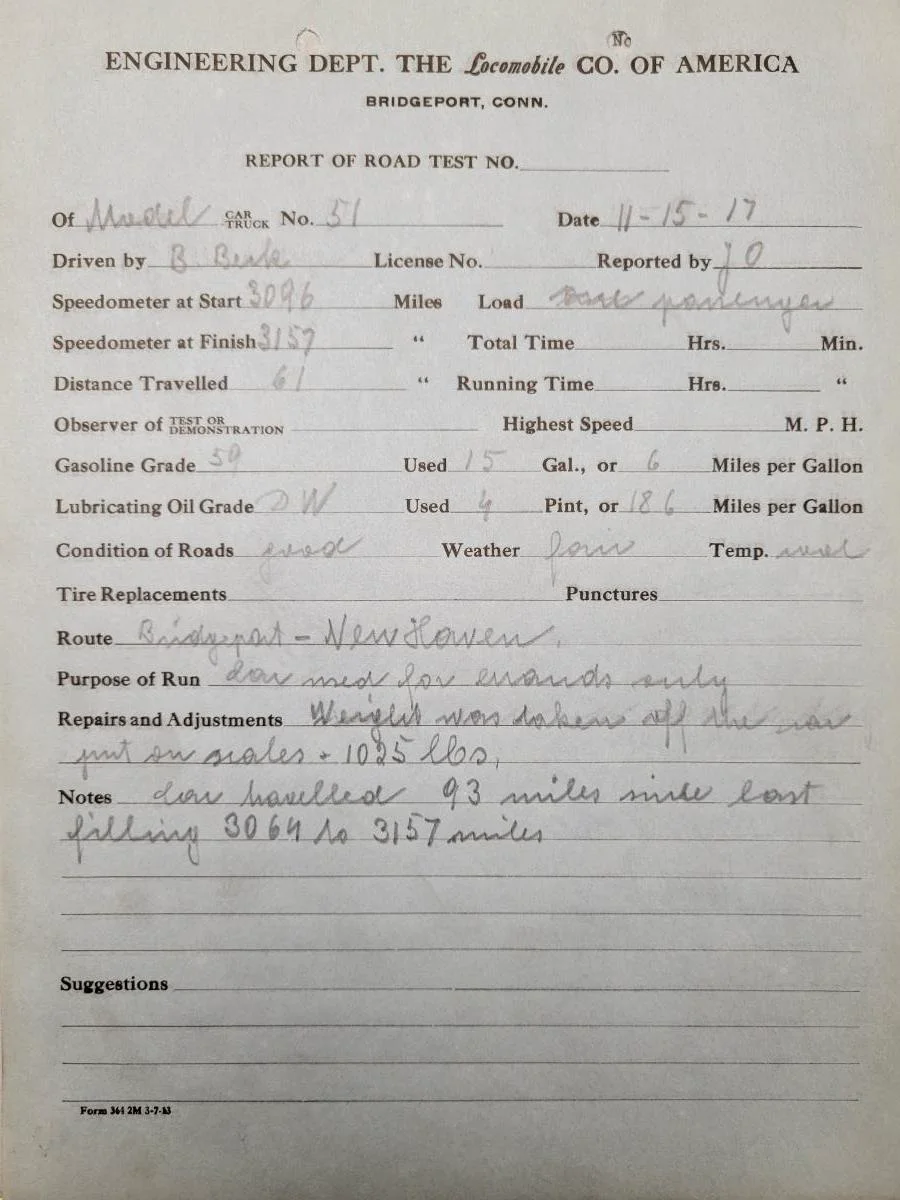
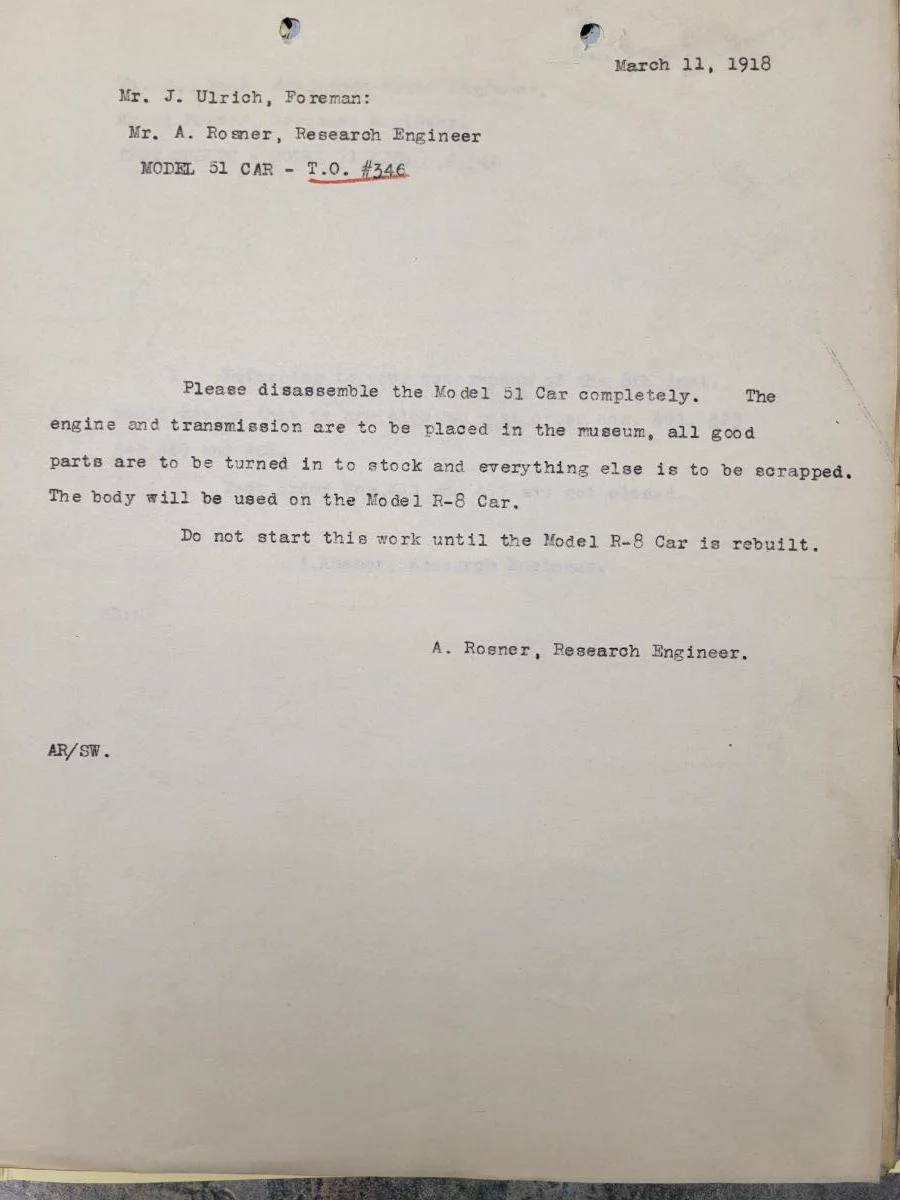
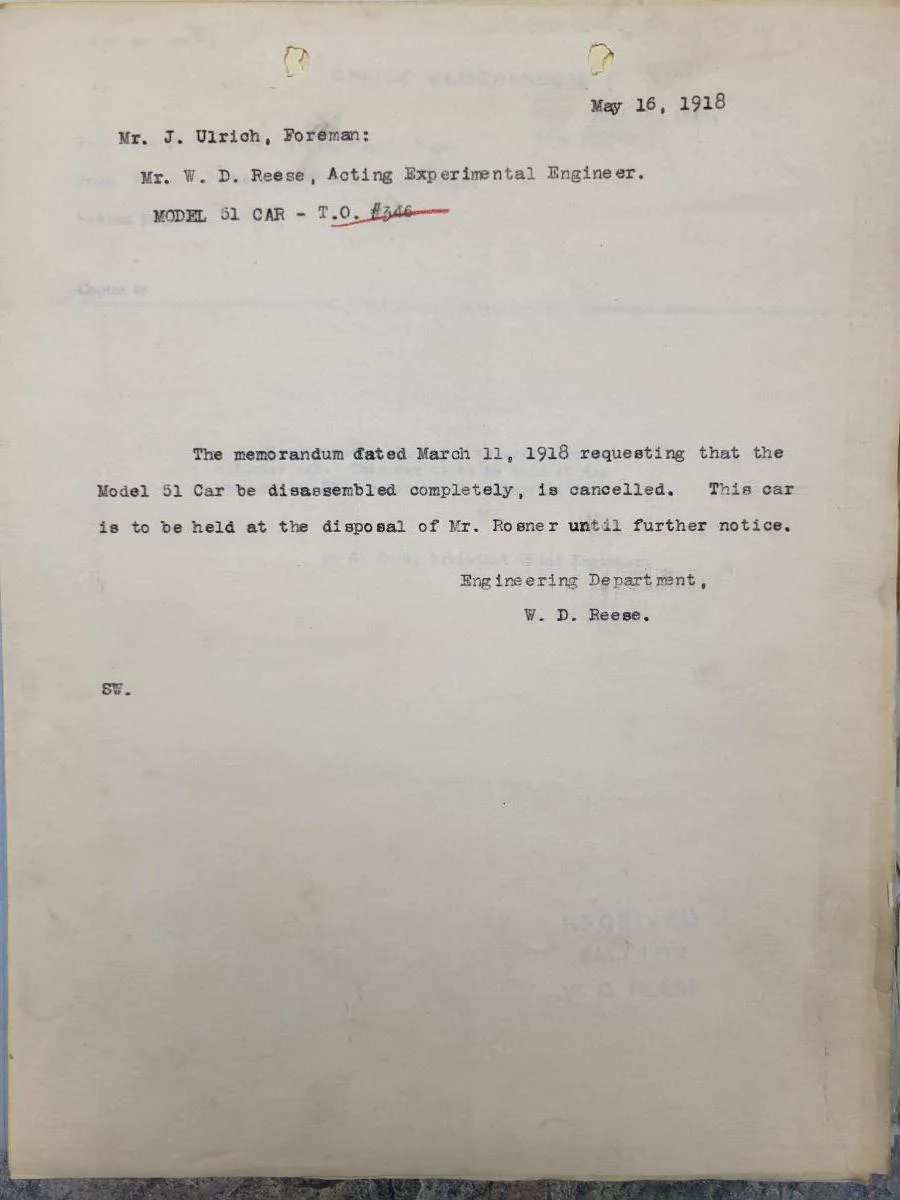
Here are more excerpts. As per the last entry, perhaps it still exists....(well, doubtful).
Someone keep me honest, am I the first in modern times (as in the last ~70 years) to publicize this? I don't see any other info online about Locomobile's 12 cylinder efforts...

i have 2 1920 crankcases if you want to try and Siamese them together at 60 degrees. Flip the left hand jugs so the intakes both face the center and exhaust ports outboard left and right sides. offset cylinders enough to accommodate a single intake camshaft with lobes for both sides ( a three cam).
Thanks for the fifteen munities of free fun!
Sure would love to see what approach they took.

Prewarnut,
I'm curious to see the dyno numbers on the 48 compared to the Twin 6. I'm interested to see the torque numbers.
I can only imagine the weight of a Loco V12 engine. I assume it would have 6 jugs?
Thanks for the post.

The way it burned oil……..it was never gonna be used as a street machine.
prewarnutMar 14, 2025There were no photos or technical diagrams in this stack, just reports and details regarding some of the changes they made. I really, really want to find a diagram. I imagine 525 c.i. x 2 as they seemed to be putting more effort into the model 48 engine.
Here are more excerpts. As per the last entry, perhaps it still exists....(well, doubtful).
Someone keep me honest, am I the first in modern times (as in the last ~70 years) to publicize this? I don't see any other info online about Locomobile's 12 cylinder efforts...
I have never heard about this, but in the school of Locomobile, I am in Kindergarten. Others more familiar with Locomobile May have heard of it. I wonder if any mention/reference of it existed in the old Locomobile Society website? My daughter captured all of the content from the old sites and has it saved (via the Wayback Machine). Maybe I can search through it for any mention of it.
1050 cubic inches……? Just crazy that they thought about it and said “ let’s dedicate some funds to it and dedicate engineering to see if we can make it happen”.

The name "model 51" could refer to the tax HP, which might indicate a capacity of slightly more than the model 48.
I can try to answer a few of the questions. The model 51 was probably noted in sequence because they had a model 50 as well. They already had dyno sheets showing real HP versus ALAM calculated HP at this time and actually mapped out in places in the rpm curves where they differed so I think it wasn't a reflection of calculated HP. I don't see any dyno tests of this however I now know where to look. I see no mention of a V12 on the previous Locomobile Society website, nor Wikipedia or other sources. I'm sure the old timers alive in the '40s and '50s could have known second hand about a V12 from sources such as previous drivers or A.L. Riker, Jr. I'm not sure how long Adolph Rosner or D.G. Roos lived...but I have never seen a newspaper account. I have not gone over to the Dragones.... I usually assume I am not the first to know something but like another project I am working on it is possible I am the first and only in decades to know something.... Here is a dyno sheet (no torque curve on this one though) comparing Locomobile and Packard. It is NOT this engine. The associated data sheet is missing or misfiled (another thing to look for). This would be for a model 48 engine against probably Packard's six. Someone should take on some creative welding and fork and blade work....
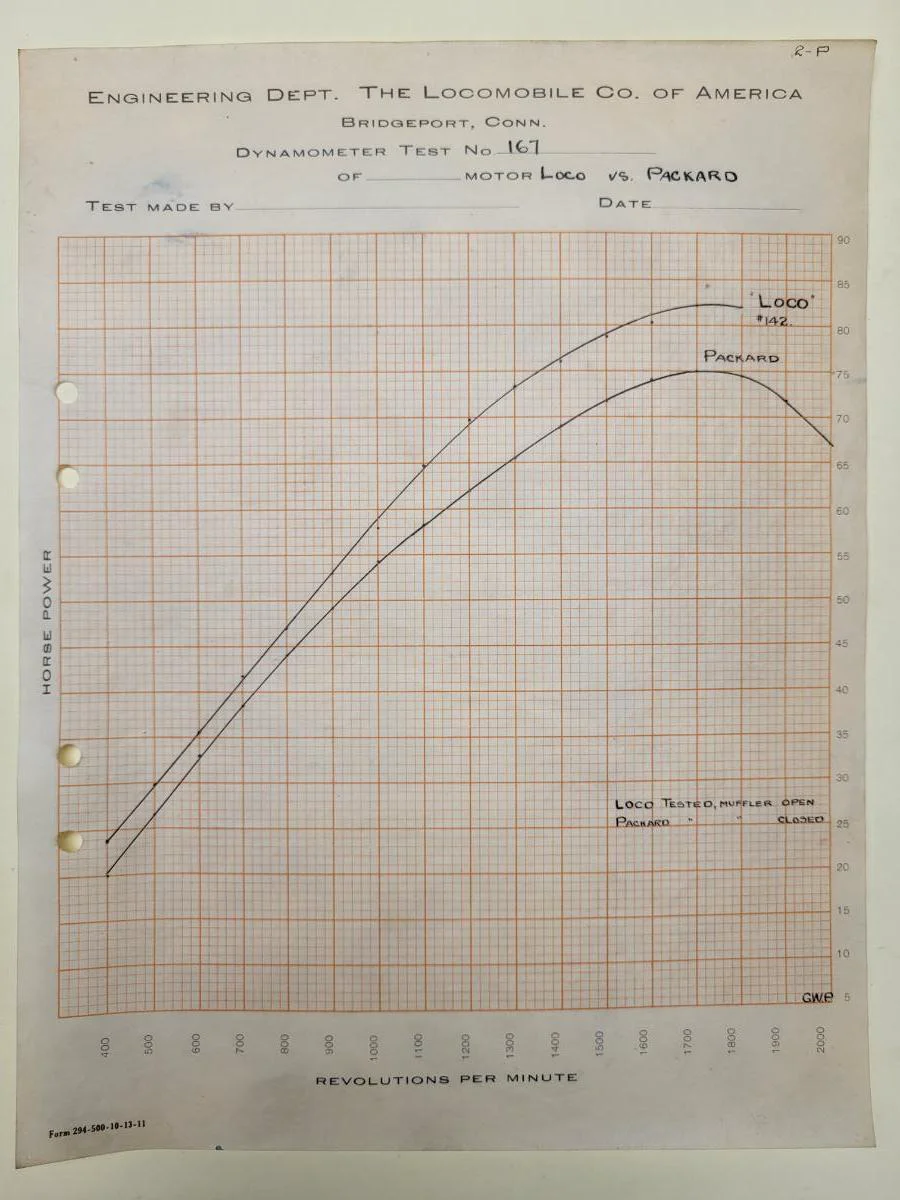
If Loco was utilizing the jugs from a 48, I assume that the exhaust would be on the outside of the engine, while the intakes would be in the center. If the engine was a t head wouldn’t they have to use 4 cams? The carburetor would have to be massive to feed this Frankenstein, unless they used a multiple carb set up. Would it have still been cooled by one water pump? Would this engine have had the dual ignition meaning 24 spark plugs? With the weight of this engine on the front end you would have to be He-Man to steer the thing. What would be the reciprocating weight of the pistons and rods at 1050 cubic inches be?
Maybe I am thinking of it wrong and a model 51 would be more in line with an L head like the Packard twin six and the overall displacement would be in the 550 cubic inch range. A twin six put out 90 hp at 424ci and the 48 loco 82hp at 525ci so what kind of horsepower would the loco 12 put out?
Either way, someone should recreate this beast. If it was made once, it can be made again!
Below is a comparison of cars in an article by Packards Jesse Vincent. I wonder why he didn’t include the Loco 48 in it, but I assume it would be similar to the Pierce.
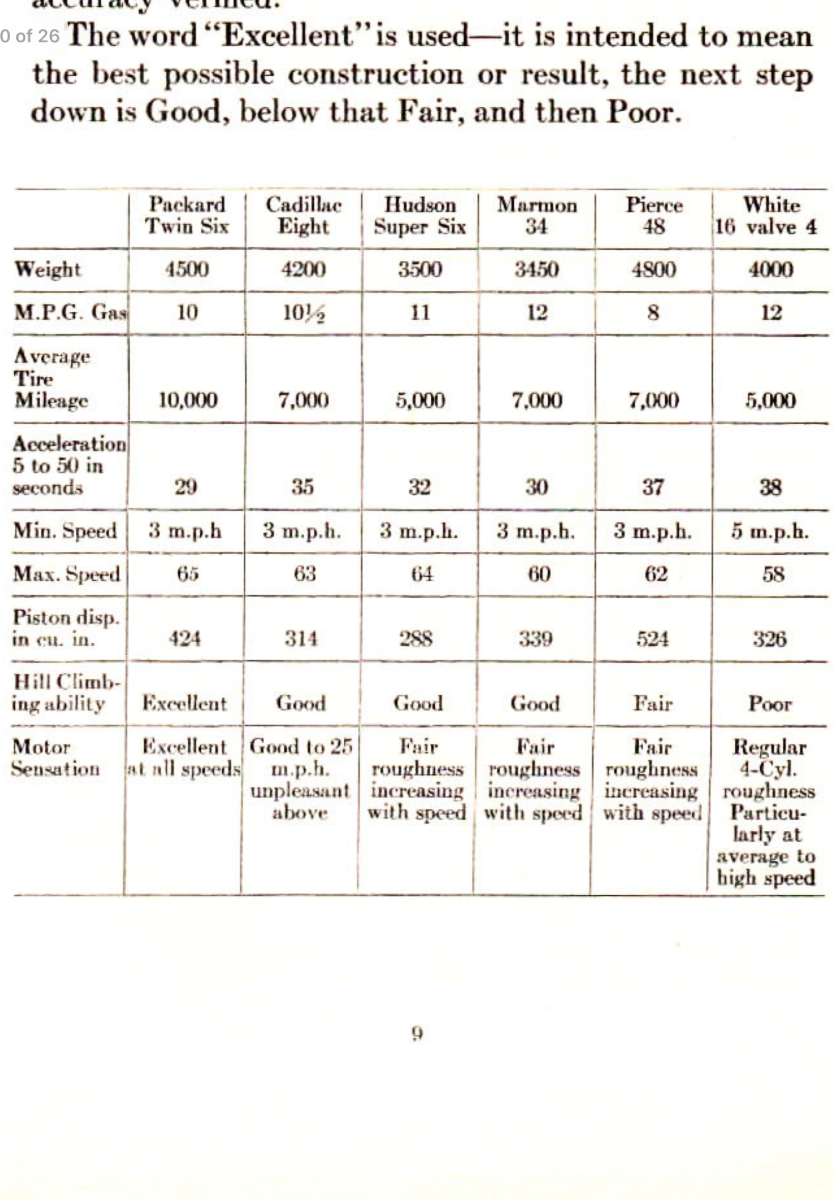
Does a 38 use the same jugs as a 48? 850 cubes seems a little more reasonable than 1050. I can't believe they were thinking about that size engine for a street car.
Al,
No the jugs on the 38 are different than the 48. At 1050 cubes maybe a tank engine?
Tph479,
The standard config of the 48 has the exhaust ports on the right side although I am almost positive the blocks will bolt on the crankcases reversed.
A V12 T head this large with a 60 degree V would be easier to balance than 45 degree V either angle would require very long rods and a tall crankcase. A Huge Thing!
Somebody with deeper pockets and more lifespan than me should build it. "The Beast of Bridgeport" ?
rydersclassicsMar 15, 2025Al,
No the jugs on the 38 are different than the 48. At 1050 cubes maybe a tank engine?
Tph479,
The standard config of the 48 has the exhaust ports on the right side although I am almost positive the blocks will bolt on the crankcases reversed.
A V12 T head this large with a 60 degree V would be easier to balance than 45 degree V either angle would require very long rods and a tall crankcase. A Huge Thing!
Somebody with deeper pockets and more lifespan than me should build it. "The Beast of Bridgeport" ?
I believe that when they transitioned from right hand to left hand drive that they just reversed the jugs on the crankcase. Making a 12 cylinder T Head does not seem to be a very efficient engine design considering that overhead valves and camshafts were already being used by this time. Fork and blade would have probably have had to be used, or the crankshaft would be super long with the bearing area of stock rods 48 rods. This would be the Beast of Bridgeport!
I don't want to make any unreasonable assumptions. I agree a 1050 c.i. engine sounds ridiculous at the time. The data does demonstrate a number of things: the car's weight, mpg, oil consumption and driver testimonials. They did use their Ball carburetor, series III I believe and as they note, under load (e.g. up the ~9% uphill grade of Sport Hill Rd, Easton) they had trouble.
Pebble allows recreations right? We just need two crankcases, aluminum pistons, a dozen rolls of 5086, an English wheel, a data plate and about $2 million.
prewarnutMar 15, 2025I don't want to make any unreasonable assumptions. I agree a 1050 c.i. engine sounds ridiculous at the time. The data does demonstrate a number of things: the car's weight, mpg, oil consumption and driver testimonials. They did use their Ball carburetor, series III I believe and as they note, under load (e.g. up the ~9% uphill grade of Sport Hill Rd, Easton) they had trouble.
Pebble allows recreations right? We just need two crankcases, aluminum pistons, a dozen rolls of 5086, an English wheel, a data plate and about $2 million.
That should just about do it! I volunteer to be captain of the cheerleading team.
John BloomMar 15, 2025That should just about do it! I volunteer to be captain of the cheerleading team.
John, We are going to set up a Go-Fund Me page in your name to build the Beast of Bridgeport. Using common core math we will eventually make the numbers work. I do have a buddy that could probably make it happen. Remember my buddy that built the twin overhead cam, fuel injected Ford Model T engine that put out 325 on the dyno?
When they switched from right hand drive to left hand drive, I know that they flip flopped the intake and exhaust, but did they have to flip the jugs around also?
I'm still trying to figure out the complexity of a T Head V type engine. A lot of stuff would be going on in the crankcase with the cams, and it would be a wide heavy engine.
Tph479Mar 16, 2025John, We are going to set up a Go-Fund Me page in your name to build the Beast of Bridgeport. Using common core math we will eventually make the numbers work. I do have a buddy that could probably make it happen. Remember my buddy that built the twin overhead cam, fuel injected Ford Model T engine that put out 325 on the dyno?
When they switched from right hand drive to left hand drive, I know that they flip flopped the intake and exhaust, but did they have to flip the jugs around also?
I'm still trying to figure out the complexity of a T Head V type engine. A lot of stuff would be going on in the crankcase with the cams, and it would be a wide heavy engine.
I do remember that model T.
I have never had a Go Fund Me account set up for me….. I hope it is a huge success.
I can’t imagine two Loco 48 engines stuffed under the hood.
I am a fan of Locomobile. The fact that they even attempted this just takes it up another notch or two.
I have spent to much time measuring crank cases to come up with a concept design unless....
Dan this is on you, you found the docs. Please find the some drawings so we don't have to reinvent what was already done.
On the other hand why limit ourselves. Many V12 engines have been done successfully since, we should be able to get creative right?
About that 2M Go Fund Me budget, the "Plumb Loco" research and development team for the "Beast of Bridgeport", is sounding better all the time!
Interesting read on Wikipedia including earliest V12 engines but didn't find mention of Locomobiles effort yet.
...will do, I'll keep looking. It is a large archive and disjointed. I usually get over there once a week if I have time. I will certainly post anything more I find but it could take awhile. You might want to hold up on the bodywork on your speedster; they mentioned they needed a special hood for this! 😁
Notice the slight offset of the cylinder banks to accommodate the single center camshaft on this 60 degree V12.
With my proposed 3 cam version of T head, the center cam for intake valves on both banks of cylinders with a wide variety of intake induction options supplying fuel to the 6 intake ports (one port each block), left and right cams each operate exhaust valves with 6 tube exhaust manifolds/headers each side ( post 1916, 2 ports each block), thus eliminating the need for a fourth camshaft and allowing the narrowest design and need for counterbalance crankshaft.
With the Model 48 T head cylinder blocks it would still be a very wide and imposing 17.2 Liter Edwardian power plant.
Hoods are optional!

A Sunbeam Mohawk on display at the Polish Aviation Museum.
To join in the conversation, you must be a club member.
You’re welcome to read and like every post. Members can reply and start topics of their own.