

@alsfarms
I have brought a direct response to this chat that was shared by Dan in the Locomobile 38 and 48 chat as it is very relevant to this discussion of Locomobile radiators, quote:
" We have a copper sink, which while, looking great, is a pain in the rear to keep polished. Remind me to avoid such in our next house....One way to polish copper, and German silver (if this is german silver), is to use warm white vinegar and salt. I do this on occasion when I don't want to be scrubbing. In your case avoiding rubbing so as to not cause scratching or a change to the surface patina would be ideal. For German silver the only twist is to line the vessel the item is submerged or bathed in with aluminum foil. Being a large radiator shell this may not be too practical but food for thought about doing this chemically without mechanically altering the surface - at least to get started. Maybe you could make a wood-framed box water-tight and with some aluminum foil lining it (doesn't have to be contiguous over the whole box's surface). I would say with our copper sink this gets it 90%. If I really want a shine and some reflection I follow it up with an ammonia solution (or just start that way).
If the radiator shell is nickel I'm not sure the above applies..."
I just thought of another Locomobile radiator question that is perplexing me. What is the difference in appearance between the patina found on a German Silver radiator and the patina found on a Nickel plated brass radiator.
Al
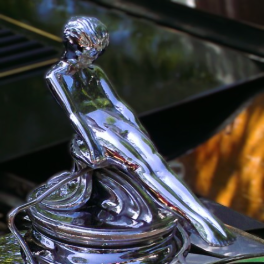
Al, I'm trying to see if there's any clear way to differentiate with a chemical test outside of playing with potassium cyanide and hypochloric acid to precipitate nickel from a sample (and using a lot of mathematics). I found two online sources who state not to use ammonia on nickel plate as it can separate the plating. I'm not sure that is true but word to the wise. Otherwise it is hard to go by a color test as oxidation will mask this. Overall if you can't find wear-through or plating which is flaking then it may be an alloy such as German silver. Isn't this the same as Silver Ghost radiators of the time?

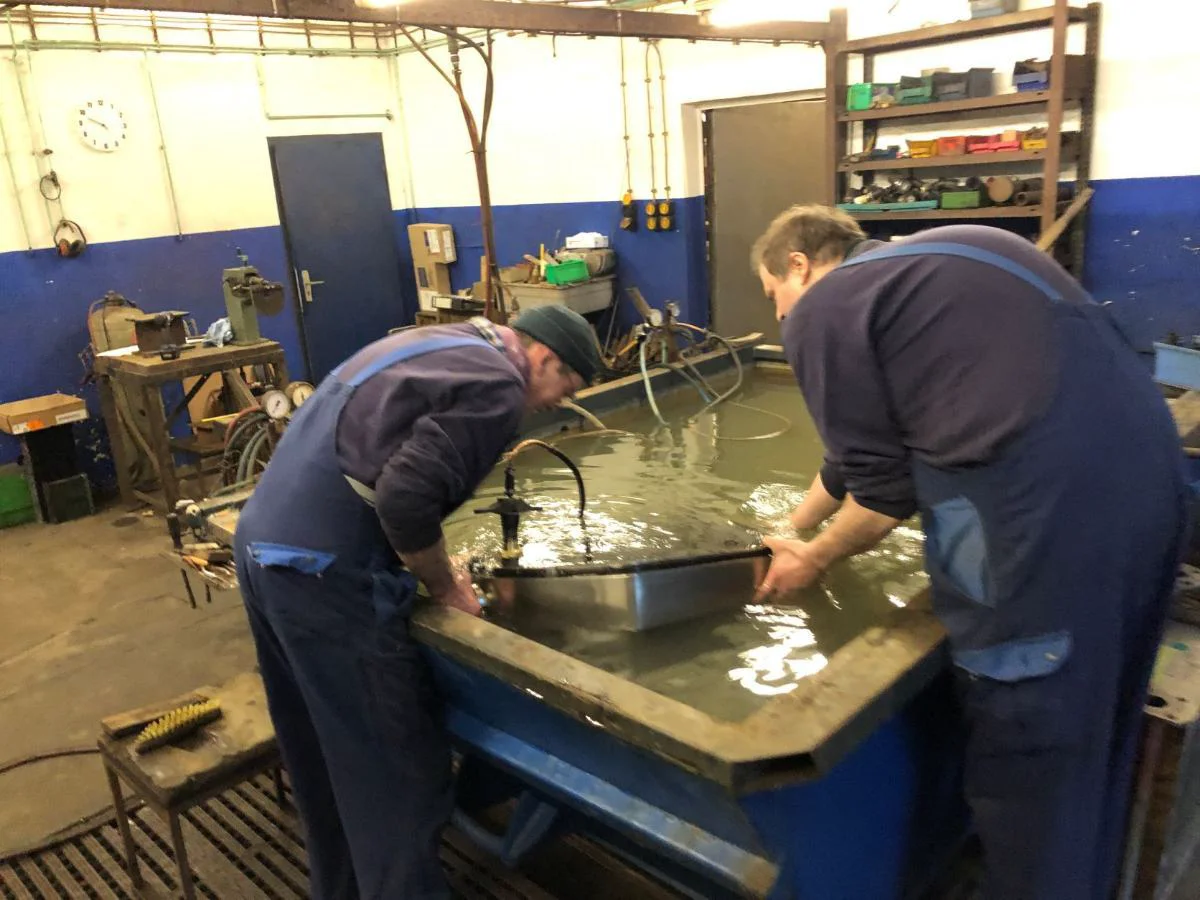
Dear Al, before doing any attempts on improving the visual appearance of it's external surface, I suggest to check the radiator's function:
1. Is it leaking? You should apply very little pressure only (1 to 2 PSI, no more!) when submerged in a water basin.
2. Are the water passages free? I have not tested that on a radiator which is not installed in a car. I can only say: The Locomobile has such a strong water pump, it will push water out of the overflow pipe if the flow is restricted. End of last year I gave the radiator to an experienced repair shop and got it back just last Friday. The whole beautifully polished surface is now dull and ugly from emerging into the water basin so many times!
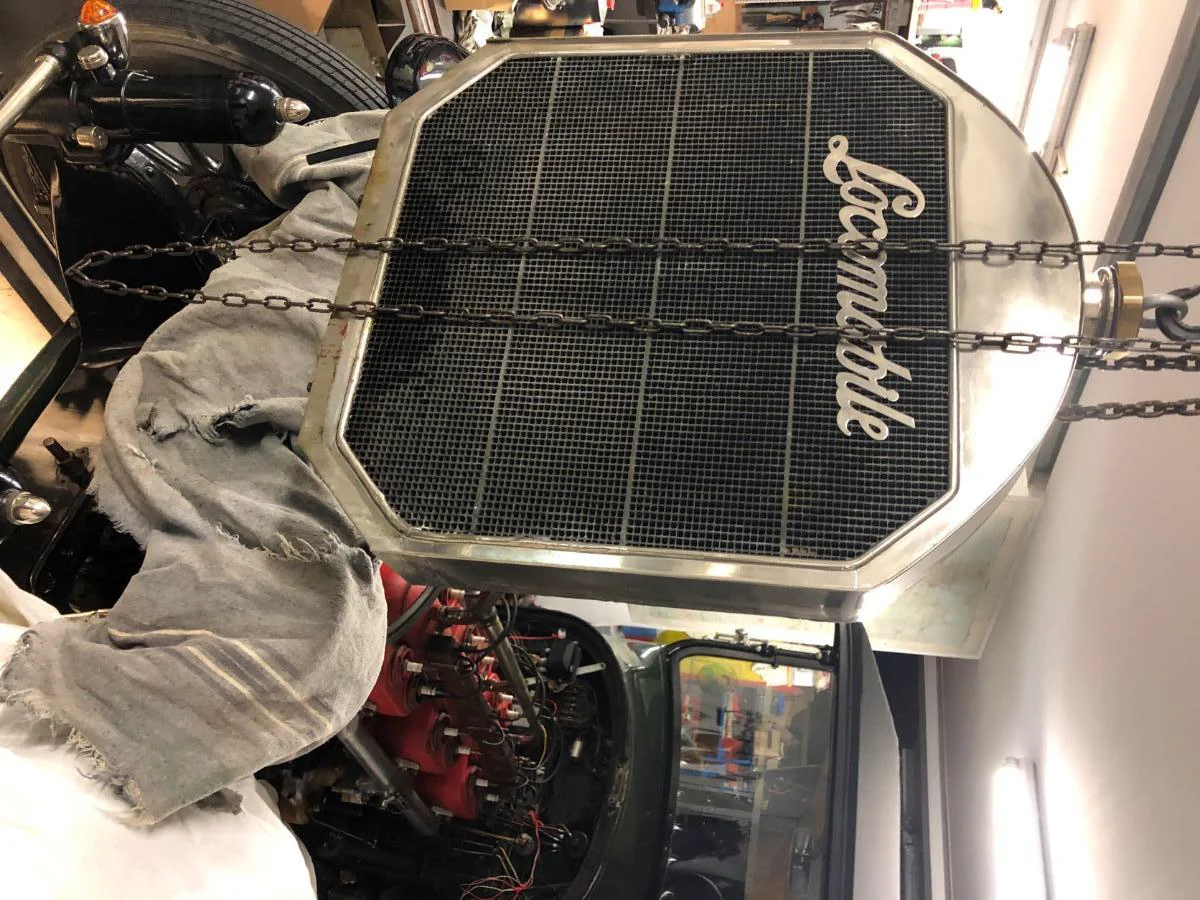
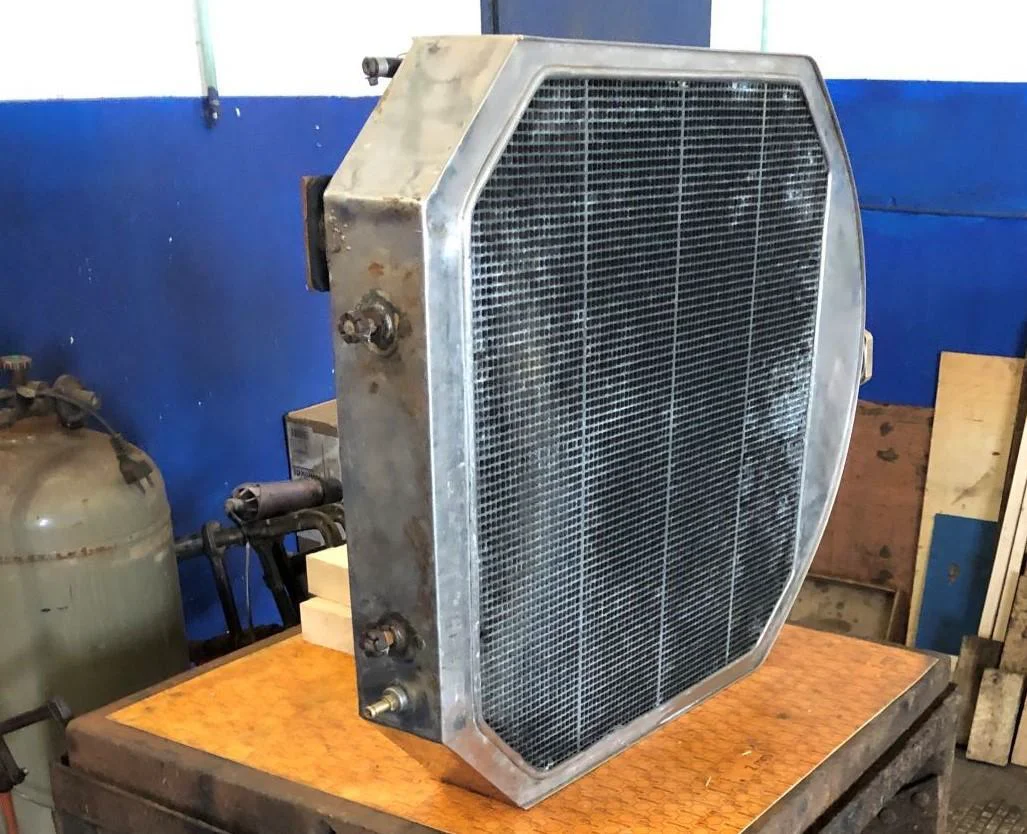
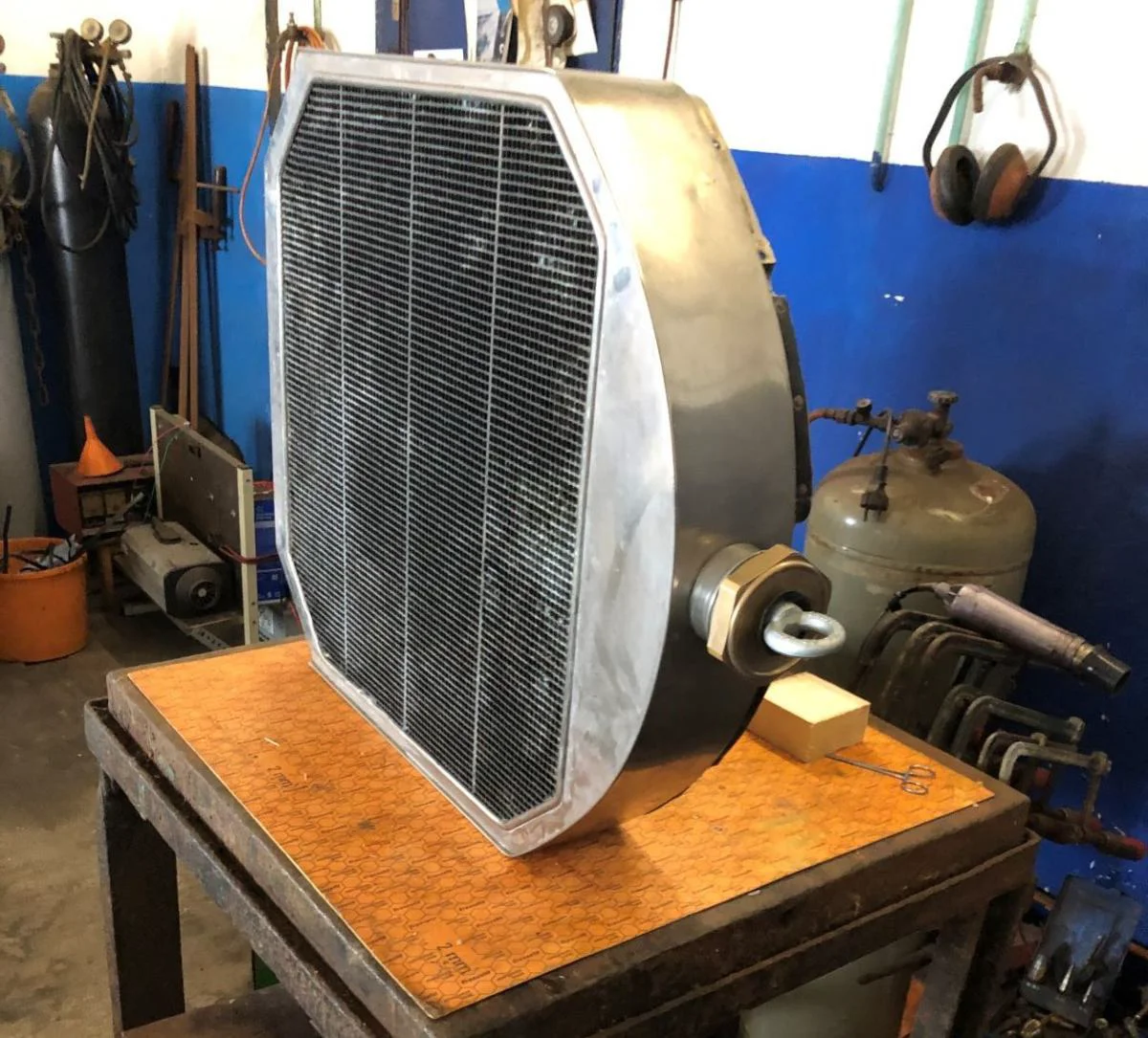
See the serial number on the radiator:
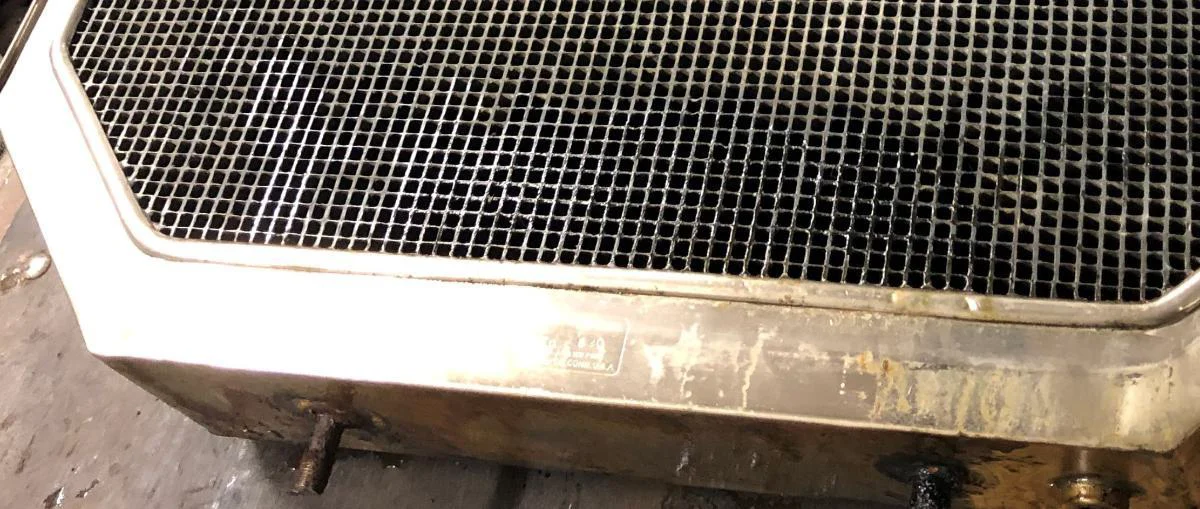
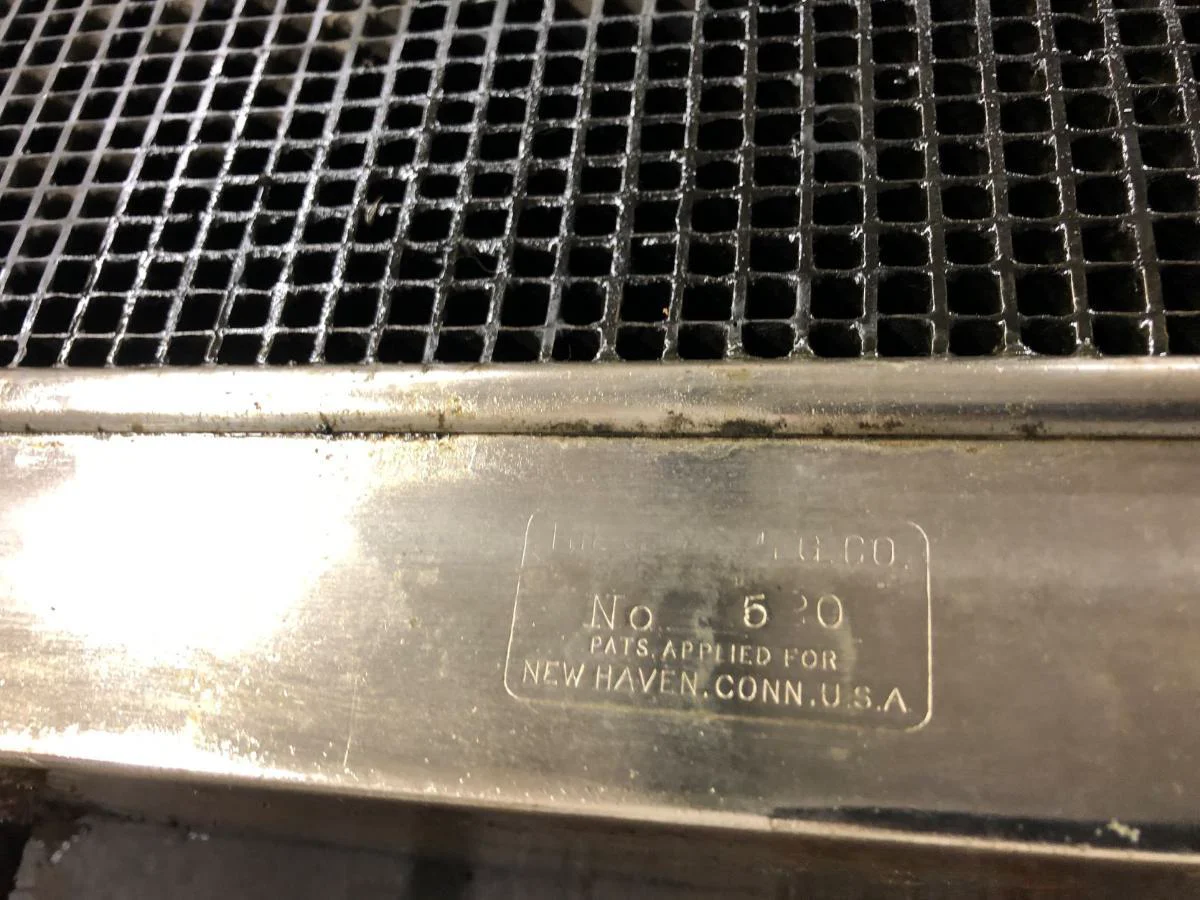
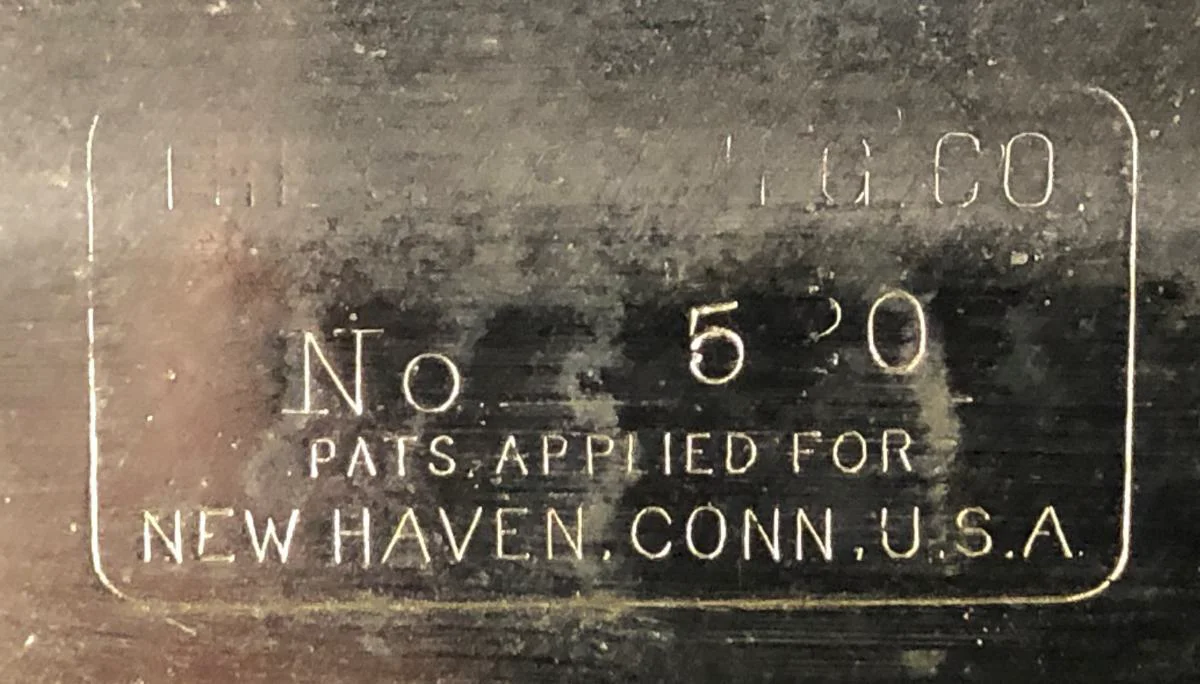
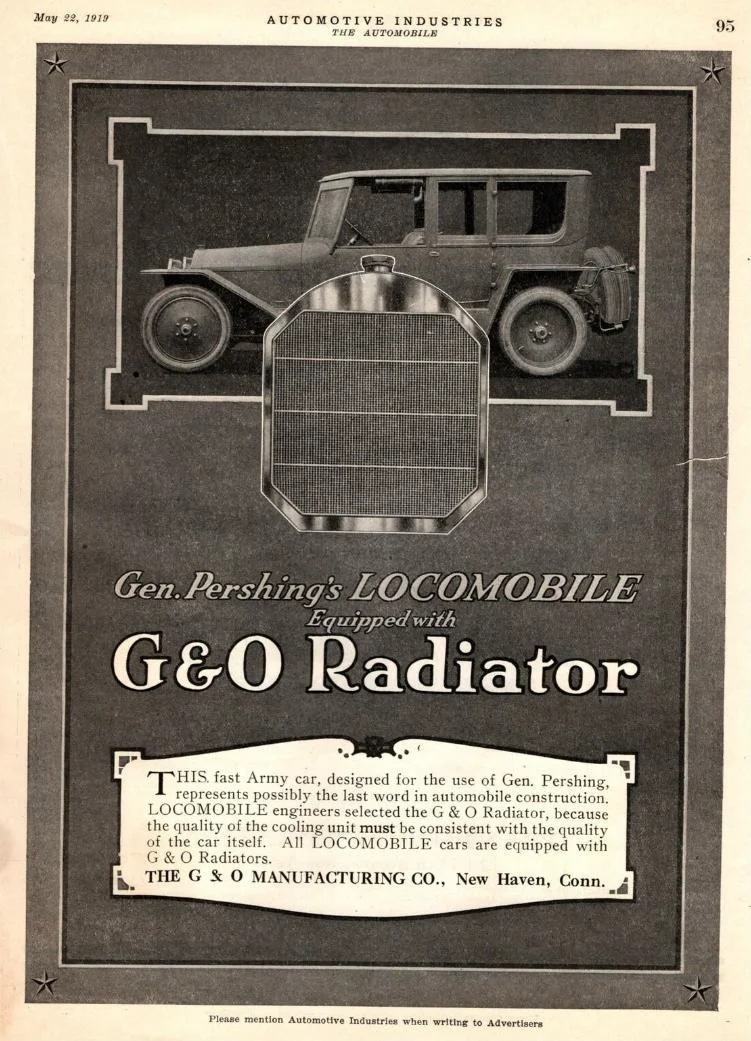
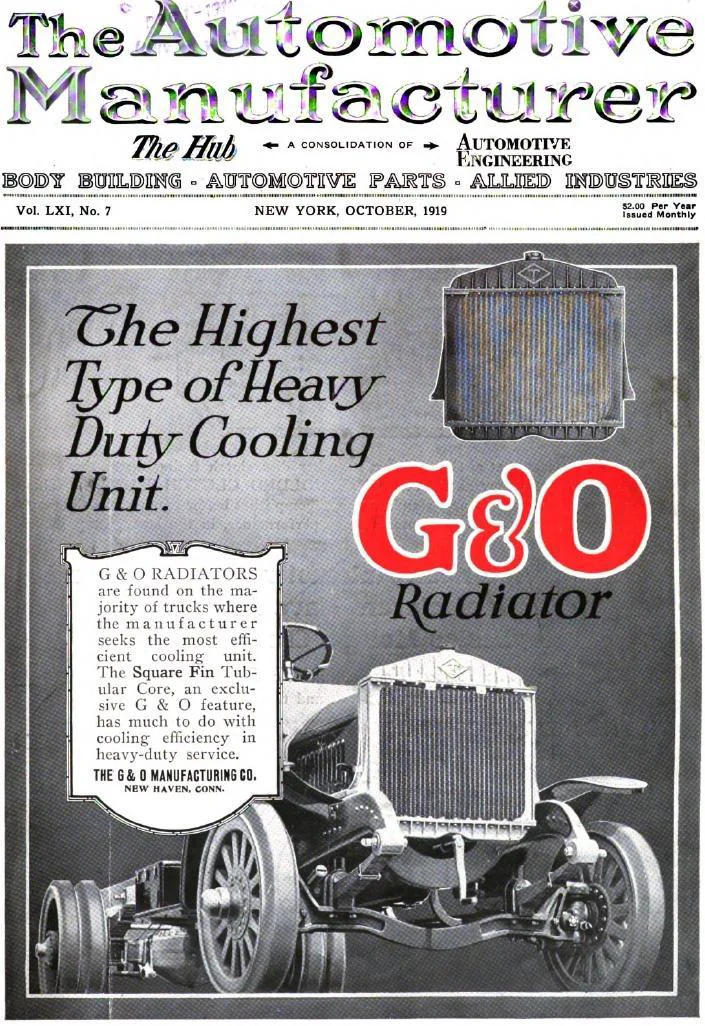
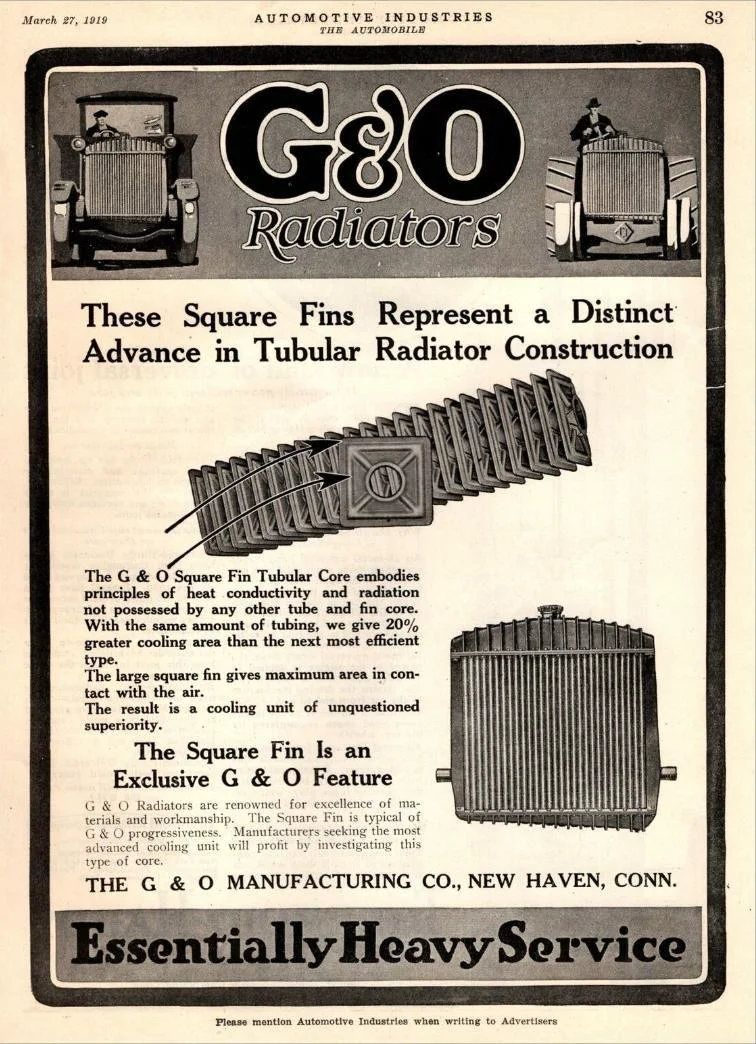
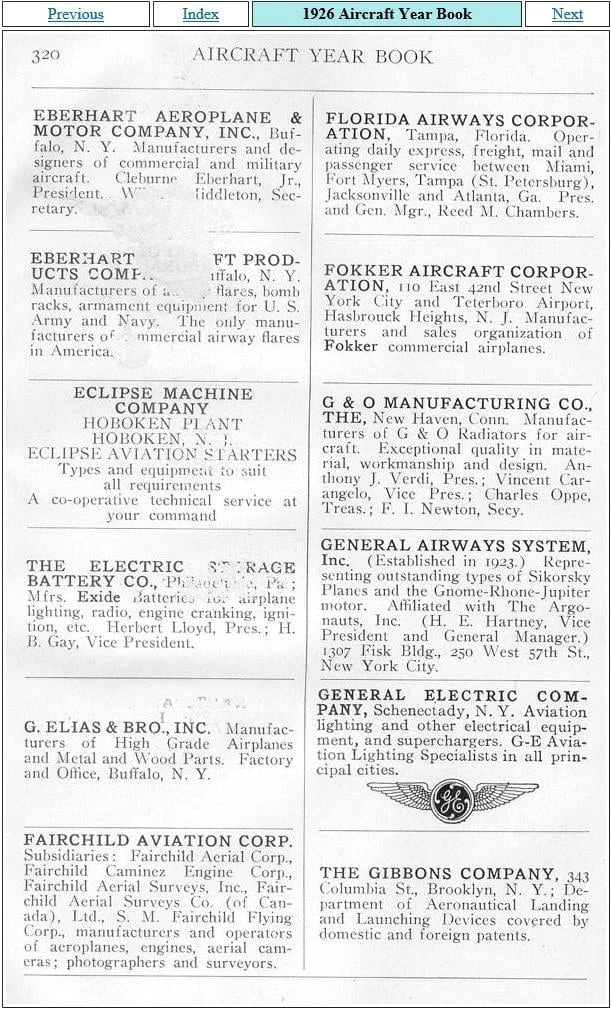
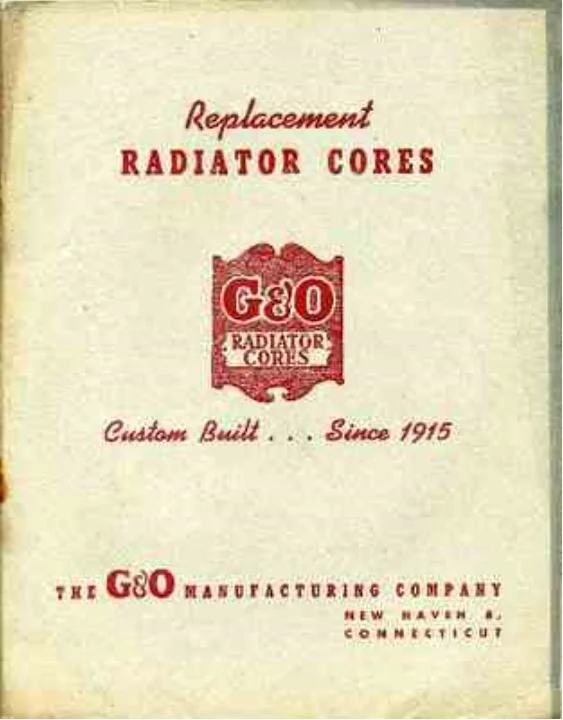
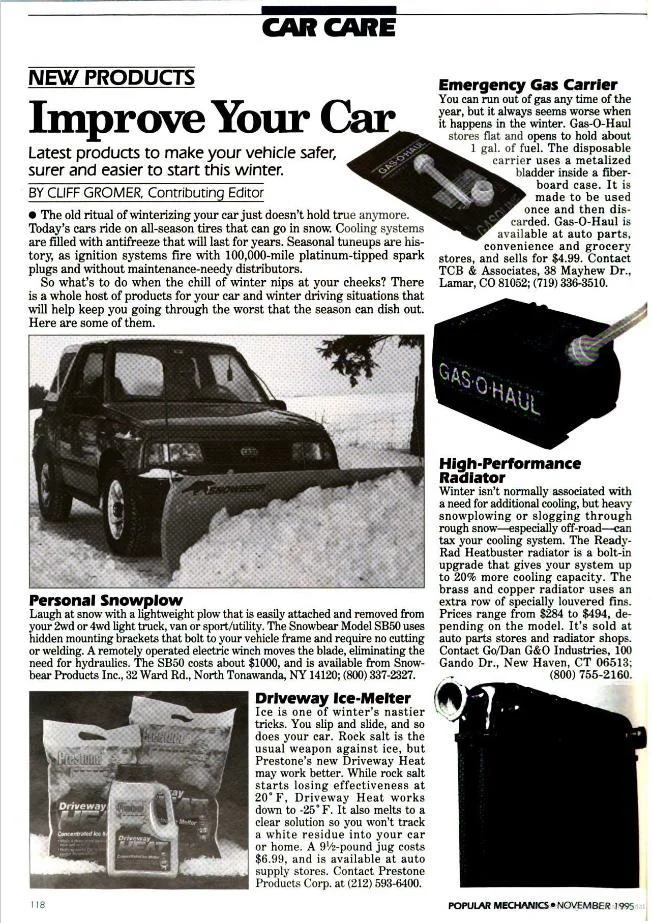
The manufacturer was G&O, look at these advertisements:
Pls. note: "custom built since 1915" means: It was a quite young factory when most of our model 48's were built. Who made the radiators for Locomobile before 1915?
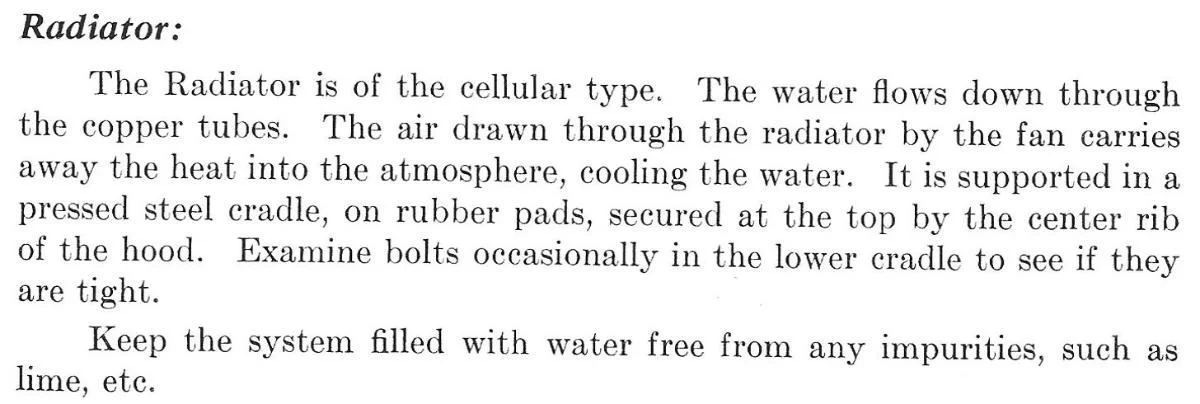
One more hint: The square fins were not used on the Locomobile preasure cars. Our radiators are called "honey-comb" or "cellular type". I add descriptions from the manuals of model M7 (1916), series seven (1920) and 19000-series (1924).
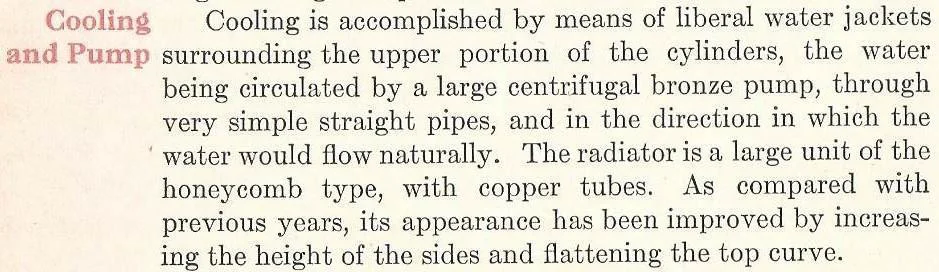
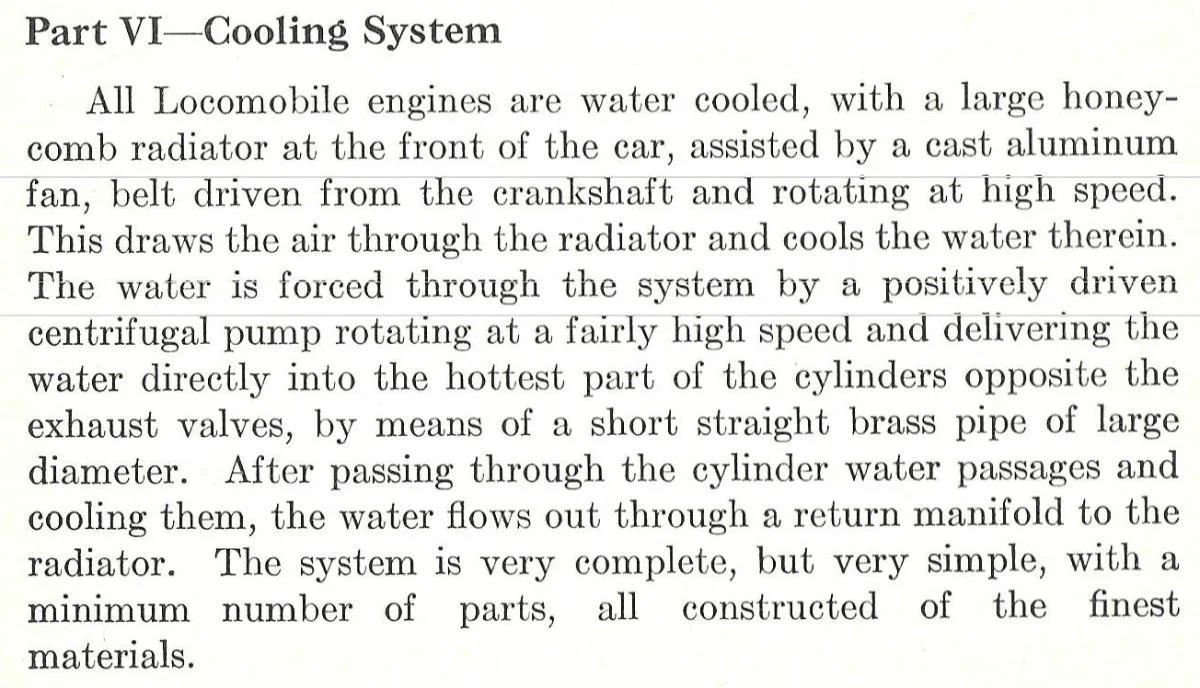
When I bought my 1917 model touring car, I was happy to find the cooling system filled with antifreeze and not leaking. But when I started with driving, I learned very soon that the cooling system has some problems: various smaller leaks from the core showed up, and I lost a much bigger quantity through the overflow pipe. After the last trip in November 2022, I measured: I could only drain 17.5 liters from a total volume of 29 liter, after driving not much more than an hour only. The neighbours informed me that I was loosing water when driving down the road. This overflow started from medium engine speeds already, with a continuous flow (stream), visible as a wet line on the road.
As one reason I found a dent in the copper pipe between radiator and water pump, which I could repair.
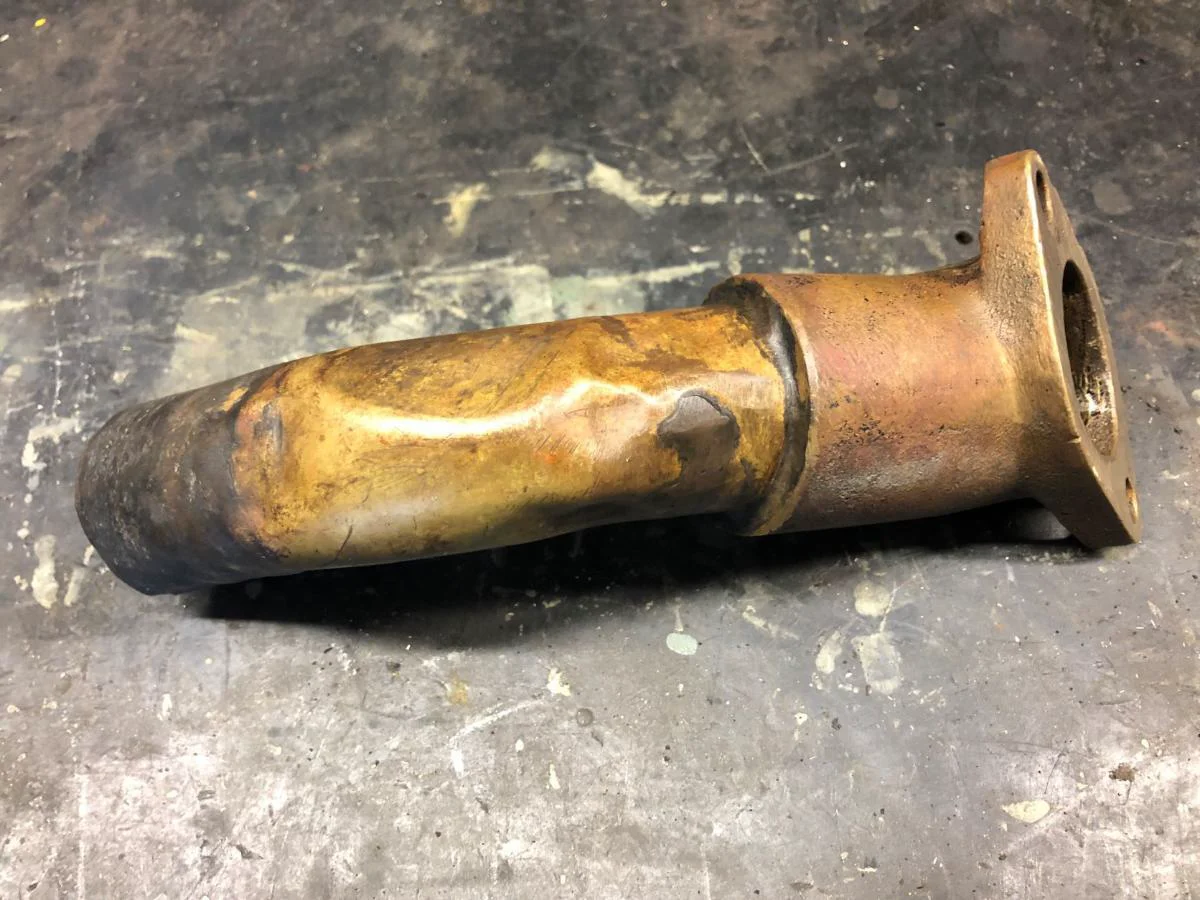
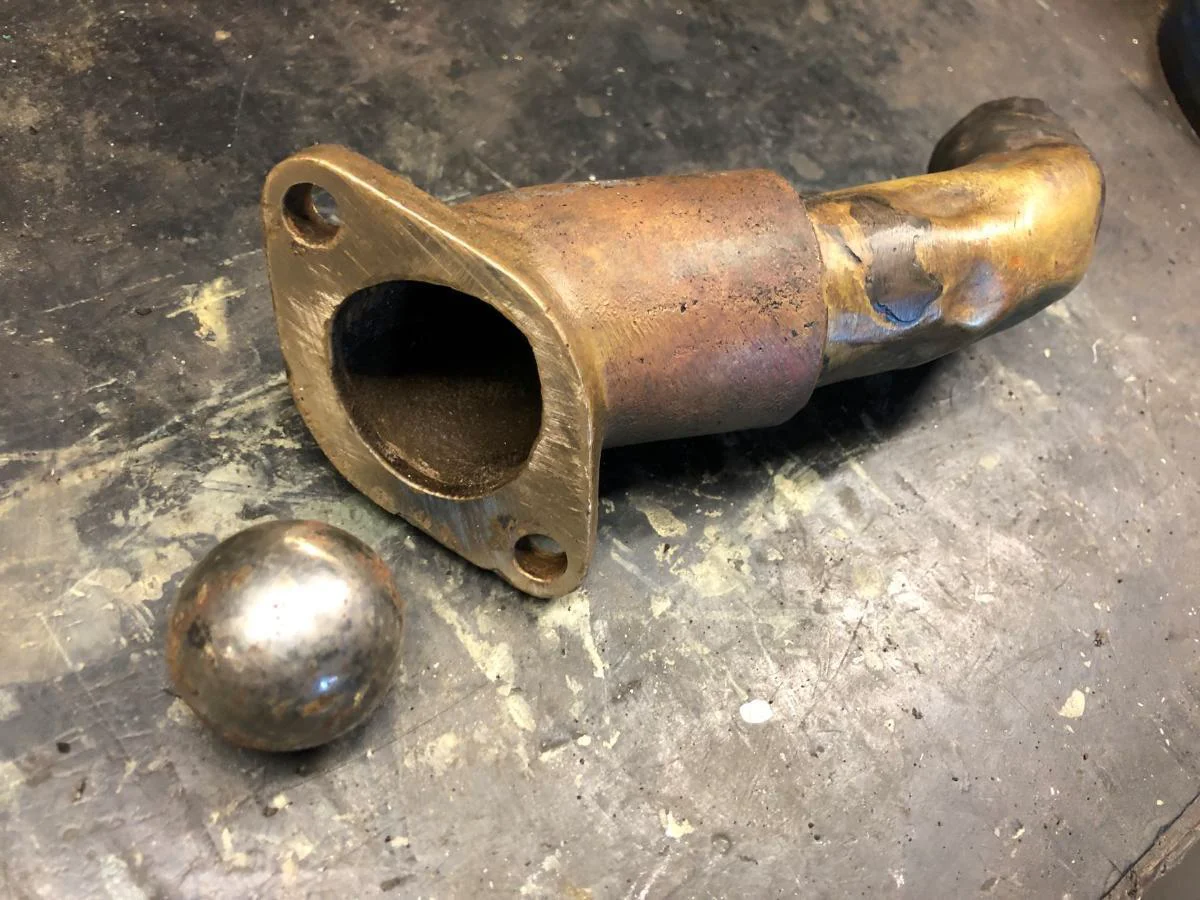
Another reason is dirt inside the core. The repair shop cleaned it very carefully with some chemicals and by flushing backwards. He said it was "somehow dirty, but not too bad, he had seen much worse cases before". The water passages in this type of radiator are smaller than on other more modern radiators, they get blocked more easily.
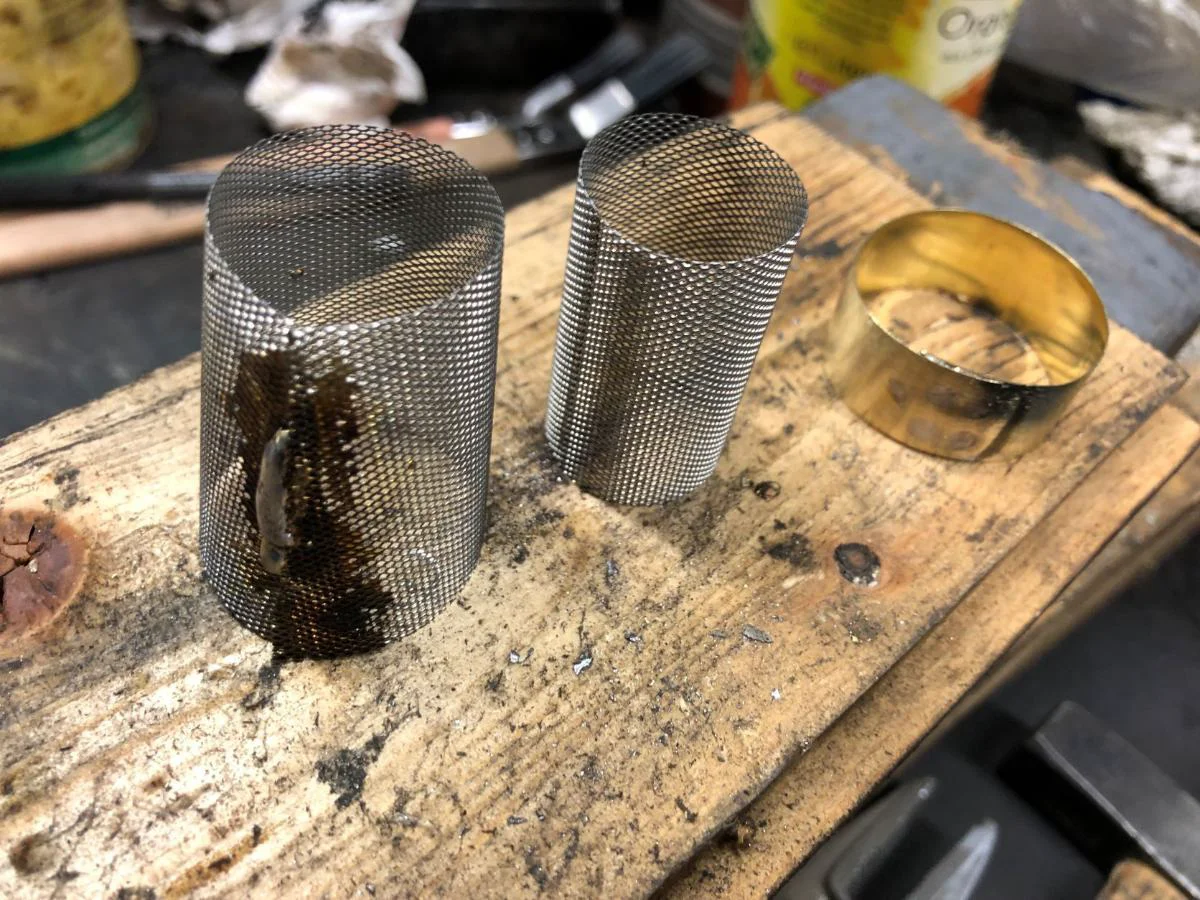
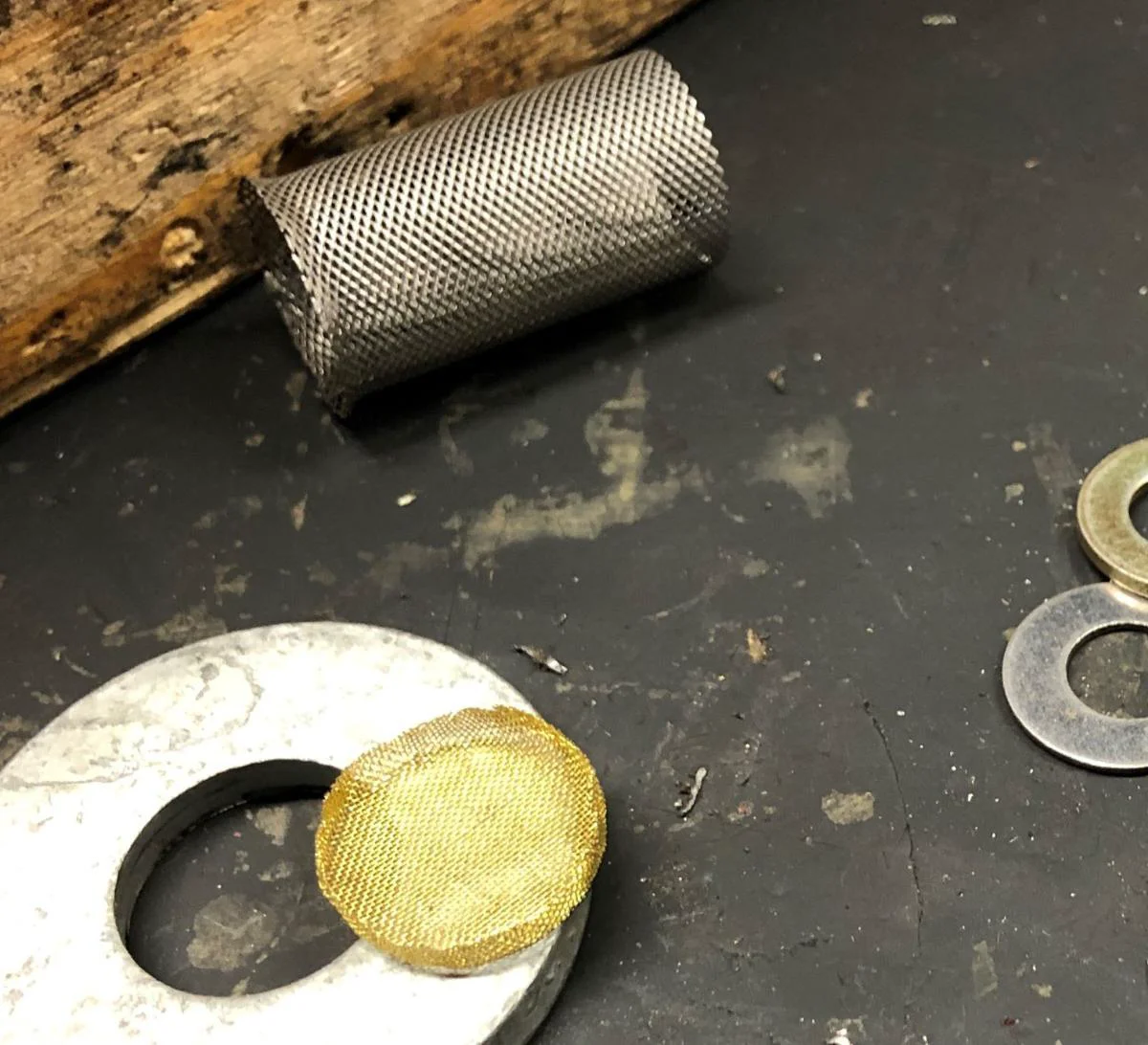
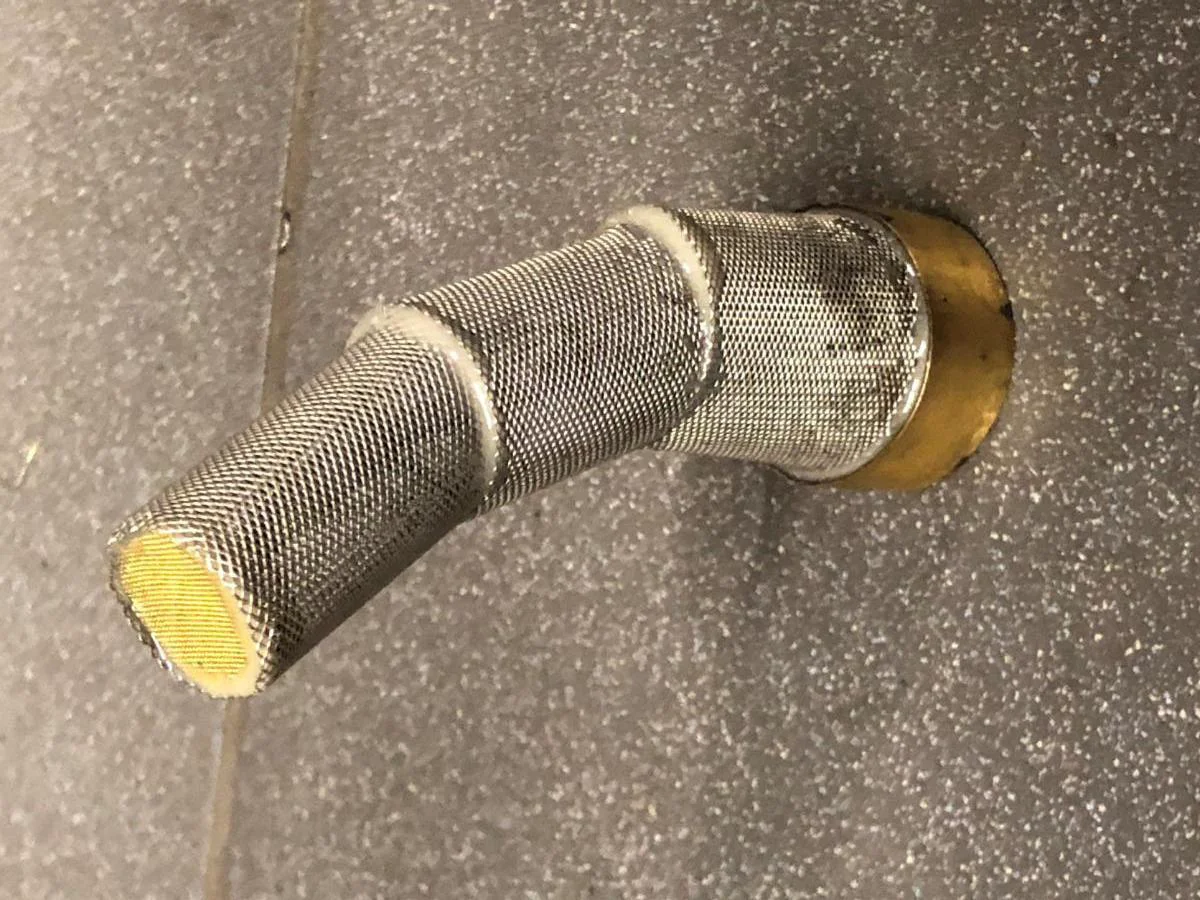
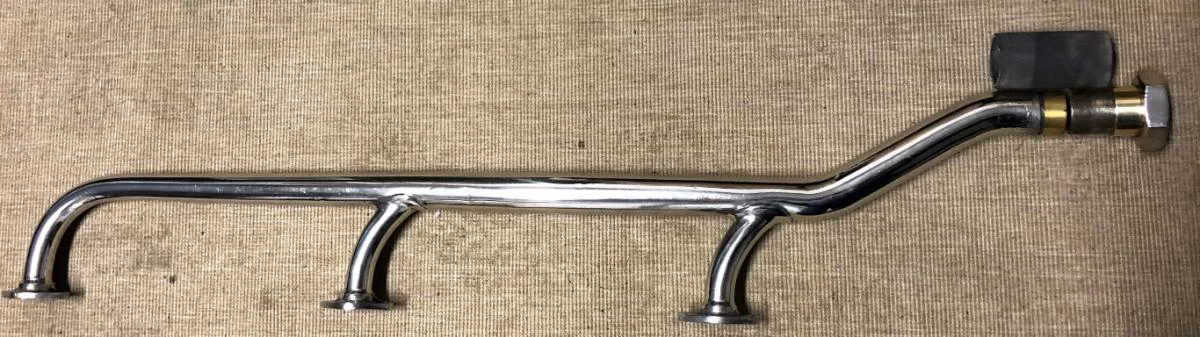
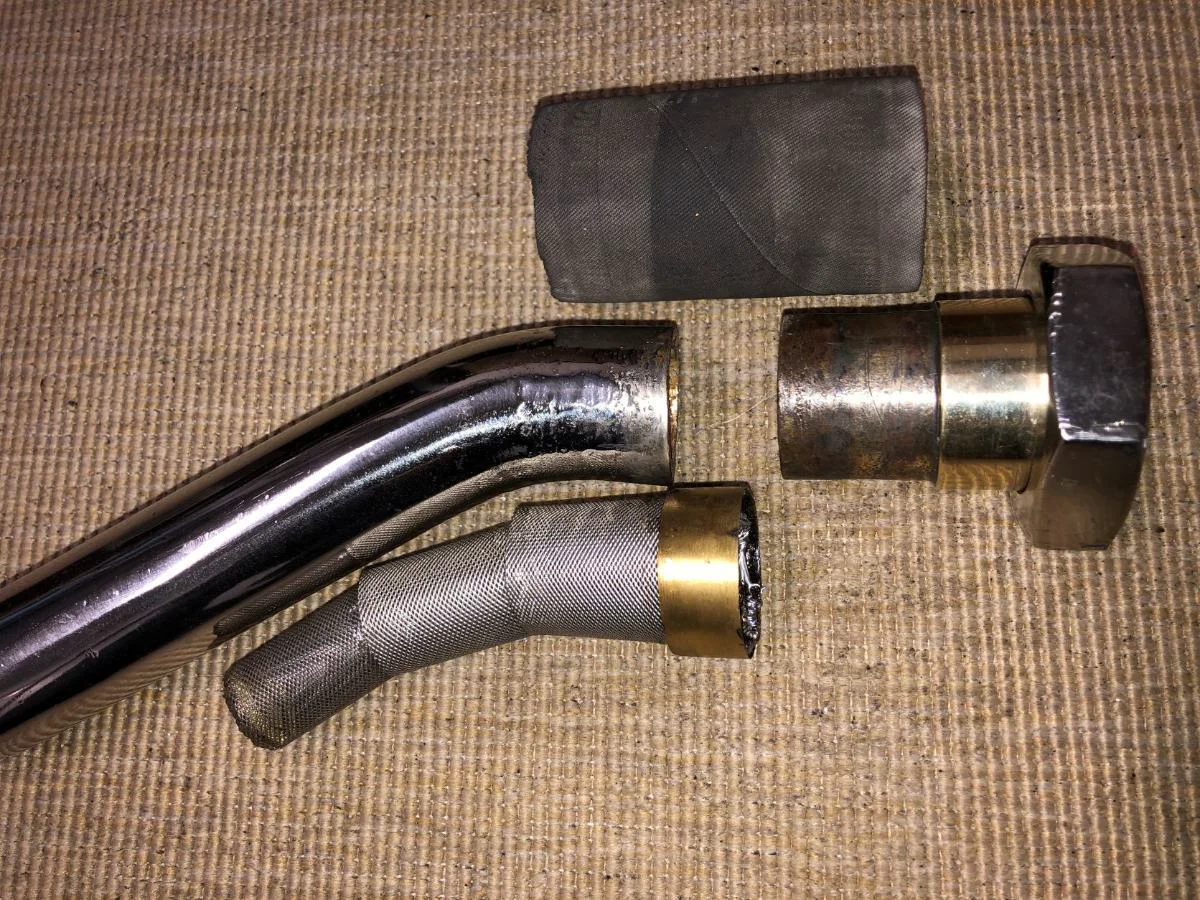
As a safety measure for the future, I made an in-line filter mesh:
Frank, was your radiator shop able to clean out the 1917 Locomobile radiator core and allow for a much better thru flow characteristic of the coolant? What is your take on what your radiator is made from, nickel plated brass or German Silver alloy? Which ever it is, these radiators are simply elegant when polished to a fine luster. That assessment is true regardless of some radiators being polished brass or even painted brass. These various options, for the radiator, undoubtedly were reflected on the order for purchase when new. I wonder if G&O, the radiator builder, would have order information that would specify what material was used in the manufacture of a new radiator and the end cost to consumer.
Al
If you would like to understand the cooling ability of a Loco 48 radiator look no further than the Lytle-Helck Rabbit the First. 18.8 liter Benz aircraft engine. Now in the hands of the much lauded Leno collage as it has no cohesion as a collection.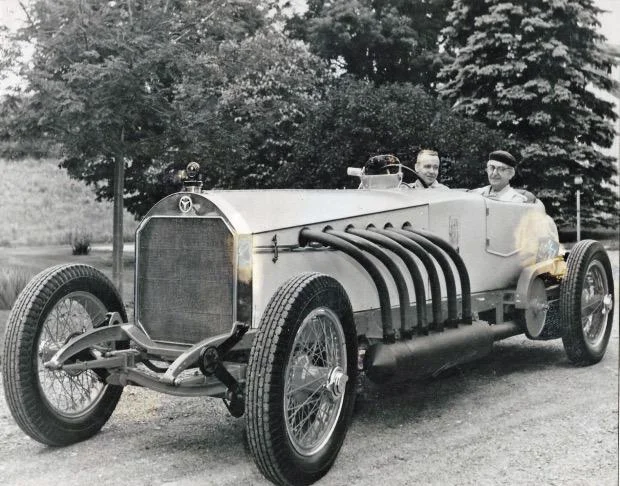
Good Morning George,
You threw out a morsel of information on the Lytle-Helck Rabbit and a picture and certainly raised the interest. How about a bit more background information on that race car and the builders. Yes, it certainly looks like a Locomobile 48 radiator was used. I wonder if this vehicle utilizes an auxiliary water tank for more coolant capacity?
Al
With a bit of mathematical estimation, the Lytle-Helck Rabbit engine is a bit more than twice as big as the 525 CID engine in a Locomobile 48. If the radiator , as a stand alone, cools that huge aircraft engine, the cooling characteristics of the Locmobile 48 radiator has plenty of cooling capacity to cool a 48 Locomobile. But of course, it would be very important to keep the system clean so the small passageways of a square cellular radiator do not become fouled and plug up.
Al
Another nice aspect of the Lytle-Helck Rabbit is the wire wheels. The don't look like typical Buffalo style. Are they Rudge? If not Rudge, then they must be those darned Dayton wheels. What is the thoughts of this group?
Al
Does anyone have Locomobile radiator information that predates 1915 as the start of G&O building radiators under that name. I wonder if the did business under a different name earlier than the 1915 date as the radiator on my 1909 Model L is constructed and certainly appears to be a sister to the Locomobile 48 radiator.
Al
alsfarmsMar 20, 2023Good Morning George,
You threw out a morsel of information on the Kytle-Helck Rabbit and a picture and certainly raised the interest. How about a bit more background information on that race car and the builders. Yes, it certainly looks like a Locomobile 48 radiator was used. I wonder if this vehicle utilizes an auxiliary water tank for more coolant capacity?
Al
It is a Loco radiator. I know what I am talking about unlike others.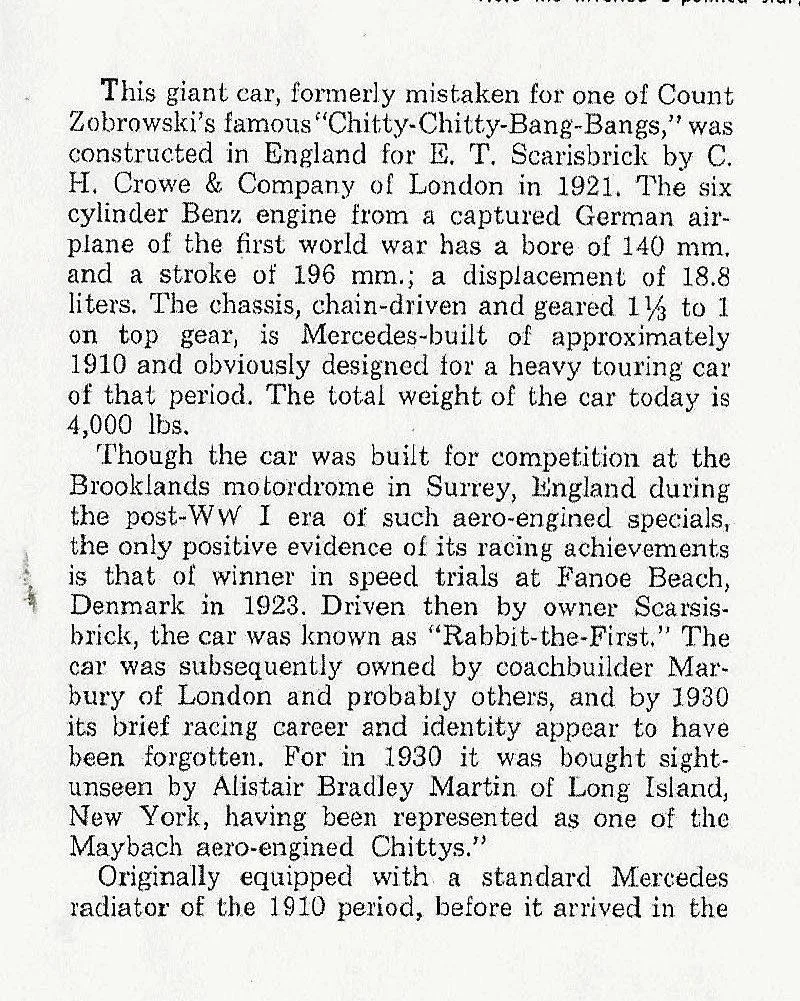
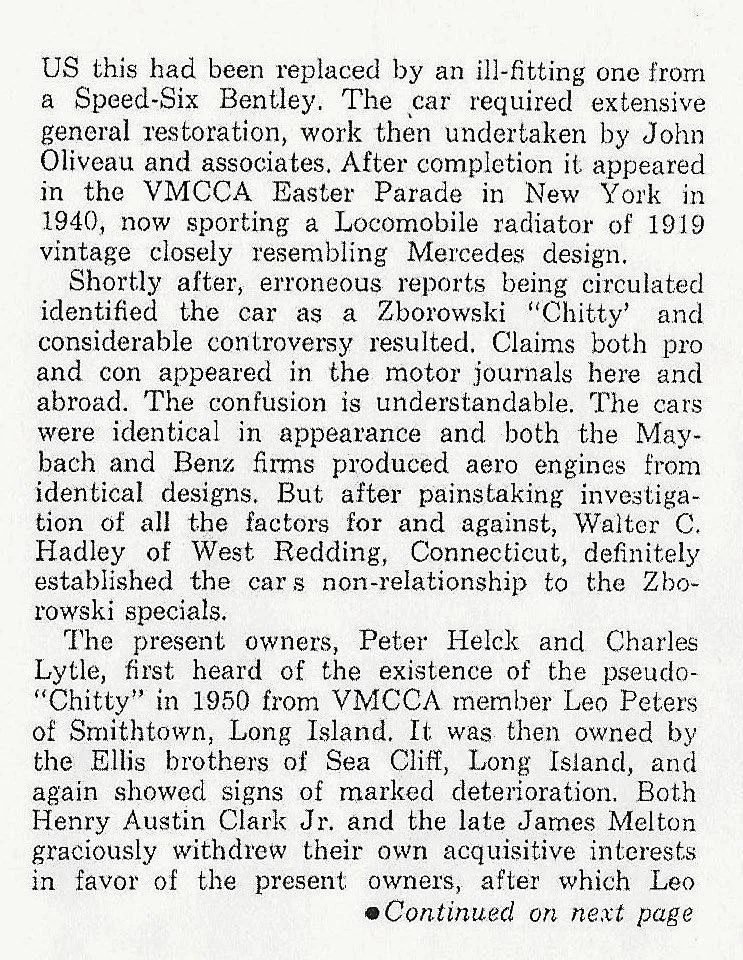
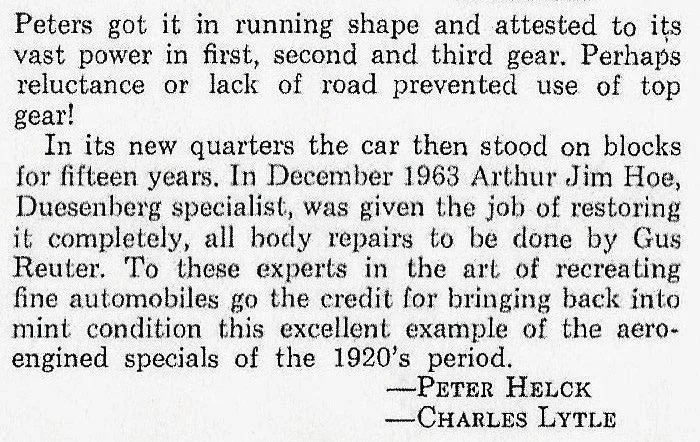
George, that is a nice verbal rendition of this British made special! Thanks for your posting. I would like to put my eyes on that race car and appreciate it similar to my reverence to Ab Jenkins and the Mormon Meteor here in Utah. Is the Lytle-Helck Special hidden away somewhere, out of site, or is there possibly any current history that can be added to that information you kindly posted?
Al
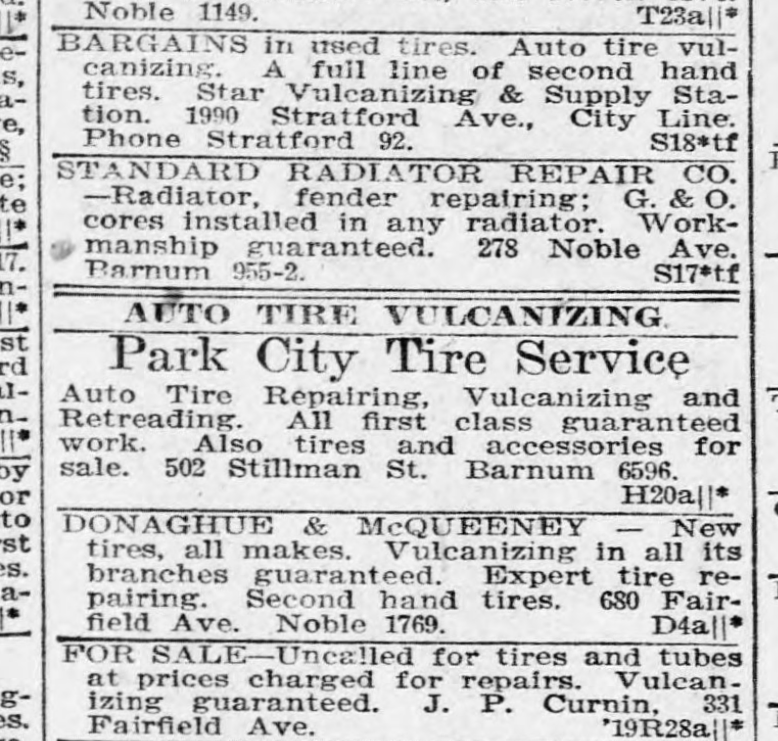
It looks like G & O sold on the secondary market too. From 1920 (2nd ad down):

Thanks to Google, I took a quick and short crash course on German Silver and am now a bit more knowledgeable on that subject. This material has no silver in it and was developed in Germany in the 19th century. It is actually a good material that is used a lot in jewelry and kitchen utensils as well as in high end radiators from the teens to mid twenties. It is made up of a mix of copper, zinc and nickel. German Silver should not be treated polished or cleaned as you would a Silver alloy. One of the best or easiest ideas for renewing the silver like gloss is a 1 to 1 mixture of water and sodium bicarbonate. Soft cloth wetted with this solution and, like brass or copper,........elbow grease. If this needs to be "supercharged" add a bit of white vinegar. German Silver is very good for holding a shine and resisting tarnish, but over time it will require work. There is also a couple of other remedies but I will start with what looks to be the easiest first. If you have other or additional ideas, please share. One last thought on what the above radiator is. I now think it is formed from German Silver. I see no places where conventional Nickel plating may have rubbed to expose the brass underneath. The under structure appears the same even in locations where assembly and solder work is plentiful. I am anxious to get this radiator "tuned up".
Al
Here are a few remedies that can be used to clean and polish Brass and most likely German Silver.
Al
If you're in a time bind or want to save some cash and not shell out for a brass-specific cleaner, there are a number of homemade options that can get your brass back to gleaming.
Squirt some ketchup on the brass and let it sit for a while. After a half an hour or so — preferably a full hour — has passed, use a soft, damp cloth or soft toothbrush to rub the brass item or brass jewelry clean. Once you have removed the buildup, rinse and wipe away the ketchup with a clean cloth and dry the brass.
Cut a lemon in half, remove the flesh, and apply salt on the inside. Rub the brass piece with this lemon, reapplying salt as needed. Clean and dry the brass with a soft cloth.
For the toughest stains and buildup, make a paste with vinegar, flour, and salt, ensuring that the salt is completely dissolved. Rub the mixture generously onto the brass item and let it sit for about 10-20 minutes. Rinse and wipe with a damp clean cloth.
These two cleaning agents, when united, create a cleaner that’s tough enough to remove brass buildup with ease. Make a paste of lemon juice and baking soda and apply to brass with a clean cloth. Polish and buff away the grime, and wipe away any residue with a wet cloth. Dry your brass item with a second clean cloth.
If you'd rather go the conventional route, opt for a natural, plant-based cleaner or brass polish to protect your fixture or item from harsh, corrosive ingredients.
The easiest cleaning method we know of is to simply make a mixture of soap and warm water to clean your brass piece or brass jewelry. Soak the brass in this mixture soapy water for a while, then use a soft cloth and a soft-bristled toothbrush to work out the buildup and stains. Rinse and wipe dry with a clean cloth.
To join in the conversation, you must be a club member.
You’re welcome to read and like every post. Members can reply and start topics of their own.