

@IttenbacherFrank
The file containes 153 pages. I went through all of them, then I prepared a short summary:
Daily report sheets filled by drivers during the 10.000 miles road test consist of two parts:
- first part started on May 24th, 1916, at 298 miles (No. 1), and ended on July 13 at 3064 mls. (No. 20).
- Second part started on July 24th, 1916, at 3216 miles (No. 1), and ended on Aug. 20th, 1916 at 14.920 mls. (No. 59).
May 2nd, 1916: Introduction and objective of 10.000 mile road test
May 27th, 1916: Description of technical items to be tested, such as:
- Ignition timing
- Transmission gears
- Pistons and baffle plates, compression ratio
- Lubrication pressure setting
- Clutch spring type
- Carburetor details
June 13th, 1916: road test preparation details, such as:
- Adding additonal lead weight to the car
- Targets for minimum speed, fuel and oil consumption
- Three-shift-arrangements
July 29th, 1916: test results:
- acceleration figures, fuel consumption and hill climbing times
- technical data: Engine size, , valve timing, carburetor setting, rear axle ratio, wheel size
August 12th, 1916: engine blown up! Connecting rod broken, came through the oil sump.
August 19th, 1916: report about the failure reason and engine repair
August 25, 1916: Detailed summary of 10.000 miles test
- 33 issues found, oil- and fuel consumption figures
Sept. 14th, 1916: details about transmission repair
November 25, 1916: summary of 9-day test run for comparing R8 with M7 car
Performance evaluation of:
- Berling two-spark magneto
- Heated inlet manifold
- Different carburetor types
- Clutch test and modifications
- Camshaft timing gears
- Brake lining
- Oil pressure regulating valve and crankcase breather

Do you know which model this became, or what became of these tests? If you need any insights into the courses let me know; I've driven many of the routes. Sport Hill Road in Easton is no joke (probably a reason they tried it in June not January). In one case they probably went right by my former property except the house itself was built in 1921 so wouldn't have been there at the time...Neat!
Unfortunately there is no photo of this R8 car, does anyone of you know how it looked like?
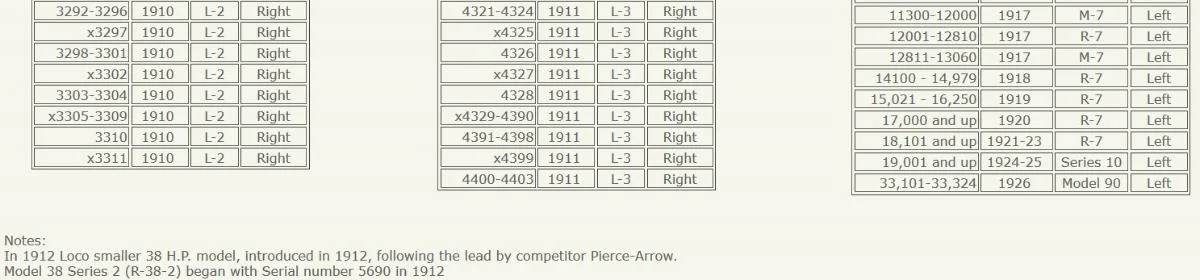
What model was that? R were the smaller 38Hp cars, in contrast to the M which were the 48HP. From the chassis production records it looks like the R7 was produced until 1923, but the 1920 book of the Locomobile already doesn't list the model 38 any more. Maybe the R8 was a prototype which never made it into serial production?
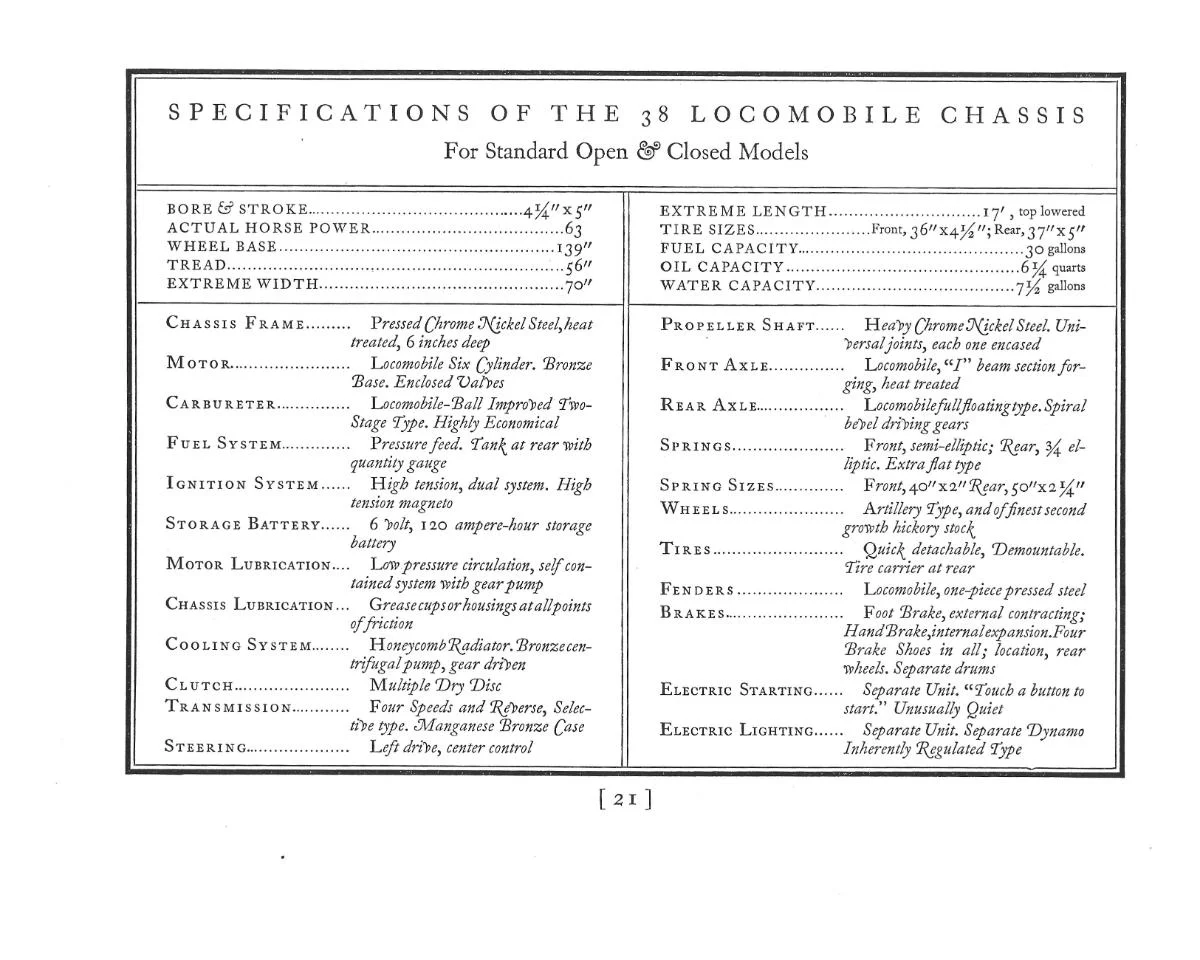
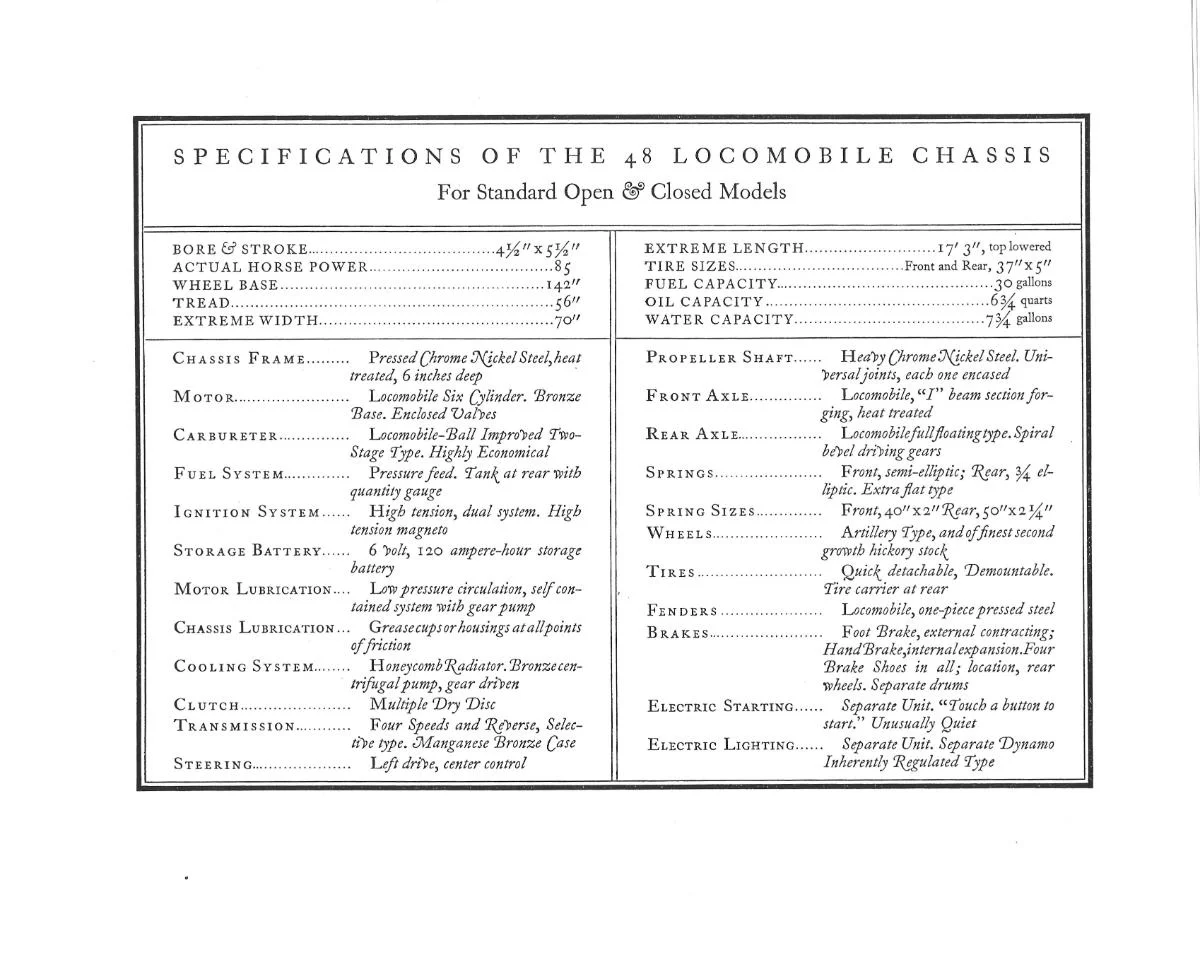
In the report of July 29th, 1916, the engine size is mentioned: 4 1/4" x 5 1/2". This is equal to 468 cui which is bigger than the model 38 (it was 4 1/4" x 5" = 425 cui) and smaller than the model 48 (4 1/2" x 5 1/2" = 525 cui).
Any comments?
prewarnutOct 16, 2022Do you know which model this became, or what became of these tests? If you need any insights into the courses let me know; I've driven many of the routes. Sport Hill Road in Easton is no joke (probably a reason they tried it in June not January). In one case they probably went right by my former property except the house itself was built in 1921 so wouldn't have been there at the time...Neat!
Oh, that is great, you must explain more about these test routes, the gradients, ...
The road conditions in 1916 must have been terrible, using chains in summer time?!?
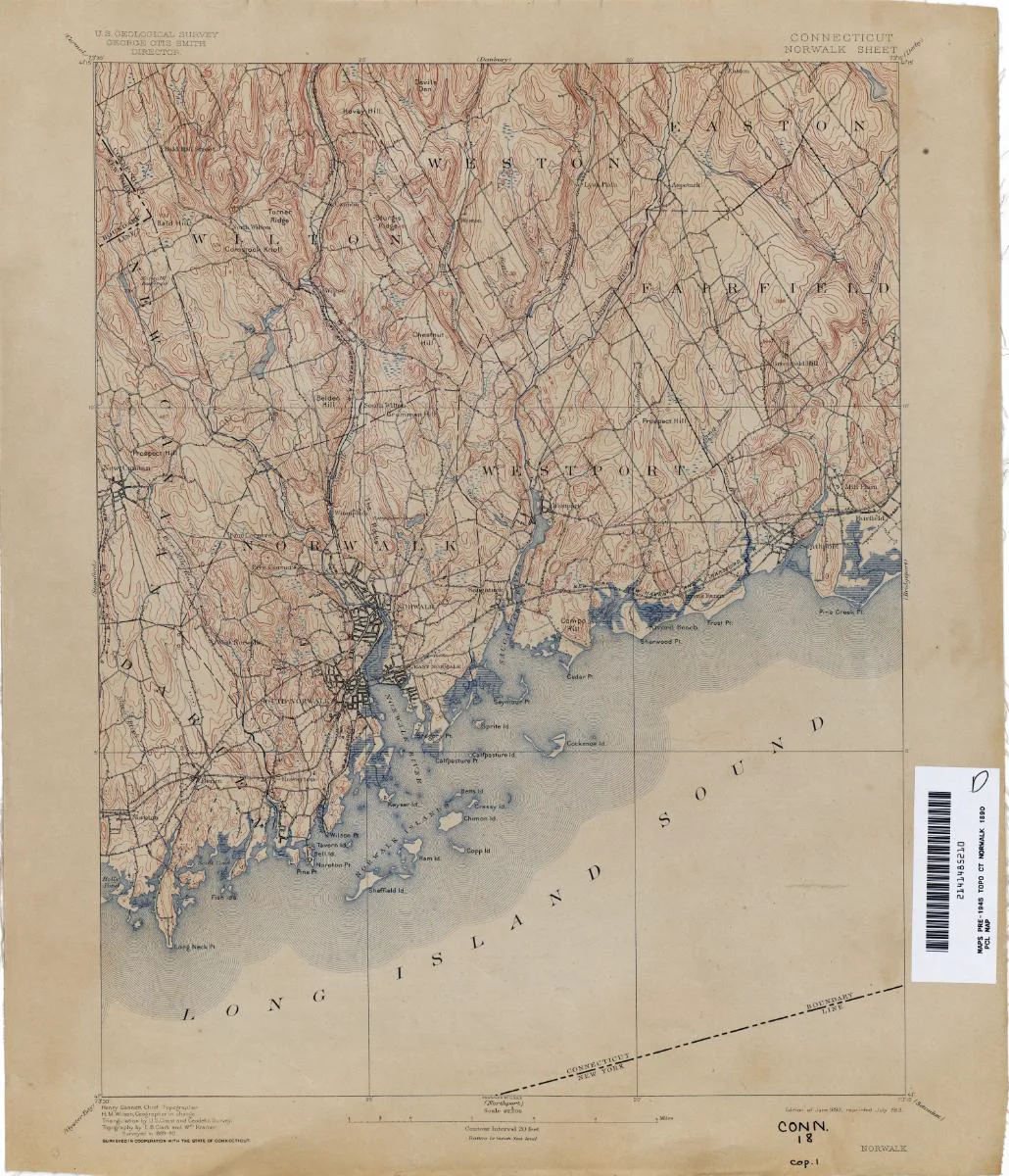
I've done some reading in he past regarding CT roads. CT route numbers were established in the 1920s but many roads were in place and can be figured out (obviously the state was early settled and developed). CT has deep river valleys draining principally north-south so many routes east-west, especially in the southwest part of the state are difficult. Roads would have to follow the valleys. Still in central-west of the state like Waterbury, Roxbury, Middlebury and out to Danbury roads were built going right up/down the side of the hills. I found two topographical maps to show (printed just the decade before so current to the age mentioned. The web address: https://maps.lib.utexas.edu/maps/topo/connecticut/ has more. You can see roads laid out crossing the topography lines.
I can't find figures on the gradient of the base of Sport Hill Road (aptly named). It might be as much as 20 degrees and trust me, dangerous in snow although the town does a good job salting it. To be fair the base of the road today has been moved and widened but the old road remains in places. Note most of the testing from Bridgeport seems to take the test drivers up the road, not down and clockwise around the state. Any trip to Waterbury and back was definitely hilly. CT rises gently from sea-level to maybe 200 feet average 40 miles inland but is punctuated with higher peaks. Back to Sport Hill, see: https://eastoncourier.news/2020/05/30/the-sport-hill-races-1908/ for an interesting synopsis of the races and old photos of such. There's a few other editions highlightes to see as well. Since the Bridgeport Auto club was involved Locomobile knew darn well they needed to perform.
The engineering notes aren't good enough to work out each route but on some of the closer, shorter, earlier ones it may be possible. If I have free time I'll see if I can try.
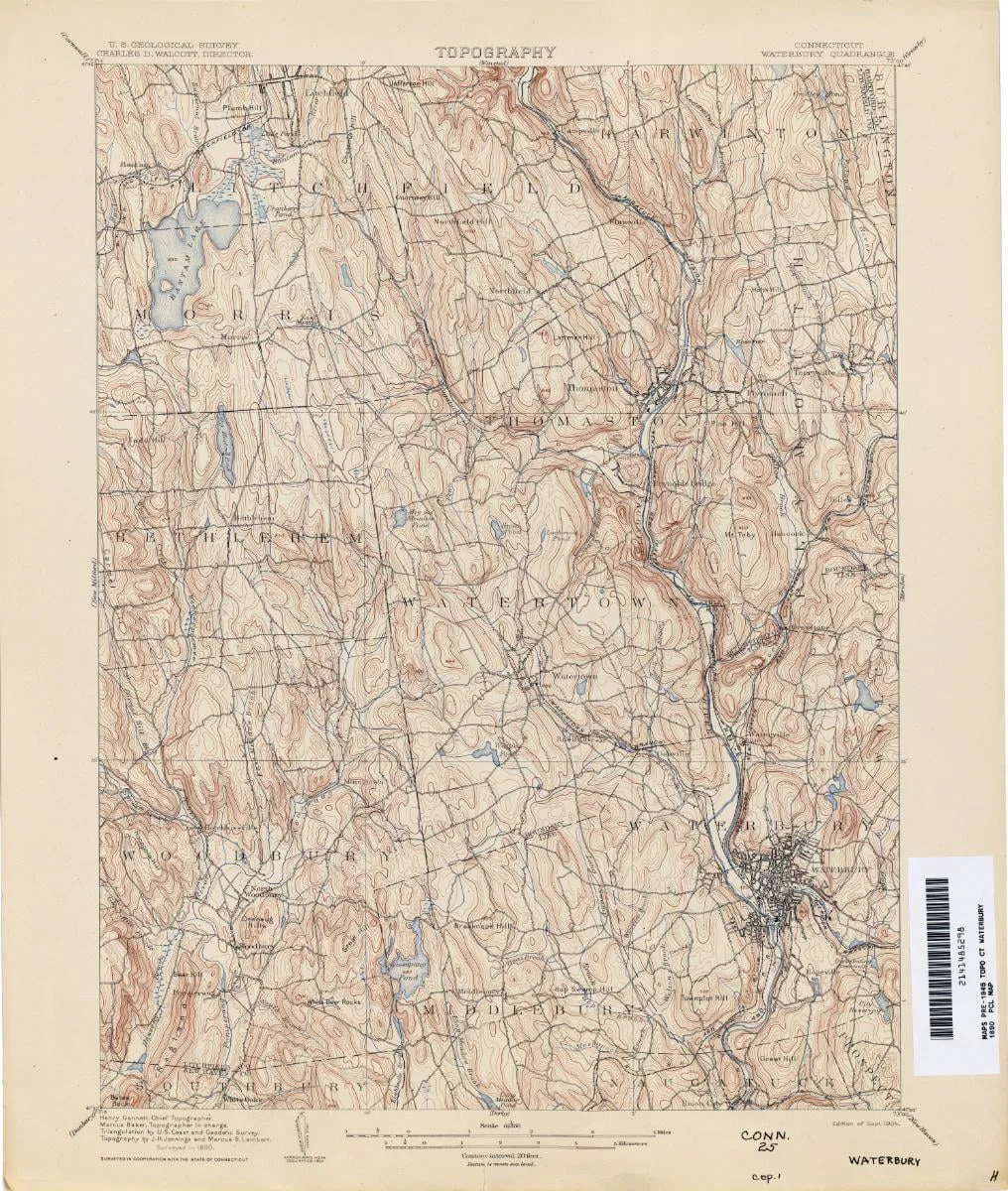
prewarnutOct 17, 2022I've done some reading in he past regarding CT roads. CT route numbers were established in the 1920s but many roads were in place and can be figured out (obviously the state was early settled and developed). CT has deep river valleys draining principally north-south so many routes east-west, especially in the southwest part of the state are difficult. Roads would have to follow the valleys. Still in central-west of the state like Waterbury, Roxbury, Middlebury and out to Danbury roads were built going right up/down the side of the hills. I found two topographical maps to show (printed just the decade before so current to the age mentioned. The web address: https://maps.lib.utexas.edu/maps/topo/connecticut/ has more. You can see roads laid out crossing the topography lines.
I can't find figures on the gradient of the base of Sport Hill Road (aptly named). It might be as much as 20 degrees and trust me, dangerous in snow although the town does a good job salting it. To be fair the base of the road today has been moved and widened but the old road remains in places. Note most of the testing from Bridgeport seems to take the test drivers up the road, not down and clockwise around the state. Any trip to Waterbury and back was definitely hilly. CT rises gently from sea-level to maybe 200 feet average 40 miles inland but is punctuated with higher peaks. Back to Sport Hill, see: https://eastoncourier.news/2020/05/30/the-sport-hill-races-1908/ for an interesting synopsis of the races and old photos of such. There's a few other editions highlightes to see as well. Since the Bridgeport Auto club was involved Locomobile knew darn well they needed to perform.
The engineering notes aren't good enough to work out each route but on some of the closer, shorter, earlier ones it may be possible. If I have free time I'll see if I can try.
Wow, amazing knowledge, thanks, I will look into the maps and the sport hill history soon.
One more question to you: In the paper of June 13, 1916, Mr. Schulz explained the target for the 10.000 mile test: "The car shall show a maximum speed on the New Haven turnpike going north not less than 55 m.p.h, going south not less than 60 m.p.h. ...".
What kind of road was that? What does that mean for the car? Was/is it a stretch where someone can expect his car to reach the maximum speed?
Thanks again, best regards Frank
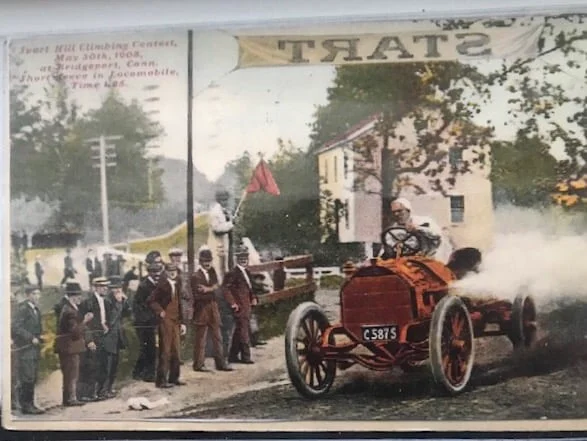
Sport Hill has a long history with Locomobile. Here’s a couple of Rppc of Locomobile races there.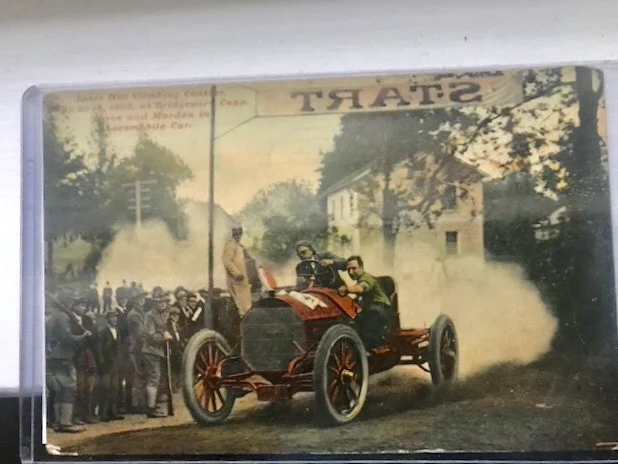
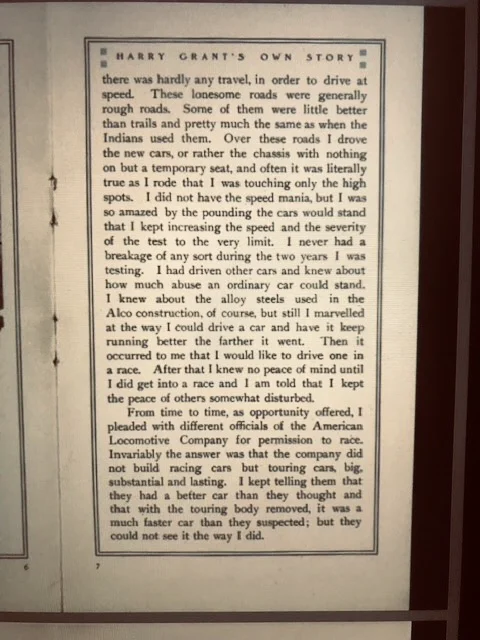
This description of the roads told by Harry Grant about Alco cars built in Providence RI. Found it a memorable passage.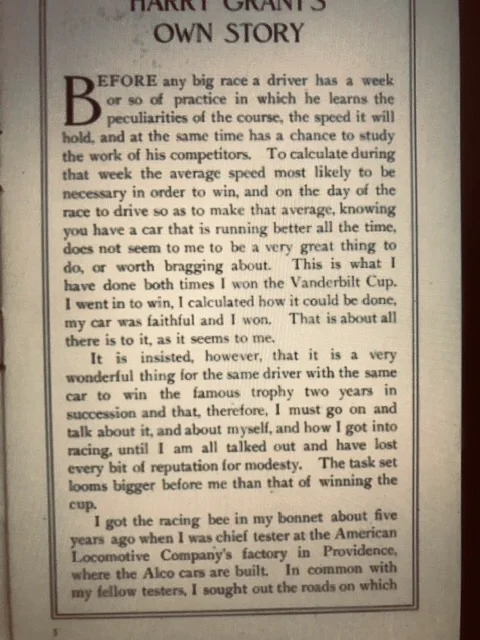
Frank, Hi, you made me look that one up (I was going to say the wrong road.....). So first off, Sport hill was dirt/gravel in 1916 as can be seen in the above colorized photo from George and also others online. It's now paved....The New Haven Turnpike became the state Route 15 (basically the Merrit Turnpike and heading north from New Haven it really morphs into the Berlin Turnpike. The original company's stock shareholders is written on paper and viewable on-line and held by Yale's library, originating in 1798. If you go to Google Maps and look at East Rock Park at the north end of New Haven, I believe the original road is labeled Hartford Turnpike by Google and begins to parallel the Berlin turnpike/Rt 15 in North Haven. I've been on that lower stretch of road and it is dead flat. The current highway of RT 15 is broad but does start to ascend some mild altitude as one works up to Berlin and past. In Berlin it becomes a drag strip from traffic light to traffic light and there used to be a place up there where one could buy aviation fuel for outwitting the guy next to you at the light. I never did that not having a big block anything at the time....
From the New England Historical Society website:
"The road began as a turnpike in October 1798, when the Hartford and New Haven Turnpike Company formed. Then opened the next year, it was one of the first turnpikes to be built on as straight a line as feasible instead of on roads that already existed.
The state paved the turnpike in 1909 after bicyclists and automobile enthusiasts lobbied for better roads. In 1920 it was then upgraded as part of a continuous paved road between the borders of New York and Massachusetts. The Hartford Courant emphasized the benefit to fans of Harvard-Yale football: “Berlin Turnpike Officially Open, Splendid Stretch of Concrete Ready for Football Crowd,” read the headline. In 1942, the state added two lanes to the turnpike."
The loop discussed in the 10,000 mile update has me slightly confused so I need to look at it more carefully. If they left Bridgeport northwest to Easton up Sport Hill (Rt 59) the problem is that once in Easton at the top of the initial rise of the road (Sport hill actually continues to rise further and further up but I think the races were at the lower section) one is blocked by the Easton reservoir on the right (east). So either they had to turn around or were committed to go all the way up to Monroe and come back south into Trumbull and east to the Nichols section of town, then back up northeast to Derby. It seems a little bit circuitous but they were off to do some decent testing. I'll think this through and perhaps can give a few scenerios on a map. I may be a bit tied up this week so it may have to wait....
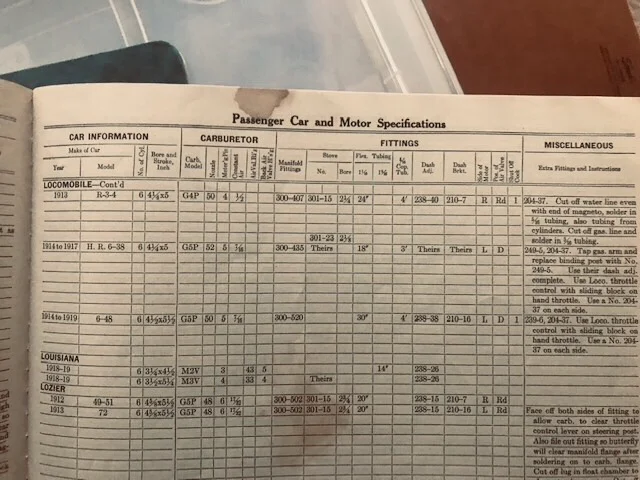
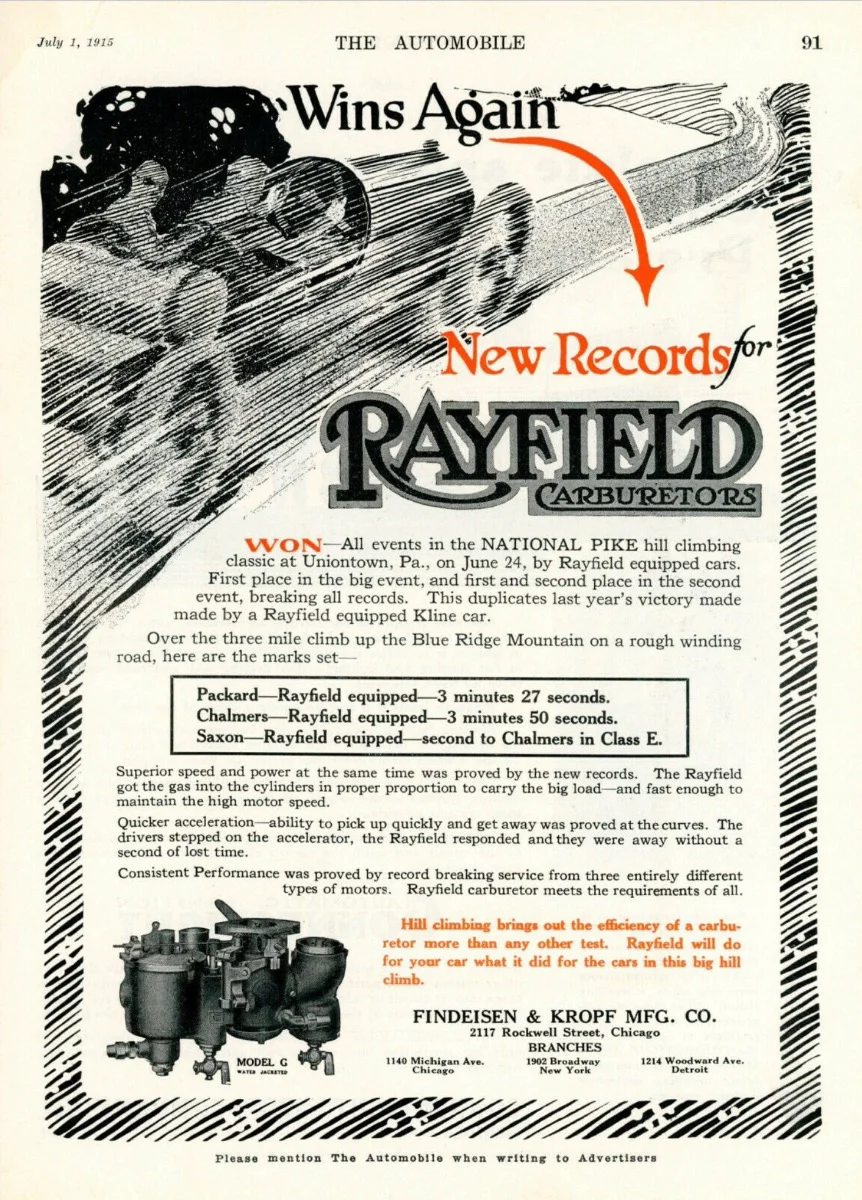
Frank, Here are a beginning look at Rayfield carburetors. I’m not an expert just an old mechanic that worked on many cars. Learned from collectors who were hand on.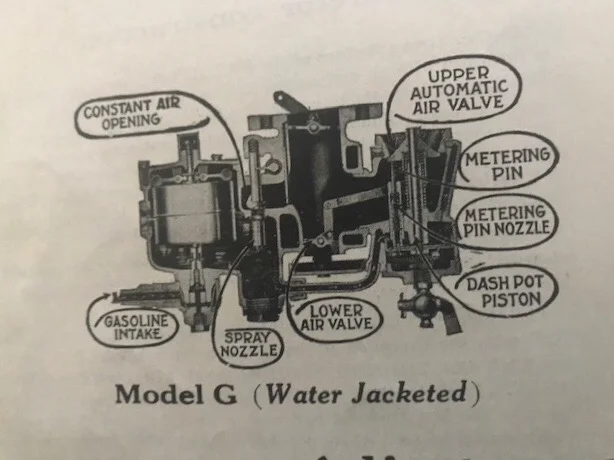

This is new territory for me. What an interesting subject, even to the Rayfield carburetor! I am going to be required to sit down,in the evening, and soak up the information slowly so I have a better feel for what took place many years ago with Locomobile!
Al
George KOct 18, 2022Frank, Here are a beginning look at Rayfield carburetors. I’m not an expert just an old mechanic that worked on many cars. Learned from collectors who were hand on.
That confirms exactly what you said: A different brand and type of carburetor, even with the parts required to install it on a Locomobile. Great find, thanks.
In the FWIW category, if I were going to replace the Locomobile carburetor, I would look much harder at Stromberg than at Rayfield.
Stromberg offered replacement type O-3 (most common usage Lincoln) for both the 38 and the 48, with Stromberg factory calibrations specifically for the Locomobile.
Stromberg suggested a main venturi of 1 1/8 inch for the 38, and 1 1/4 inch for the 48.
More parts are available for the Stromberg, and more folks that understand them than the Rayfield.
Jon.
Dear Jon, thanks for this valuable info. Perhaps we continue this topic on the "engine-related topics"-page?
Ittenbacher FrankOct 16, 2022The file containes 153 pages. I went through all of them, then I prepared a short summary:
Daily report sheets filled by drivers during the 10.000 miles road test consist of two parts:
- first part started on May 24th, 1916, at 298 miles (No. 1), and ended on July 13 at 3064 mls. (No. 20).
- Second part started on July 24th, 1916, at 3216 miles (No. 1), and ended on Aug. 20th, 1916 at 14.920 mls. (No. 59).
May 2nd, 1916: Introduction and objective of 10.000 mile road test
May 27th, 1916: Description of technical items to be tested, such as:
- Ignition timing
- Transmission gears
- Pistons and baffle plates, compression ratio
- Lubrication pressure setting
- Clutch spring type
- Carburetor details
June 13th, 1916: road test preparation details, such as:
- Adding additonal lead weight to the car
- Targets for minimum speed, fuel and oil consumption
- Three-shift-arrangements
July 29th, 1916: test results:
- acceleration figures, fuel consumption and hill climbing times
- technical data: Engine size, , valve timing, carburetor setting, rear axle ratio, wheel size
August 12th, 1916: engine blown up! Connecting rod broken, came through the oil sump.
August 19th, 1916: report about the failure reason and engine repair
August 25, 1916: Detailed summary of 10.000 miles test
- 33 issues found, oil- and fuel consumption figures
Sept. 14th, 1916: details about transmission repair
November 25, 1916: summary of 9-day test run for comparing R8 with M7 car
Performance evaluation of:
- Berling two-spark magneto
- Heated inlet manifold
- Different carburetor types
- Clutch test and modifications
- Camshaft timing gears
- Brake lining
- Oil pressure regulating valve and crankcase breather
Frank ,for some reason the link opens but I can’t get the data. This is the first report of a broken connecting rod of a Locomobile engine I ever heard of. Sure would like to see a photo of that damage.
George KOct 20, 2022Frank ,for some reason the link opens but I can’t get the data. This is the first report of a broken connecting rod of a Locomobile engine I ever heard of. Sure would like to see a photo of that damage.
George, can you access all 153 pages? They are all mixed, and a few pages are double. I printed them, then sorted them by date, and the daily test reports by accumulated miles. Now I can easily refer to single pages and find the details. I will report more when I find the time.
You want to know more about the broke conrod? The details are all in the reports. No photos but descriptions. No. 4 rod was broken at the upper end, causing damage to crankcase (both sides) and oil pan. The related piston also broke up in pieces. Report Aug. 19, 1916. I feel it is no small wonder that this happened quite late and only once, after they were constantly playing around with the oil pressure relieve valve. They got a target for the oil consumption: They shall get below 300 mpg. I will try to sumarize these issues later.
On August 14, Mr. Roos (the chief engineer) requested to "have an extra connecting rode made up right away, installing a new piston and using if possible the old cylinder and patching up the crankcase, and continue the test until 10.000 miles have been passed."
Ittenbacher FrankOct 20, 2022George, can you access all 153 pages? They are all mixed, and a few pages are double. I printed them, then sorted them by date, and the daily test reports by accumulated miles. Now I can easily refer to single pages and find the details. I will report more when I find the time.
You want to know more about the broke conrod? The details are all in the reports. No photos but descriptions. No. 4 rod was broken at the upper end, causing damage to crankcase (both sides) and oil pan. The related piston also broke up in pieces. Report Aug. 19, 1916. I feel it is no small wonder that this happened quite late and only once, after they were constantly playing around with the oil pressure relieve valve. They got a target for the oil consumption: They shall get below 300 mpg. I will try to sumarize these issues later.
Thanks Frank
alsfarmsOct 18, 2022This is new territory for me. What an interesting subject, even to the Rayfield carburetor! I am going to be required to sit down,in the evening, and soak up the information slowly so I have a better feel for what took place many years ago with Locomobile!
Al
Al , I forgot to include the other page of Rayfield carburetors. I see you could get a setup for a 30hp. Just something to ponder while reading about aftermarket carburetors.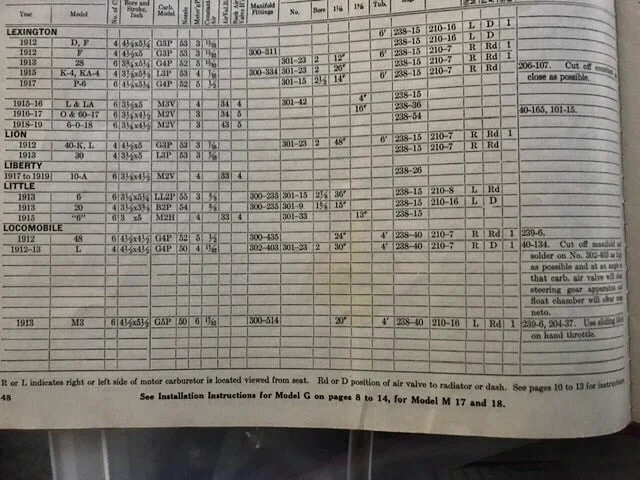
prewarnutOct 18, 2022Frank, Hi, you made me look that one up (I was going to say the wrong road.....). So first off, Sport hill was dirt/gravel in 1916 as can be seen in the above colorized photo from George and also others online. It's now paved....The New Haven Turnpike became the state Route 15 (basically the Merrit Turnpike and heading north from New Haven it really morphs into the Berlin Turnpike. The original company's stock shareholders is written on paper and viewable on-line and held by Yale's library, originating in 1798. If you go to Google Maps and look at East Rock Park at the north end of New Haven, I believe the original road is labeled Hartford Turnpike by Google and begins to parallel the Berlin turnpike/Rt 15 in North Haven. I've been on that lower stretch of road and it is dead flat. The current highway of RT 15 is broad but does start to ascend some mild altitude as one works up to Berlin and past. In Berlin it becomes a drag strip from traffic light to traffic light and there used to be a place up there where one could buy aviation fuel for outwitting the guy next to you at the light. I never did that not having a big block anything at the time....
From the New England Historical Society website:
"The road began as a turnpike in October 1798, when the Hartford and New Haven Turnpike Company formed. Then opened the next year, it was one of the first turnpikes to be built on as straight a line as feasible instead of on roads that already existed.
The state paved the turnpike in 1909 after bicyclists and automobile enthusiasts lobbied for better roads. In 1920 it was then upgraded as part of a continuous paved road between the borders of New York and Massachusetts. The Hartford Courant emphasized the benefit to fans of Harvard-Yale football: “Berlin Turnpike Officially Open, Splendid Stretch of Concrete Ready for Football Crowd,” read the headline. In 1942, the state added two lanes to the turnpike."
The loop discussed in the 10,000 mile update has me slightly confused so I need to look at it more carefully. If they left Bridgeport northwest to Easton up Sport Hill (Rt 59) the problem is that once in Easton at the top of the initial rise of the road (Sport hill actually continues to rise further and further up but I think the races were at the lower section) one is blocked by the Easton reservoir on the right (east). So either they had to turn around or were committed to go all the way up to Monroe and come back south into Trumbull and east to the Nichols section of town, then back up northeast to Derby. It seems a little bit circuitous but they were off to do some decent testing. I'll think this through and perhaps can give a few scenerios on a map. I may be a bit tied up this week so it may have to wait....
I found the best source for understanding the roads which were used for the performance tests: The test-summary by Mr. Schulz dated July 29th, 1916:
New Haven Turnpike for acceleration and top speed.
Derby-New Haven loop: exactly 37.5 miles. (a bit earlier he wrote: The loop shall be Bridgeport-Nichols-Derby-New Haven-Bridgeport. Can you confirm that loop distance could be 37.5 mls? Today's google says 43 miles.
A bridge was used for the start of the hill climbing tests up to sport hill.
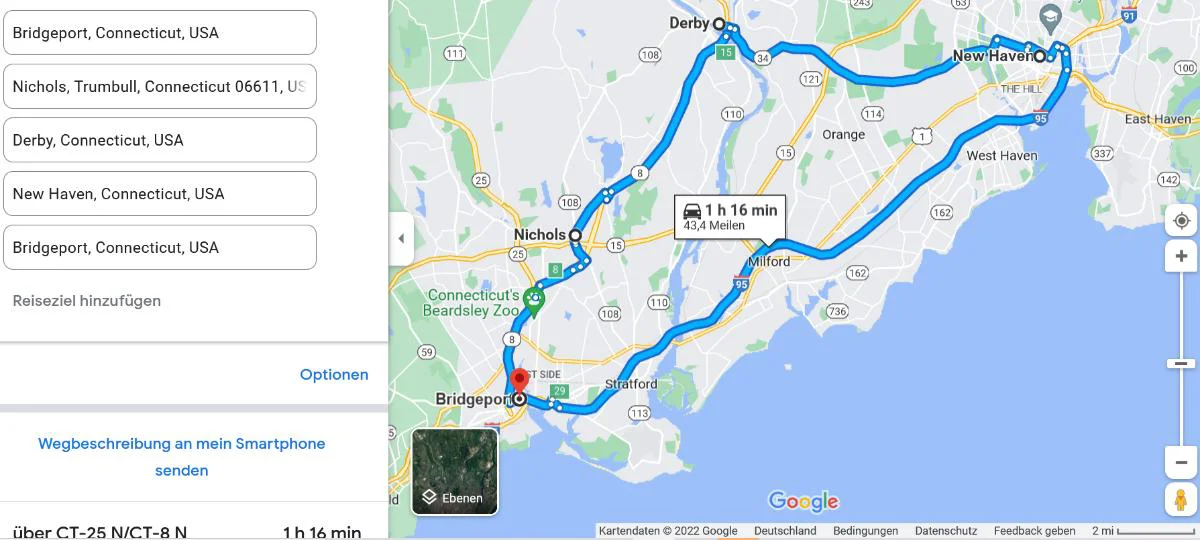
Here are some parts of the test, sumarized by the research engineer Mr. Adolph Rosner. He reported to assistant engineer A.C.Schulz, and Mr. Schulz reported to Delmar G. (Barney) Roos, who signed papers in 1916 with "research engineer" and in 1917 with "Asst. Chief Engineer". Roos was the one who took decisions for technical modifications. Riker was the chief engineer and only received a few copies, obviously no details.

To join in the conversation, you must be a club member.
You’re welcome to read and like every post. Members can reply and start topics of their own.