
GJ
@gjlundeen

Do you have any idea how many miles that your Locomobile has been driven with the clutch modification/conversion you describe? Are all the throw-out fits nice and smooth to allow for zero binding during applied pressure on the clutch pedal?
Al
It is a long story. After clutch replacement and using the car for a few hundred miles I had a noise coming from the clutch. The fellow that did the work has passed away unfortunately; so, I don't have much information on what they did other than replacing 4 of the friction discs in the clutch and 3 flexible discs for the front u joint with conveyor belting. It worked well until the noise, so we took out the clutch and took it apart finding a bolt had come loose from the output shaft that attaches to the flexible discs on the front u joint, an easy fix. But in the process, we also found that the tail u joint on the clutch that had been improvised to mate with the block style u joint that was used with the 1915 transmission was not robust and would eventually fail. A close friend and expert designed the new u joint set up but, in the process, we went from three of the flexible front discs in the u joint to two. We did this so as not modify the output shaft. Removing one of the 3/8" disc in the joint gave enough clearance for the new proper u joint (we have also thought that we may have to machine off 3/8" of the splined output shaft from the clutch and put back the third flexible disc in the front u joint). Locomobile used both styles front u joints 2 disc and 3 discs with this clutch looking at the owner's manuals that I have. Our thinking is that the material used for the flexible u joint discs in the front made from modern conveyor belt material is not as flexible as the original style rubber impregnated cloth causing the jerky engagement. Before removing the clutch again, I am trying to get some additional information as to the factory parts, dimensions, and materials used if anyone has them. I look forward to your reply. Thanks Greg Lundeen

Dear Everitt,
I am sorry to read about your clutch problems. I am a bit confused what you write about the "flexible discs for the U-joint". Originally there was nothing in the drive train made of rubber, leather or such flexible material. Locomobile changed the design of the T-joint to the universal joint. Both are made of metal, just different design. You can see more detains in the thread "https://forums.aaca.org/topic/372378-locomobile-model-48-and-38-engine-related-topics/page/13/
Here you see the later version with universal joints, as it came from the factory in 1921.
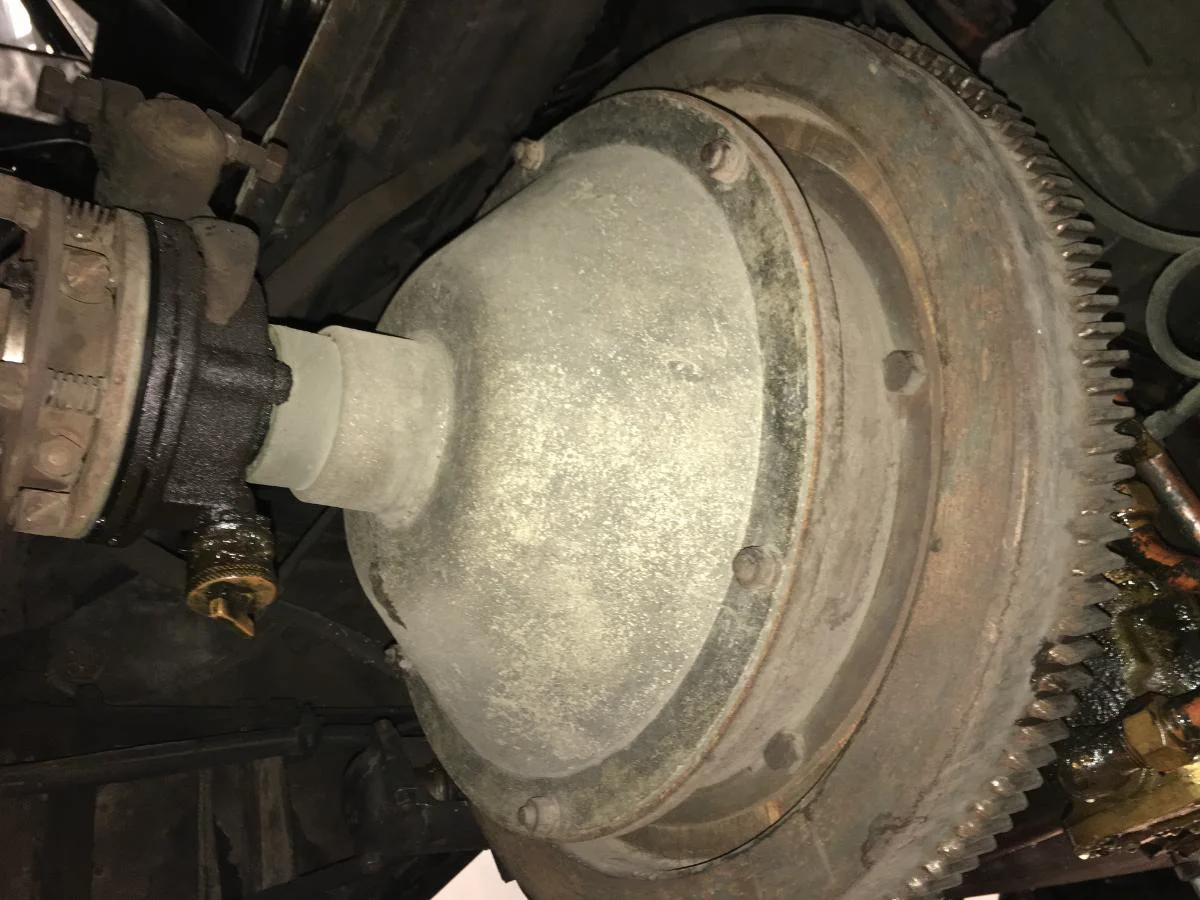
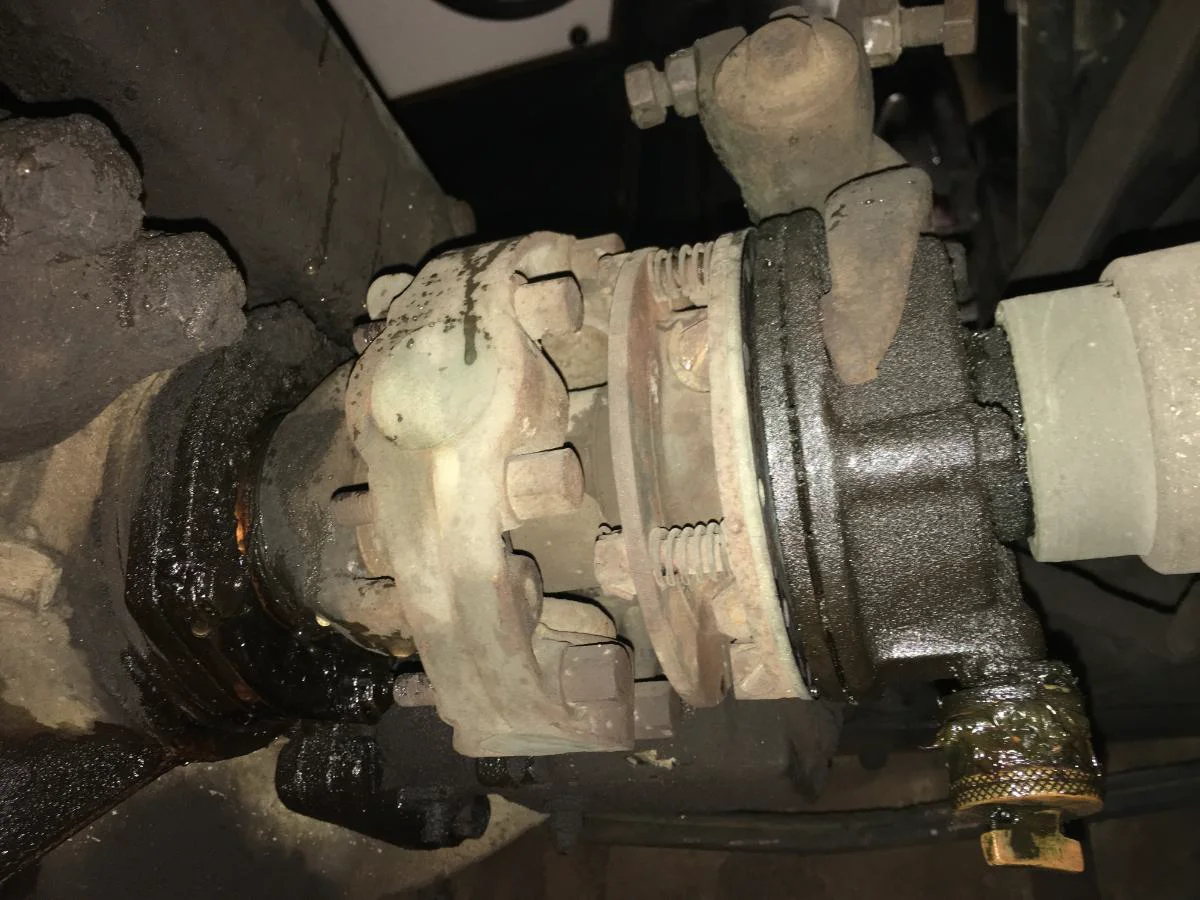
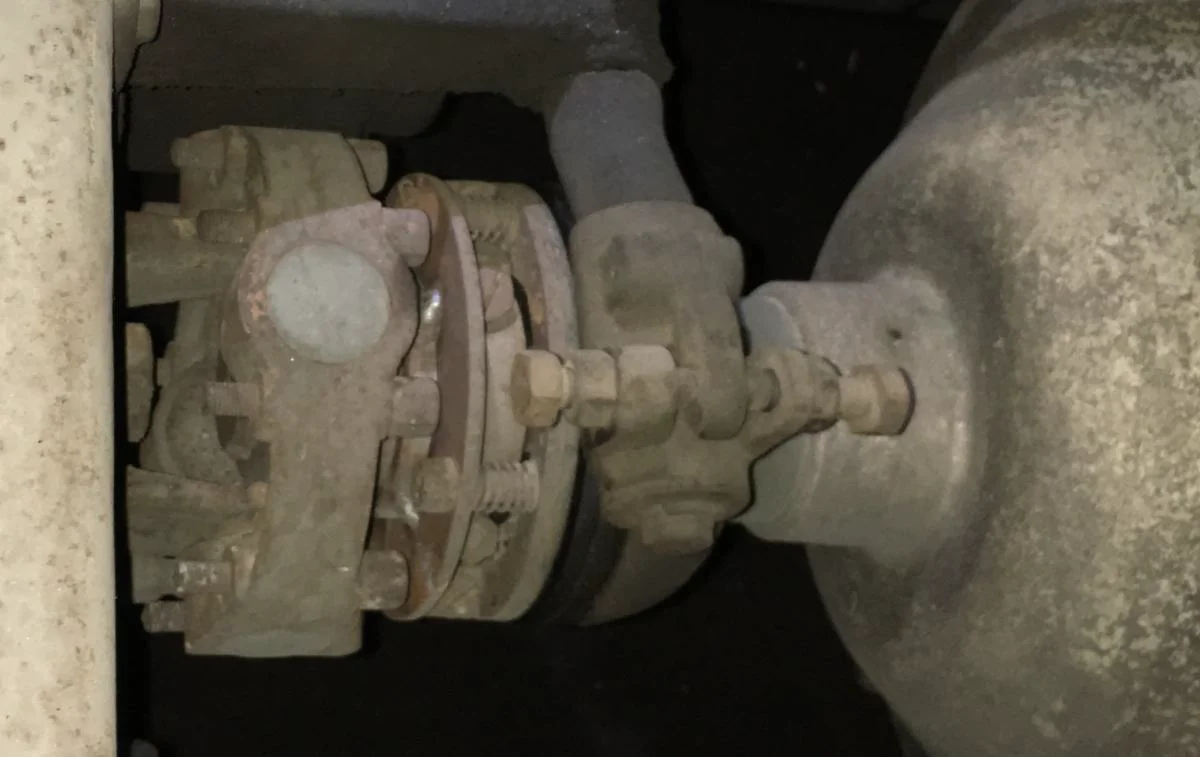
Thanks for the reply. When Loco went to the multiple disc clutch the clutch inside the case had a front and rear block style u joint. In 1915or 16 the front u joint became three flexible disc similar to a rag joint and for a while only had two flexible discs. I have drawings from owners manuals. When they changed to the flex disc they also went to the yoke style joint you pictured. I have the later clutch with the front flexible join but a 1915 transmission that mated with the block type and we changed it to a modern style yoke u joint using a Dodge u joint. I am looking for anyone who has the measurements for the steel and friction clutch discs and the flex discs. Thanks again Greg Lundeen.
EverittJun 19, 2024Thanks for the reply. When Loco went to the multiple disc clutch the clutch inside the case had a front and rear block style u joint. In 1915or 16 the front u joint became three flexible disc similar to a rag joint and for a while only had two flexible discs. I have drawings from owners manuals. When they changed to the flex disc they also went to the yoke style joint you pictured. I have the later clutch with the front flexible join but a 1915 transmission that mated with the block type and we changed it to a modern style yoke u joint using a Dodge u joint. I am looking for anyone who has the measurements for the steel and friction clutch discs and the flex discs. Thanks again Greg Lundeen.
can you share the drawings from the manual, please?
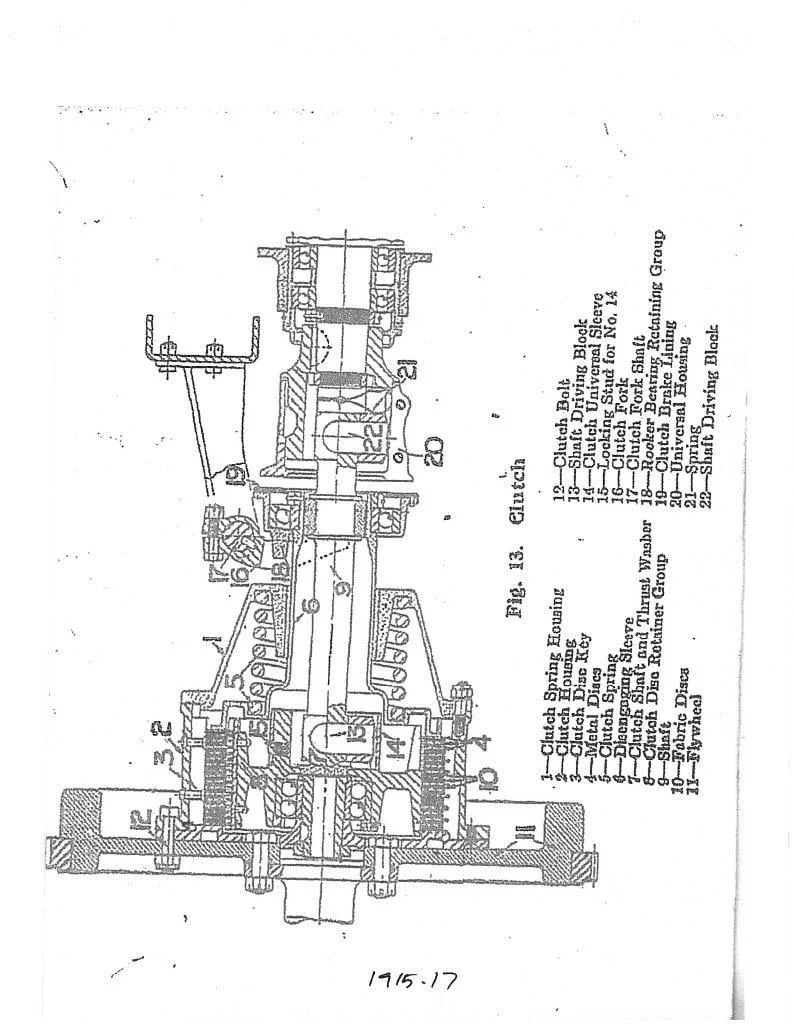
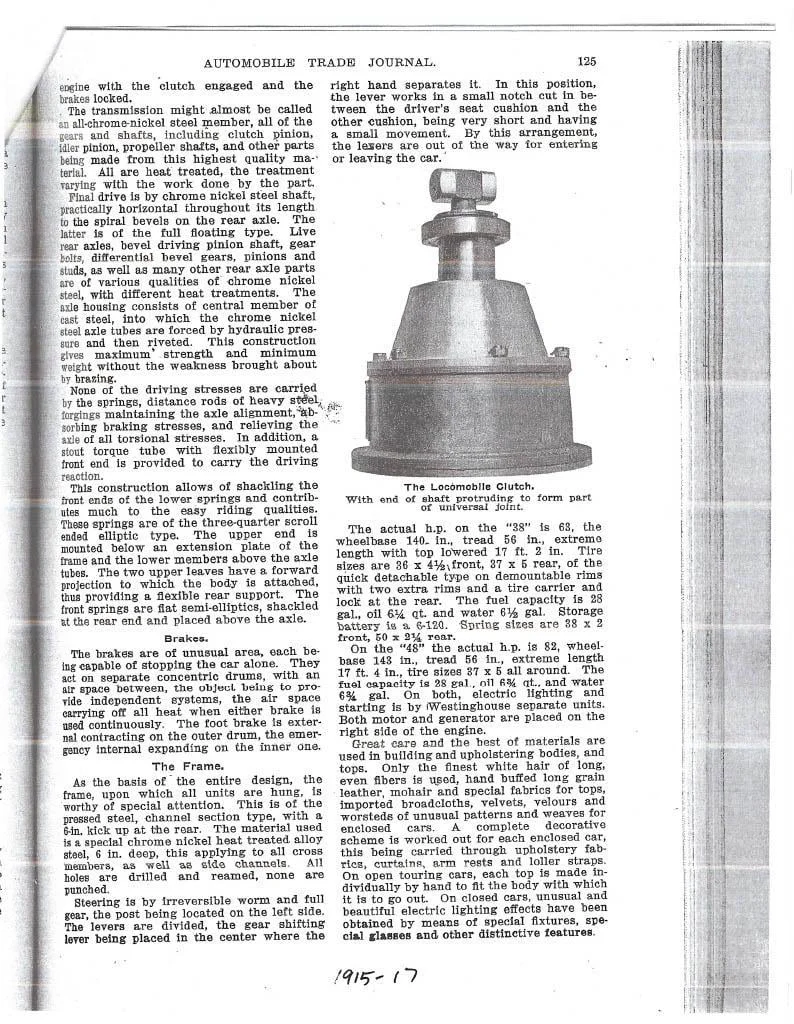
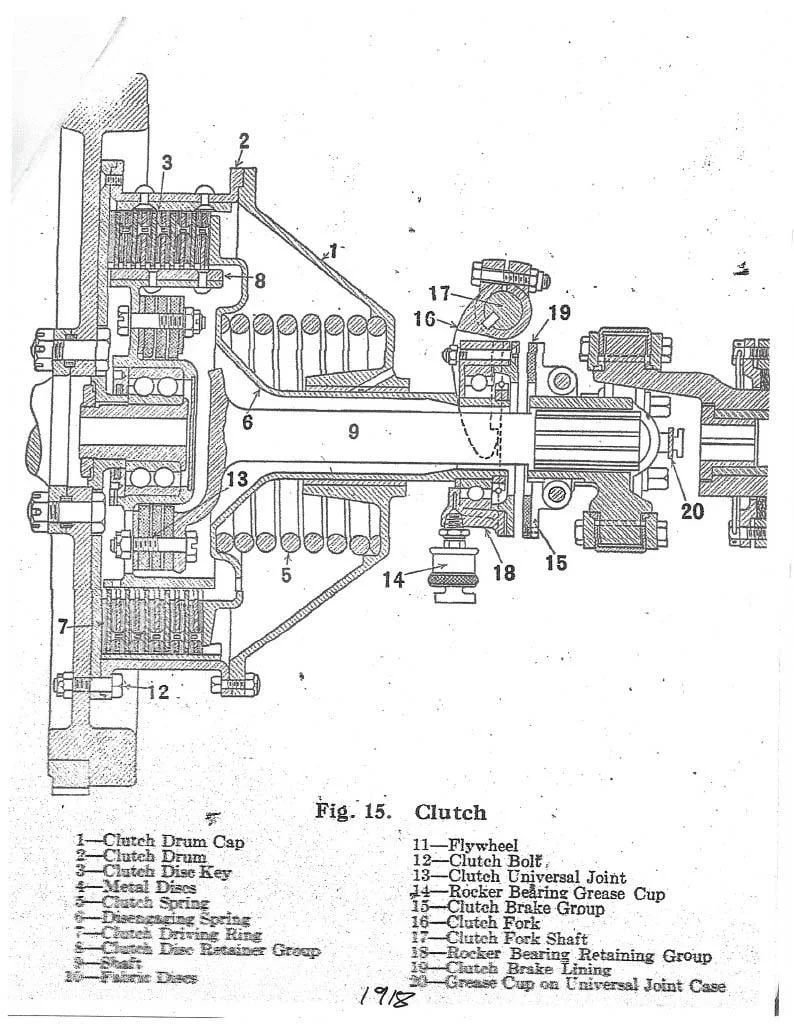
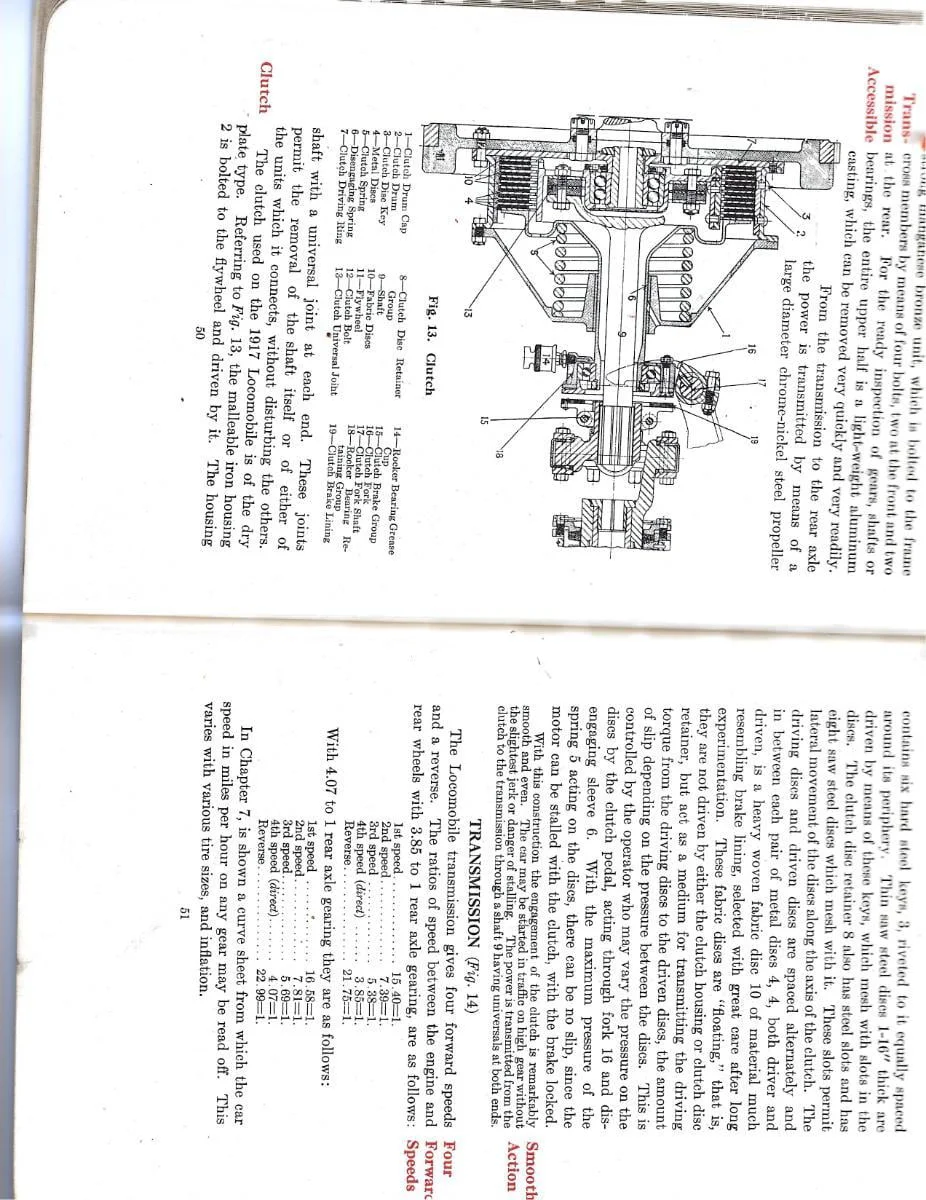
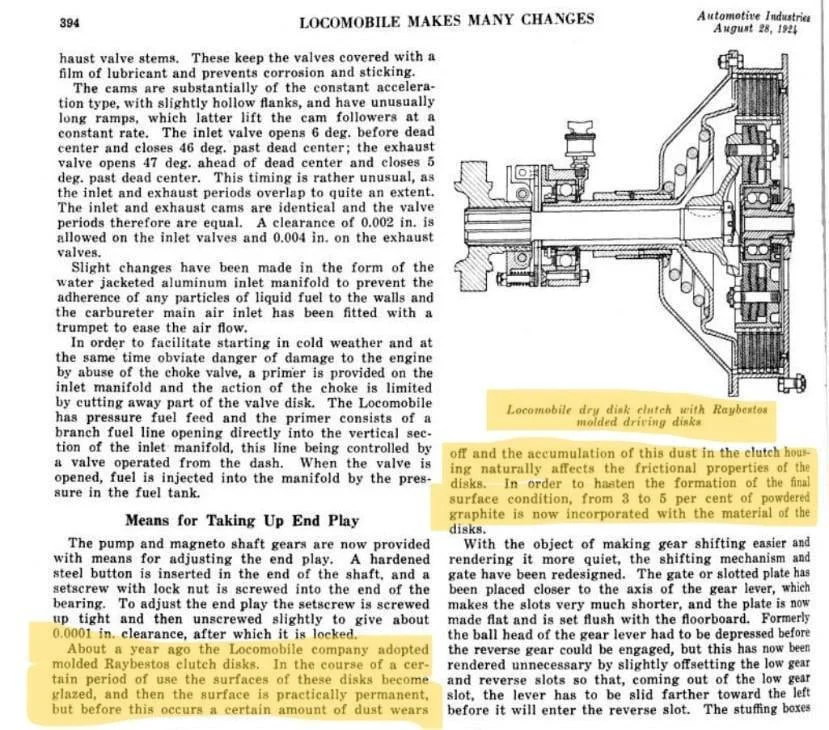
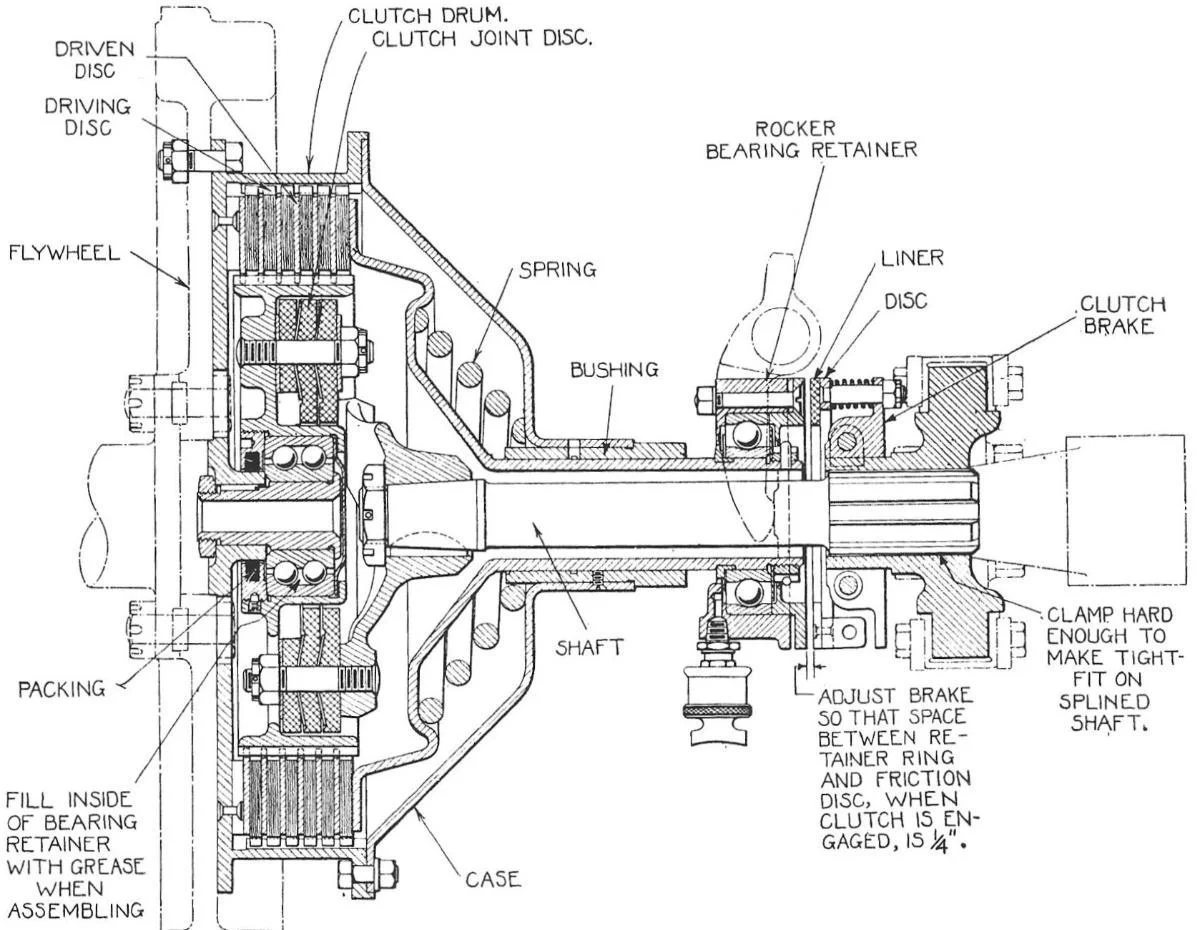
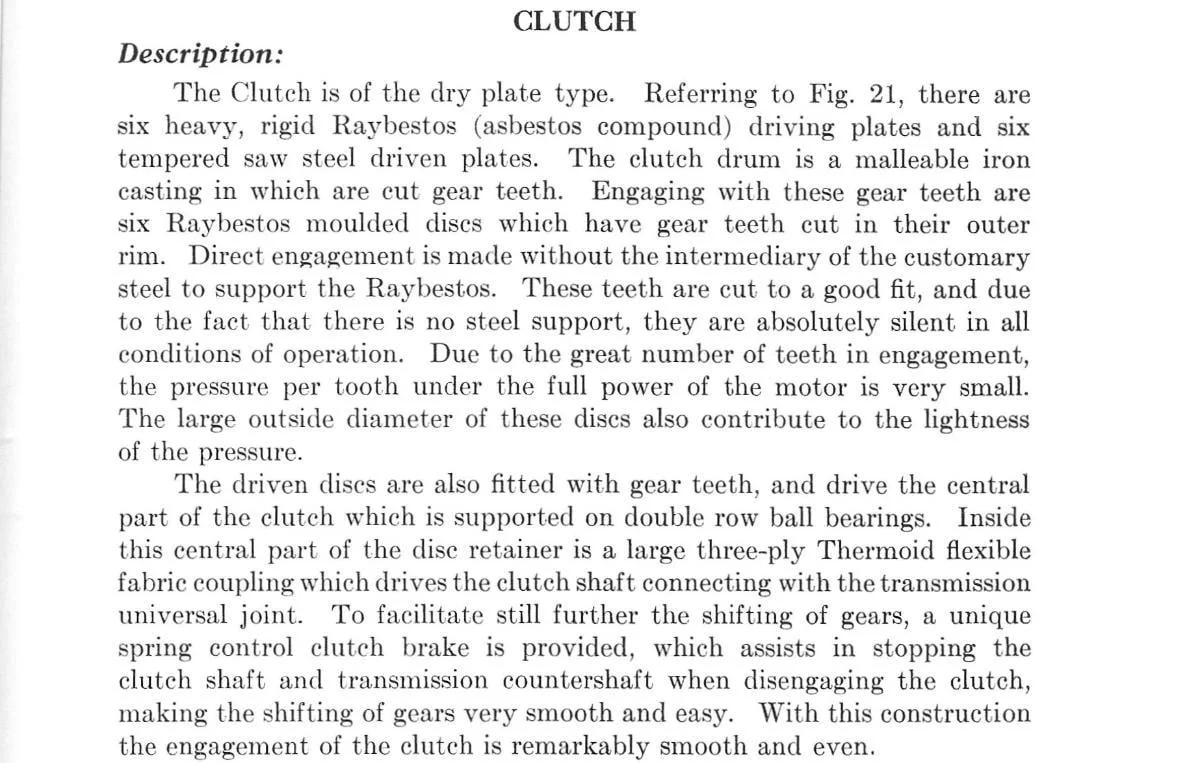
Hi Frank, here are some drawings that you requested from some of the Locomobile operator manuals I have. The first two are for the block style joint and the third shows three of the flexible discs representing the front U joint and the fourth only has two of the flexible joints. Right now, what is being used is 3/8" conveyor type belting cut and hole punched to size. I have a source for a more original material from a local restoration shop. I still would like to find out the dimensions of all the discs if someone has them. I hope this explains what I have posted. I would be pleased to talk on the phone too, 763-350-1163. All of my pictures that I have are in a pdf format and it is difficult for me to change over to a jpg.
Thanks Greg Lundeen (Everitt somehow got to be my posted name, I have a 1910 Everitt)
Hello Greg,
Could you please add what year manual each of your pictures are from? I hope it will help me to keep your stated issue straight in my mind.
Al
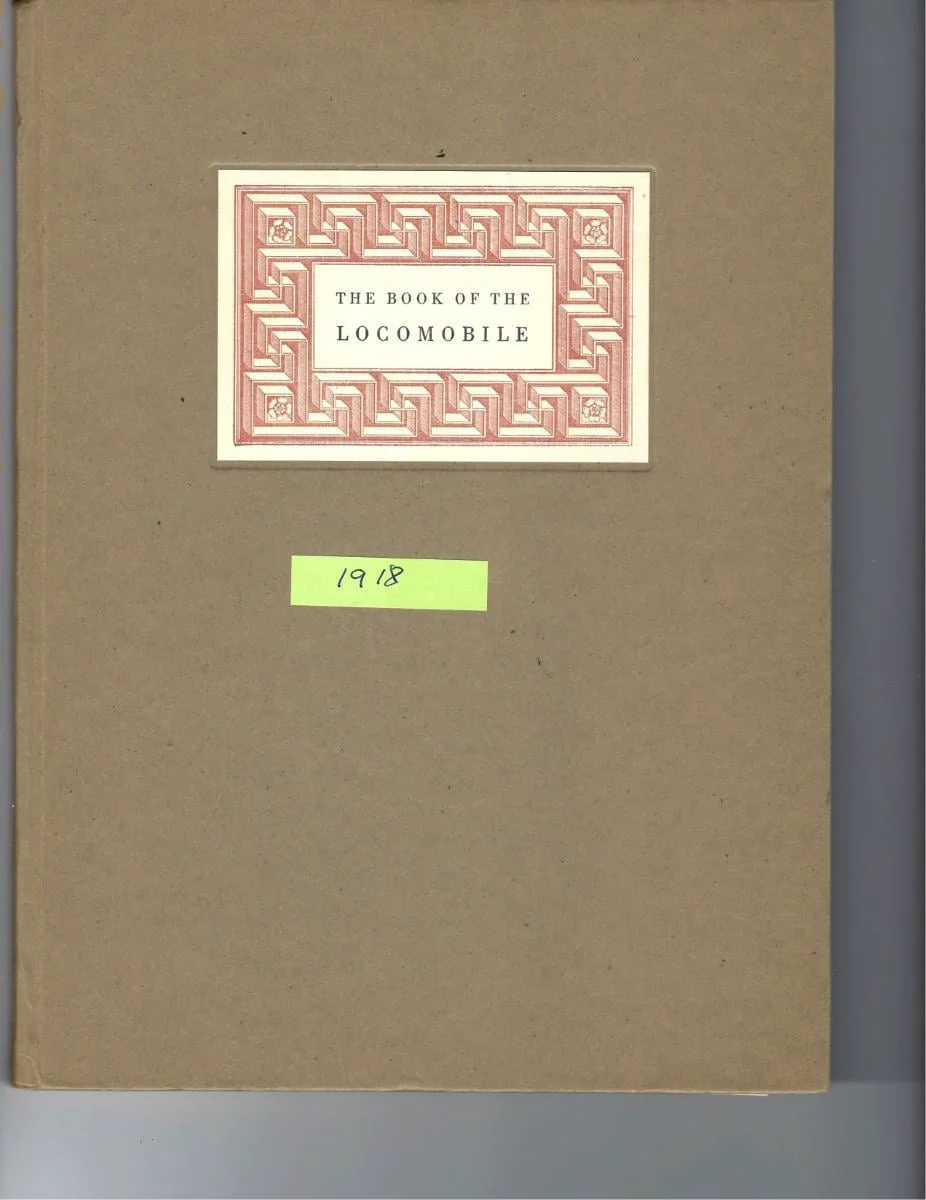
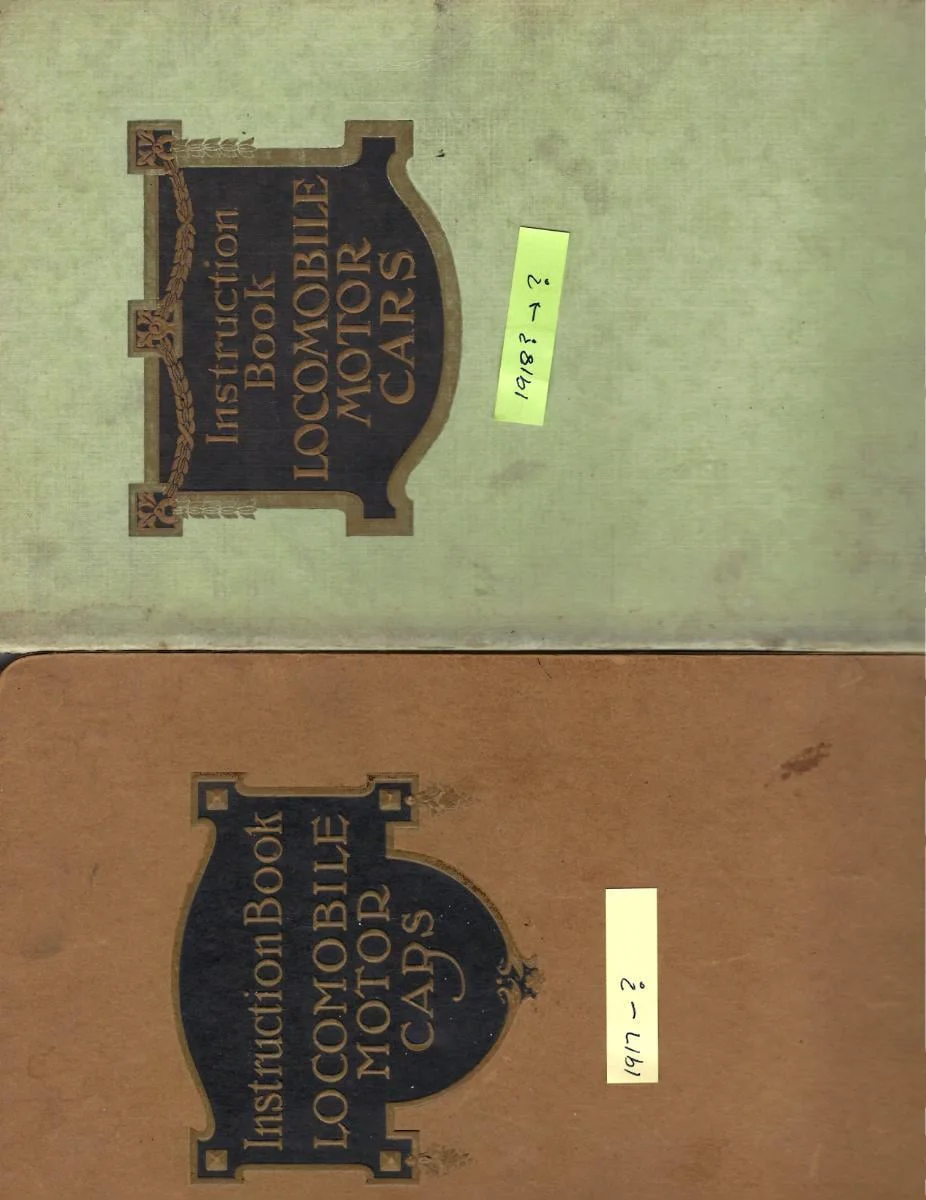
Good Moring Frank, In Locomobiles infinite wisdom they do not date their instruction books like they do with the Book of the Locomobile. The first two drawings are out of the Trade magazines from 1915 referring to the 1916 model year. The Locomobile book published in April of 1915 refers to the new models with 143" wheelbase on the 48 (the only year I believe they had this long a wheelbase) they also list a multiple disc dry clutch. The 1918 Book of the Locomobile states the clutch has 763 square inches of friction material. The next drawing is at least a 1918 model year as the front axle drawing in it is not a drop axel Last used on the 1916 model) has rectangle pedals and calls out for a Berling Magneto. The fourth drawing I found in the Instruction book (again not dated except for one picture in it referring it to the 1917 Locomobile and having a Bosch two spark Mag). I assume Locomobile added another flexible disc after 1917 going from 2 to 3 discs. Looking at the pictures in both of these instruction books the cars have the early stacked head lights with the drum lights introduced in the early 1920's? I hope this is not too confusing. I reversed arranged pictures 3 and 4 by the year picture 4 should have been before picture 3, sorry. Years ago, I had Ralph Dunwoody research mid-teens Locomobiles from his extensive library, and it has been a great resource for me. Thanks Greg
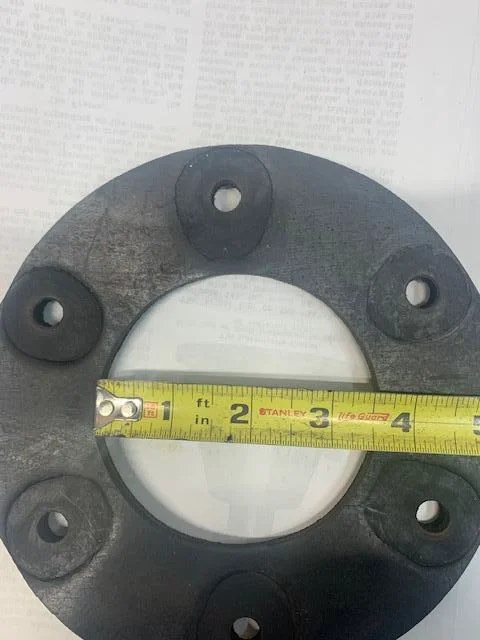
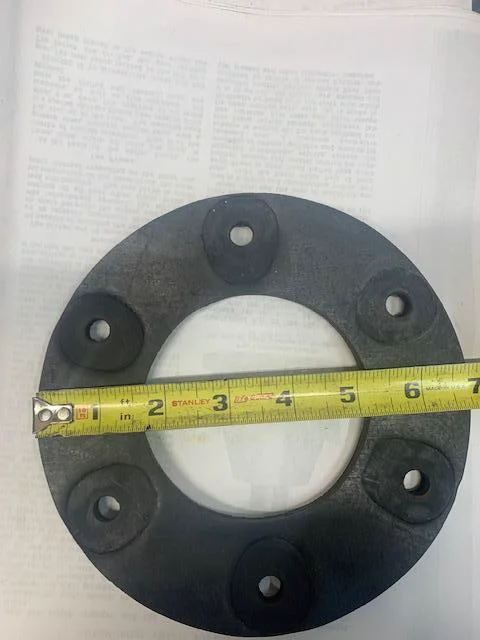
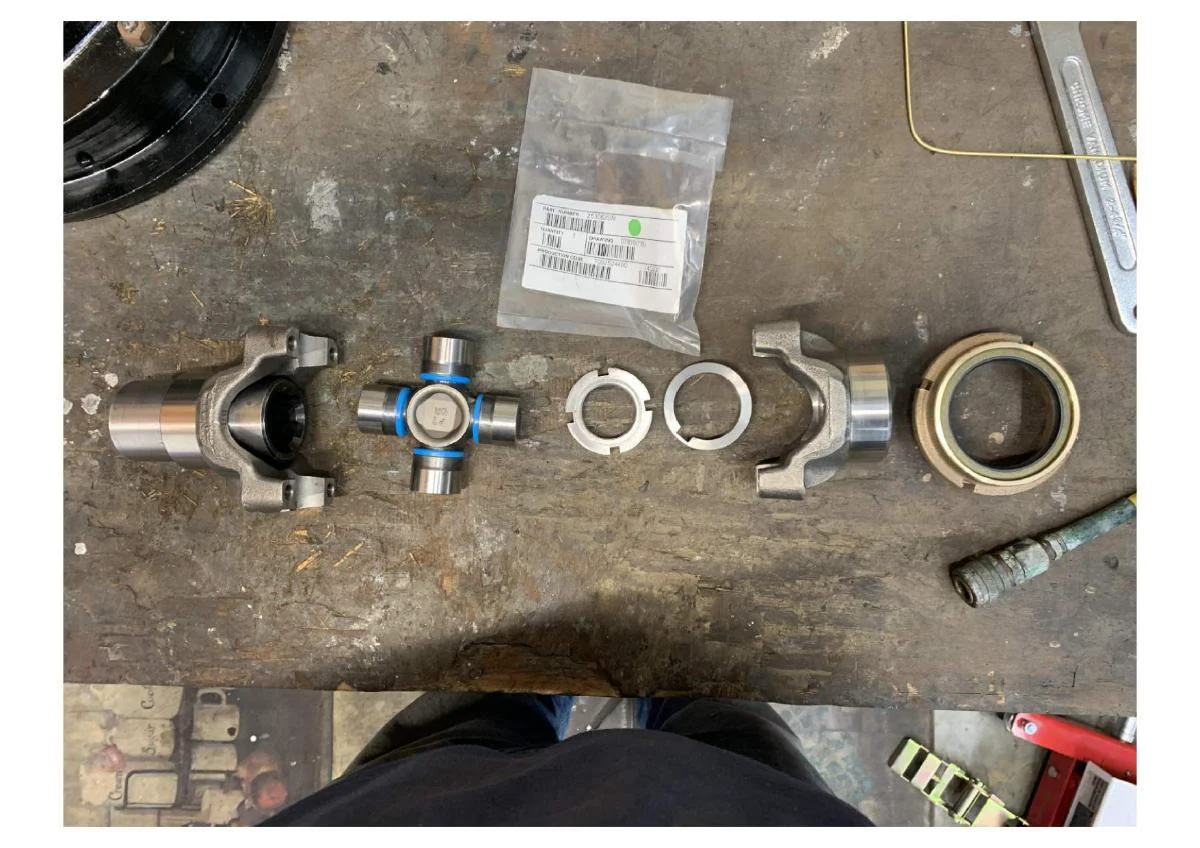
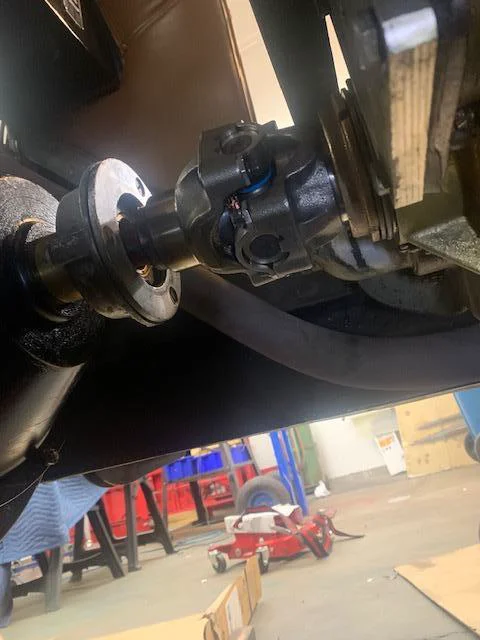
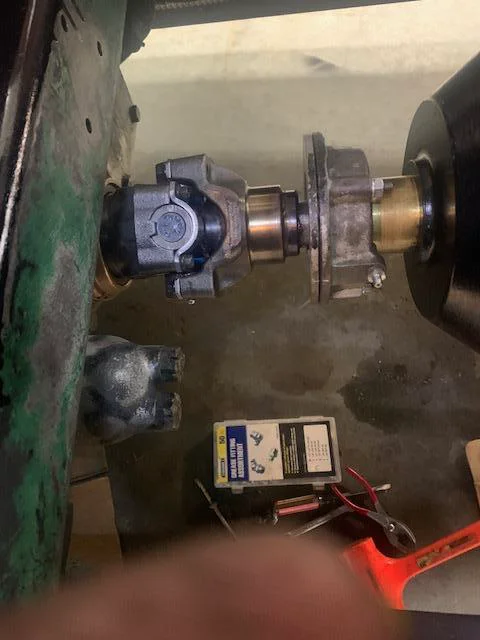
Hi Frank, just a couple of more pictures you may find interesting (I'm figuring out how to change the pdf pictures to jpg). The discs are from the flexible u joint made from 3/8" conveyor belt that we will replace using a new material. The u joint pictures are the parts after machining and then installed in the car. The yoke on the transmission had to be shortened a keyway broached in and machine the id at a 4-degree angle if I remember correctly. Also, a new retaining nut was made to hold it in place. The Transmission output shafts new Dodge heavy duty yoke was machined out and a 6-spline coupler was shortened, press fit and welded into the yoke. We got lucky and the six spline coupler when welded in didn't distort this now slides nicely on the clutch output shaft. We had to put the yokes on the transmission and clutch before installing, then squeaked the cross into place and installed the needle bearing cups. The clutch brake is being made now thus not shown in the pictures. Thanks for your input, Greg Lundeen
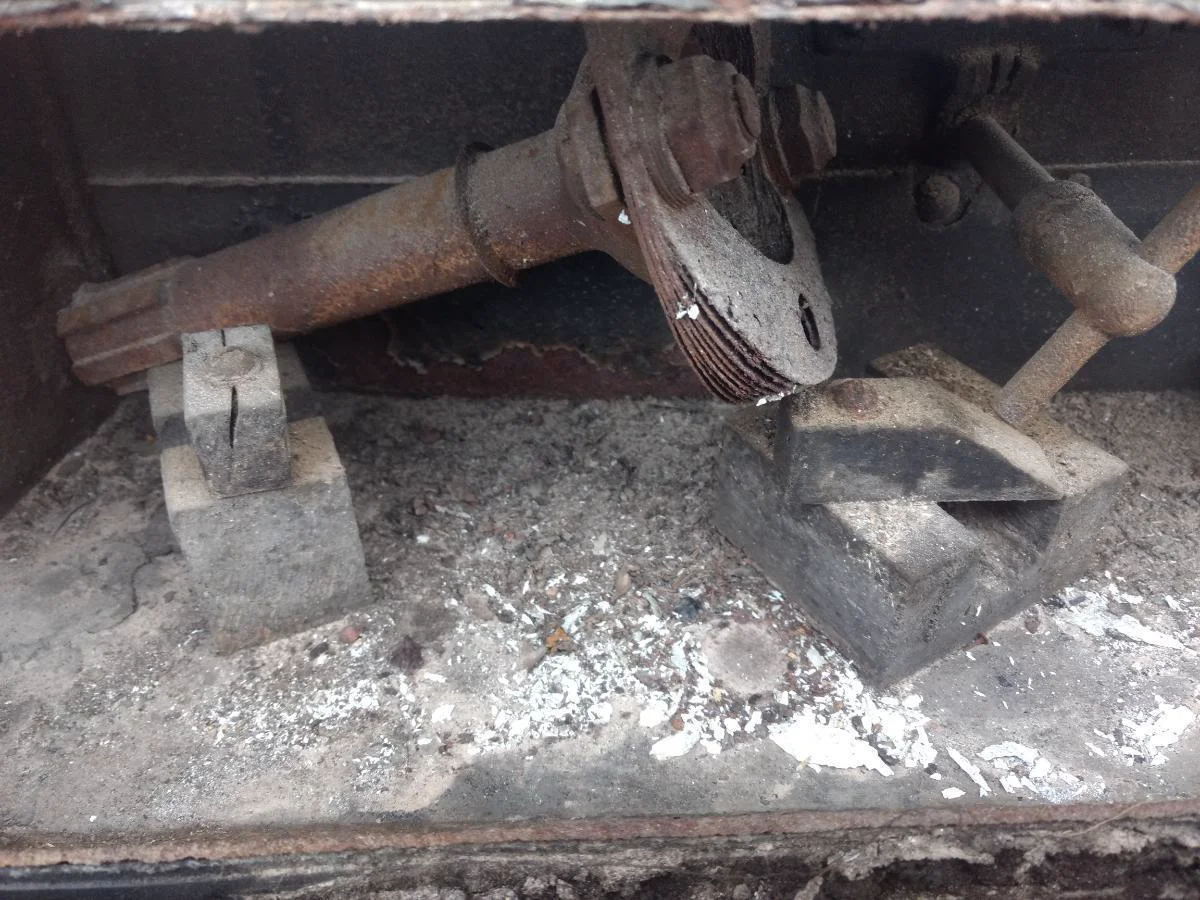
Hi Al, going back through old AASCA form information I saw that you posted this picture November 19, 2021, while discussing Yale locks. Does this part connect up to the Locomobile clutch? Is this an intermediary part from the transmission going forward to the clutch with a joint in-between? It looks like looks like fabric connection ie fabric u joint? Thanks
Hi Frank, It was nice to talk to you. my email address is greg.lundeen1951@gmailicom
Please let me know if I can do anything for you.
Sincerely Greg Lundeen
Hello Greg,
I had forgotten about that picture I posted you referenced. That picture was taken shortly after I had taken delivery of the 1825 Locomobile Limousine. I was able to open the splash apron storage compartment to find this piece shown in the picture, that connects the clutch assembly and the throw-out/transmission. This Locomobile only has a bit over 24,000 miles on the odometer and I feel that is accurate based on the general condition of many of the mechanical parts. That said, my further belief is that this Locomobile was taken off the street and out of service due to a clutch issue. When I received this Locomobile, the front of the car was dismantled, radiator off and in very good condition and engine out but fully intact but for the clutch. With the Locomobile, I received two complete clutch assemblies and parts of a third unit. I feel, the car was disassembled for clutch repair but never put back together or repaired. Fortunately, only a few parts were "borrowed" to keep other Locomobiles in running form. I have been lucky to hunt up the missing pieces and now really am in only need of typical restoration consumables. I am not sure that the clutch components, I have, would help you on your 1917 from an information standpoint as this Locomobile for 1925 was basically the last hurrah for the 48 and had evolved from the design of 1917. However, if I can assist, I will certainly try ....
Al
Hi Al, thanks for the information, I really appreciate it. The journey I have taken to mate the later clutch with the 1915 transmission I hope is almost finished. I am having new flexible discs made for the front "u joint" in the clutch housing. It still would be nice to get the measurements of what a full set of discs both steel and friction comprising the clutch pack but with the variants that Locomobile had it may be a mote point. The clutch for Locomobile, though basically the same through the years did make some changes making some adaption challenging. I am sure we will get there. Thanks for the help I am finding the forms interesting and very helpful. Sincerely Greg Lundeen
Greg, This forum is a great place to network with other Locomobile owners as we solve or resolve issues with our automobiles. It is also good as we study history of Locomobile, and people influential to the automobile industry while still in it's infancy. Please do post pictures and specific information that relates to your clutch issue and remedy. Your shared information very well could be very beneficial for someone else, (maybe me) as I get into my Locomobile clutch rebuild.
Al
Today I want to share my recent experience and thoughts about the Locomobile clutch. In the past I heard many complaints about the Loco clutches, problems with shifting due to poor disengagement, completely locked because broken parts jammed the internal mechanism, and so on. The fact that Locomobile changed their clutch design many times during the model 48 era adds to the assumption that the clutch might not be a good design. Previously I shared that opinion and explained in this forum that the clutch will not disengage any more if the steel discs become deformed (dished) when hot. Three years ago I had experienced such a situation with my 1921 Model 48 Sedan, see some older info here: https://forums.aaca.org/topic/372378-locomobile-model-48-and-38-engine-related-topics/page/12/#comment-2623810.
When I drove the Sedan more frequently, I didn't realize the problem any more, and during the last 6 months the Sedan was parked while I was using the Tourer.
Recently I used the Sedan for taking part in a rally with cars of the Loco's age and older. When I had to drive very slowly in a hilly area, I met that situation again: Sometimes the clutch won't disengage properly. The shifting became really difficult and I felt ashamed of the grinding noise which was sometimes necessary to get going. This time I could feel that the problem was not related to the disc's temperature, it came and disappeared without a logical reason. This made me curious.
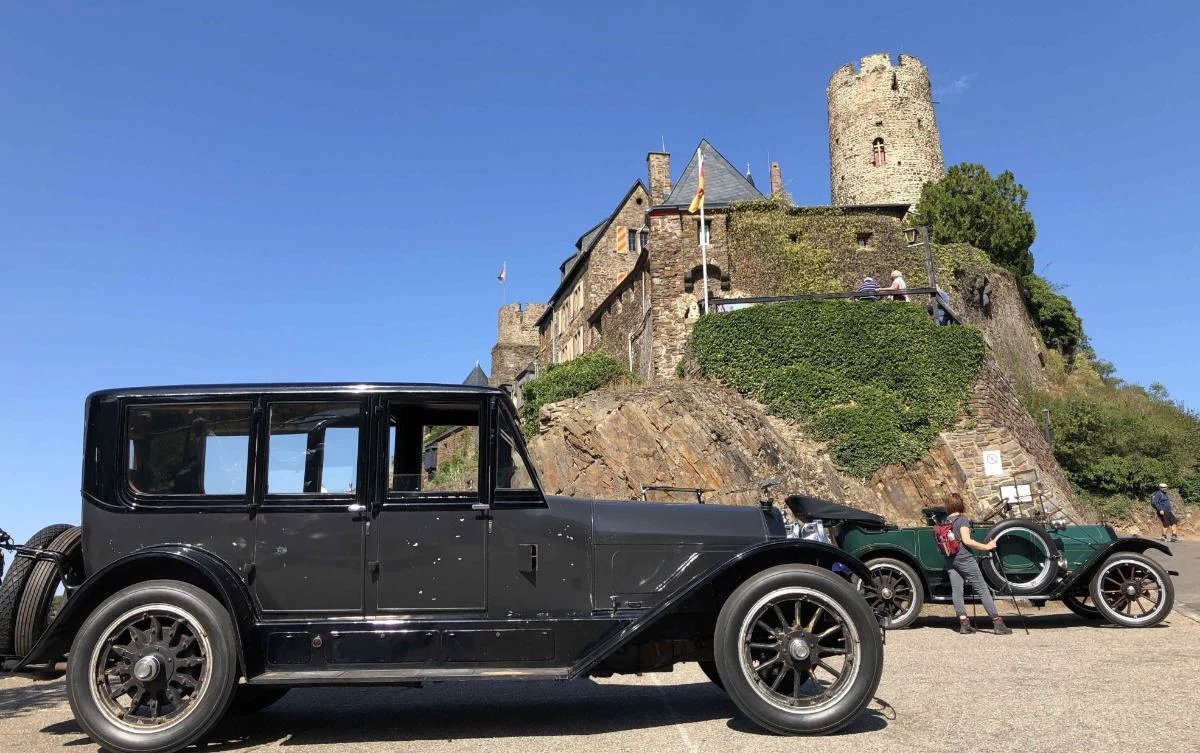
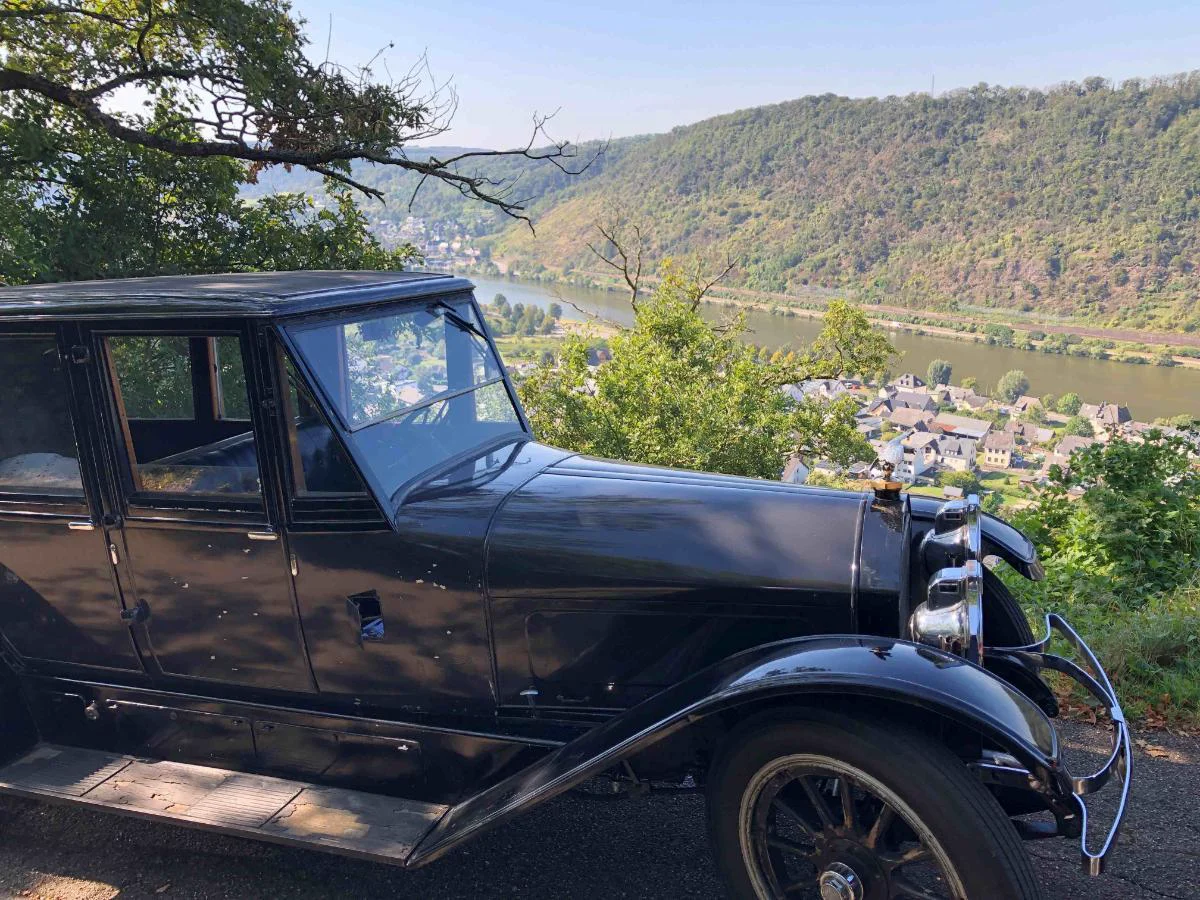
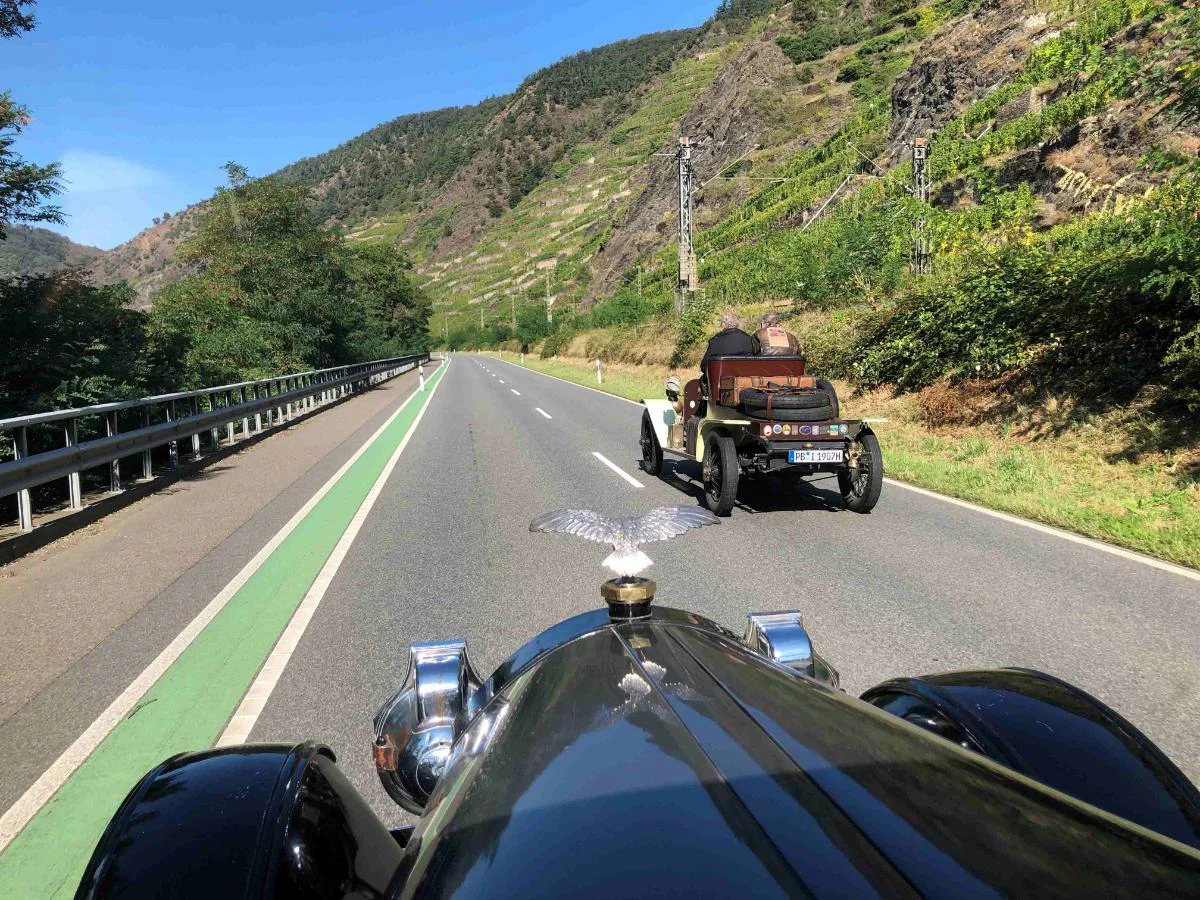
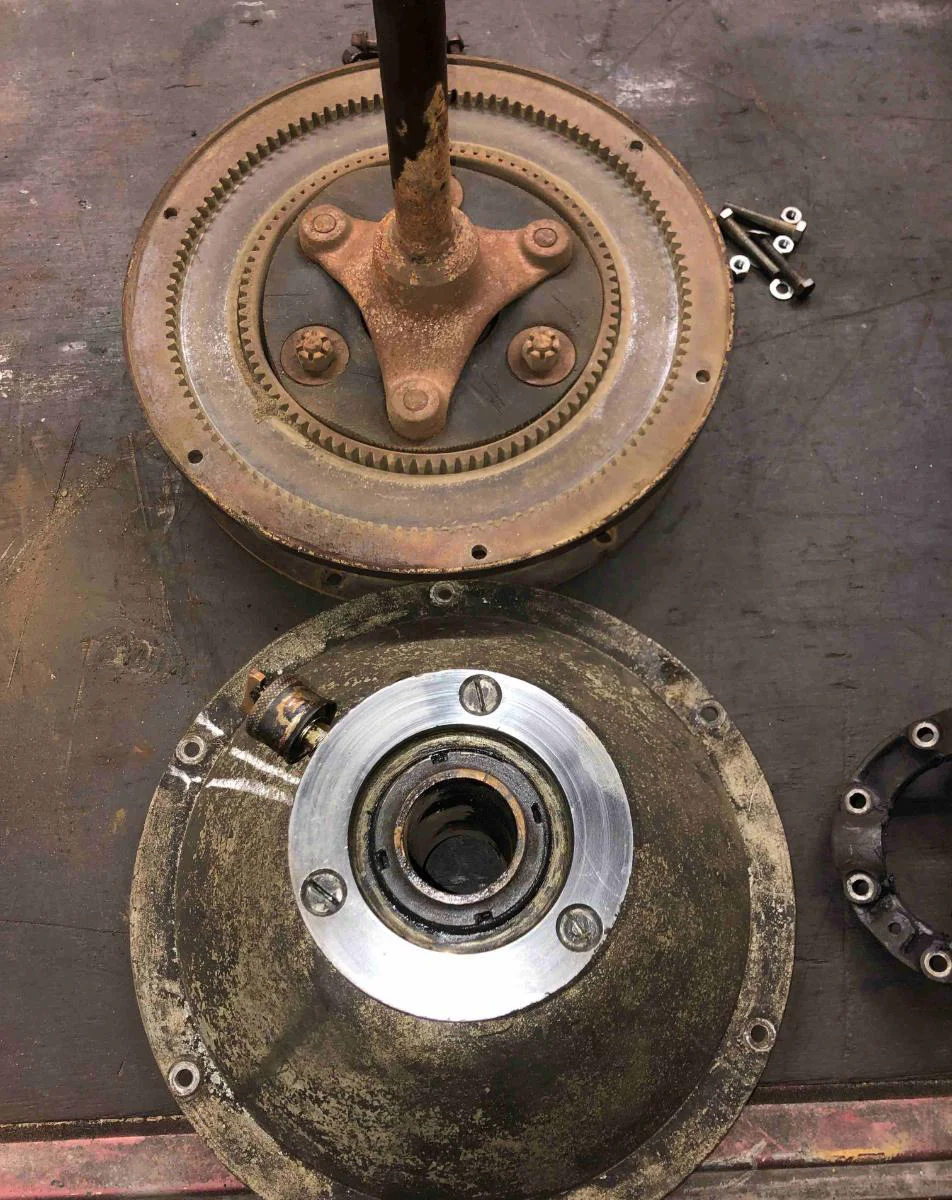
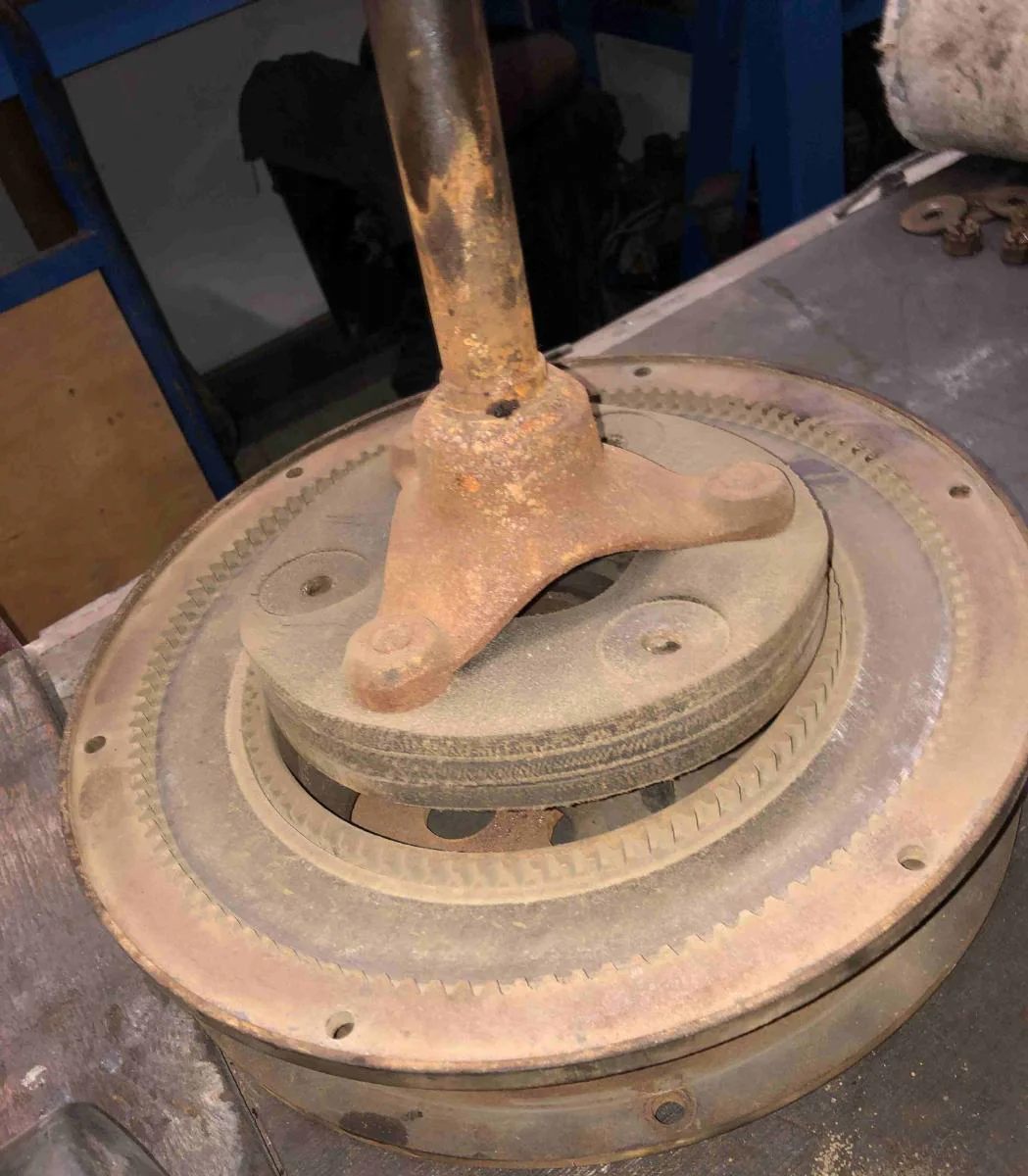
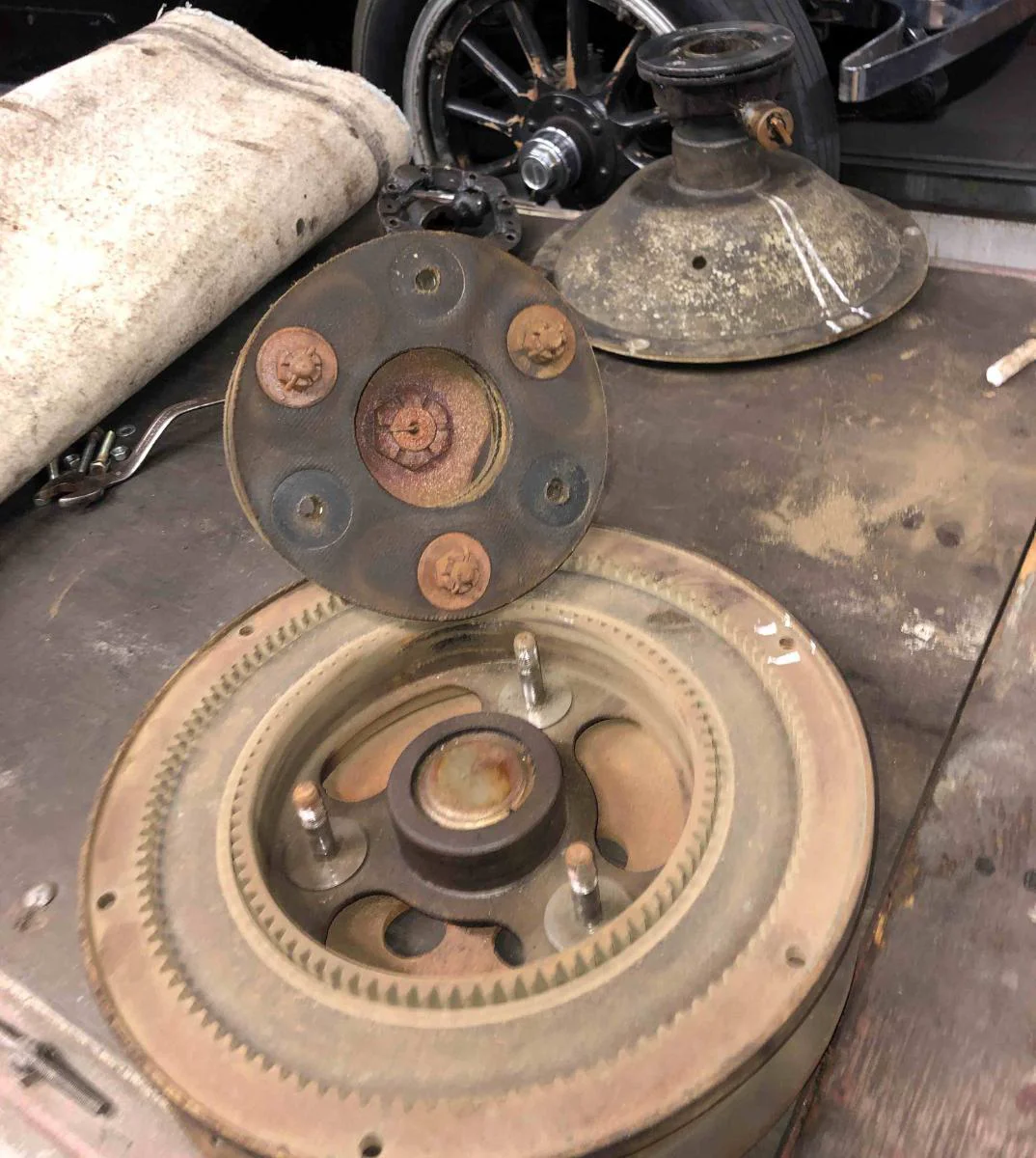
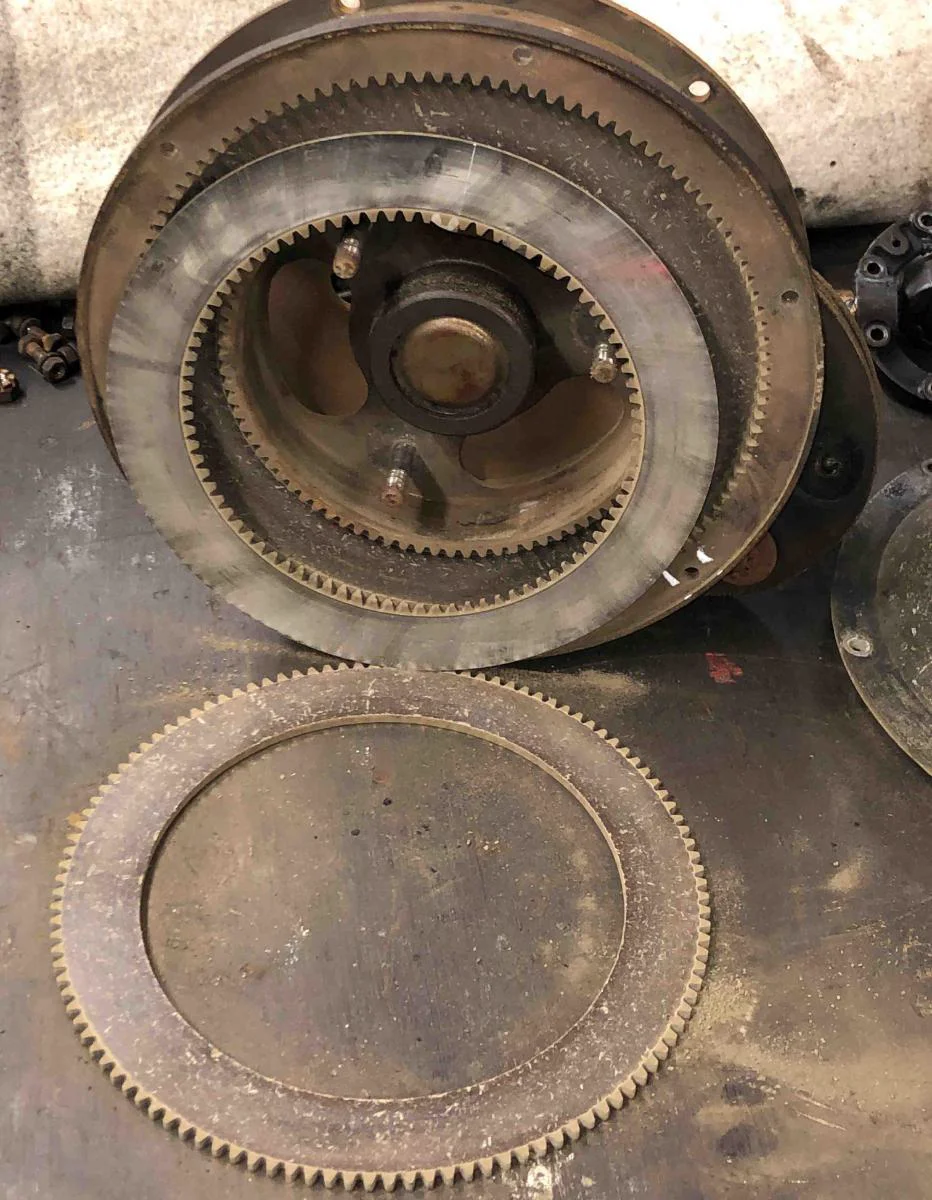
Therefore I took the clutch apart last weekend, and I have learned a lot. I want to share that experience.
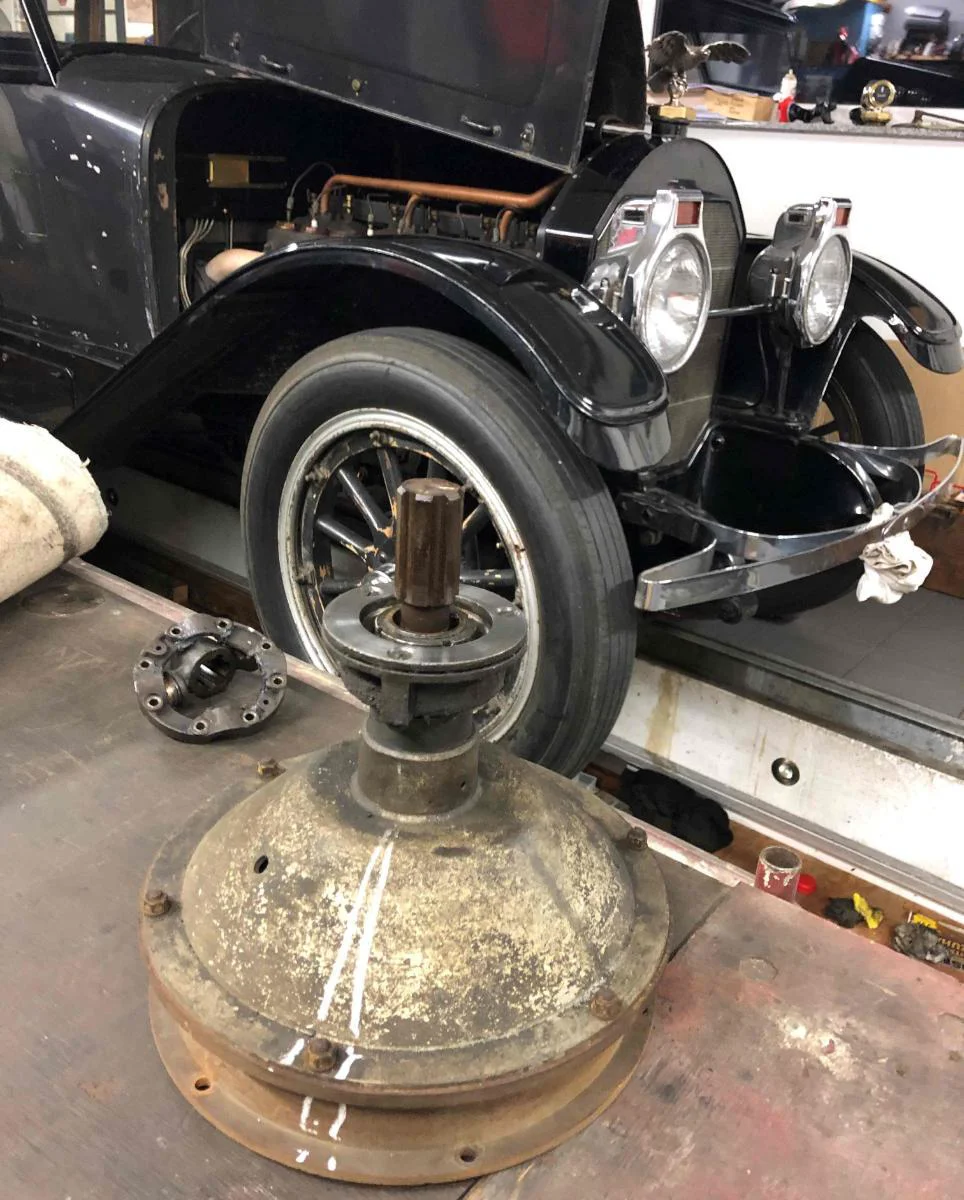
Unfortunately I don't have a spare parts book or manual for my model 48-8, but I found the clutch disc set-up in the later 19000-series seems to be very similar. The universal joints are different but the clutch housing with the machined grooves for the discs and the aluminium bell housing for the spring look the same.
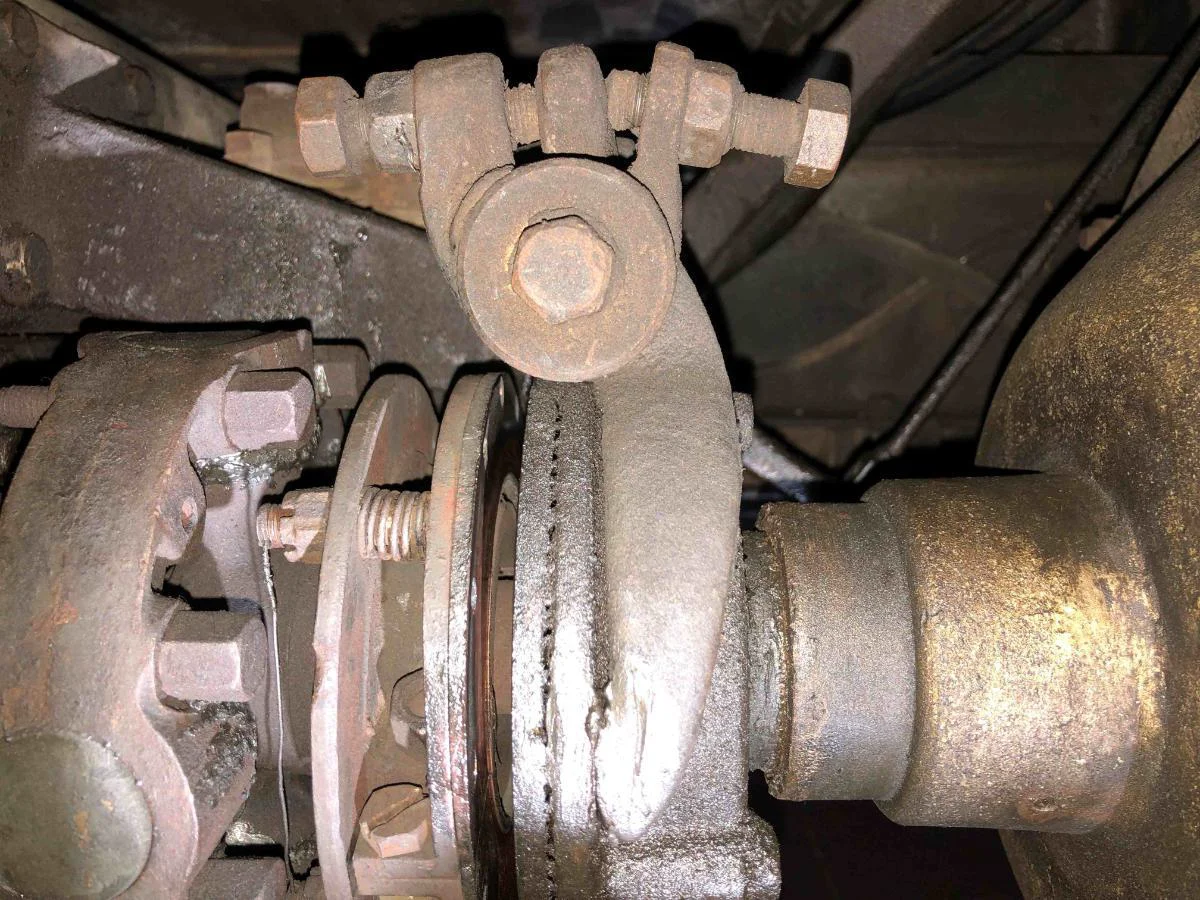
Removing the clutch from the car is very easy, provided you are strong enough. You remove the clutch brake, open the universal joint halves, undo the six bolts holding the clutch at the flywheel, and then the unit drops out of the car. The weight of this assembly is 36.4 kg (80 lbs). The clutch release shaft with fork and all remains undisturbed.
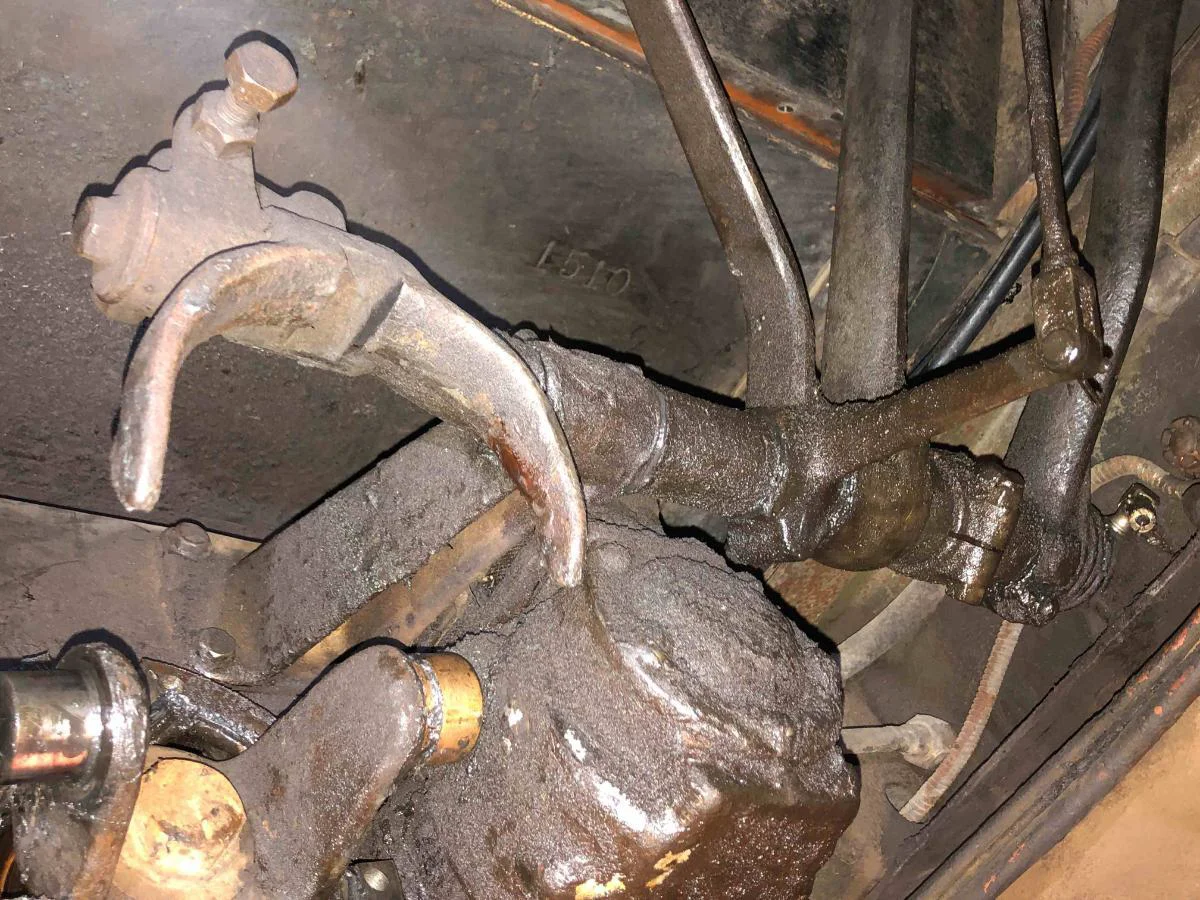
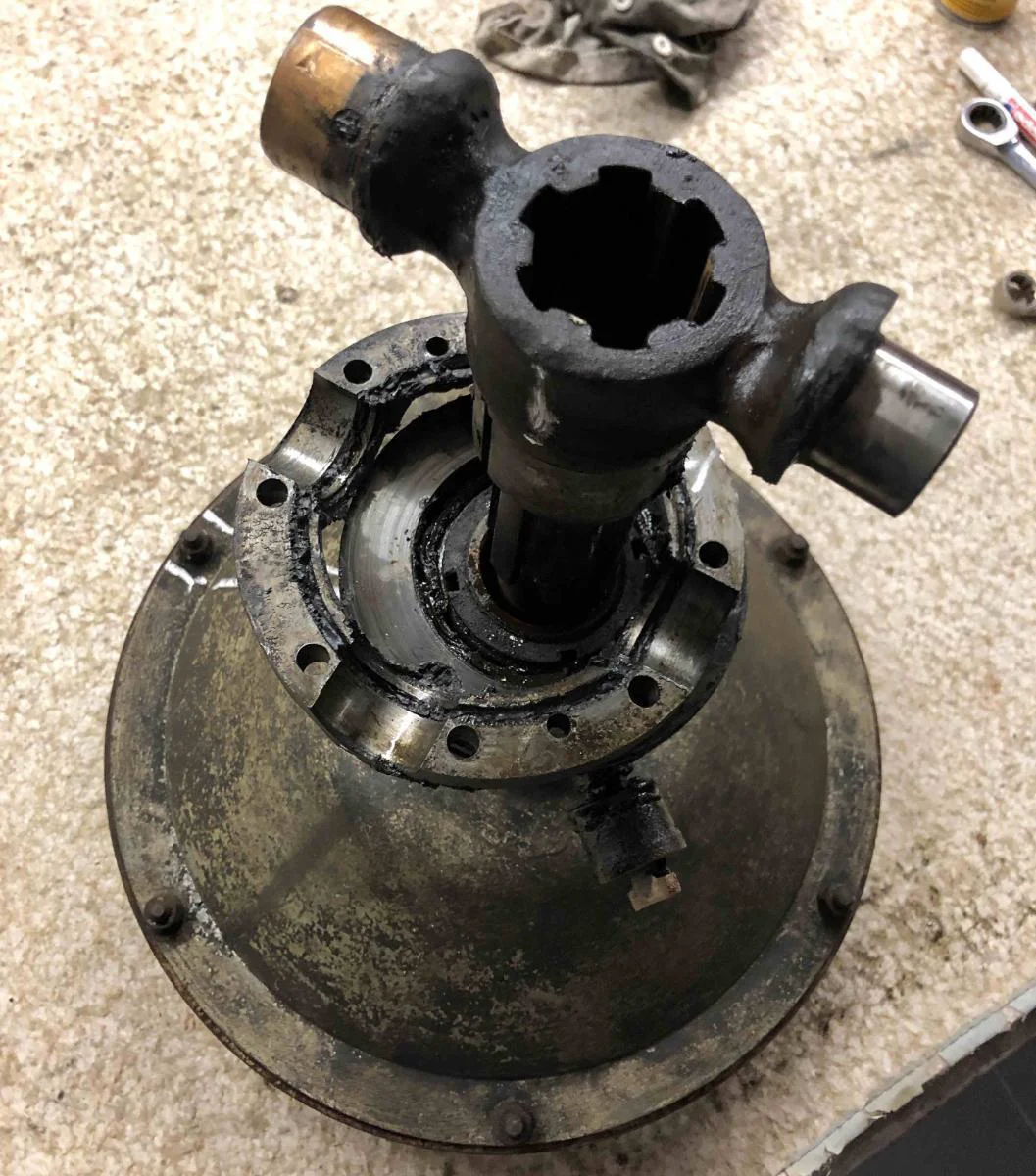
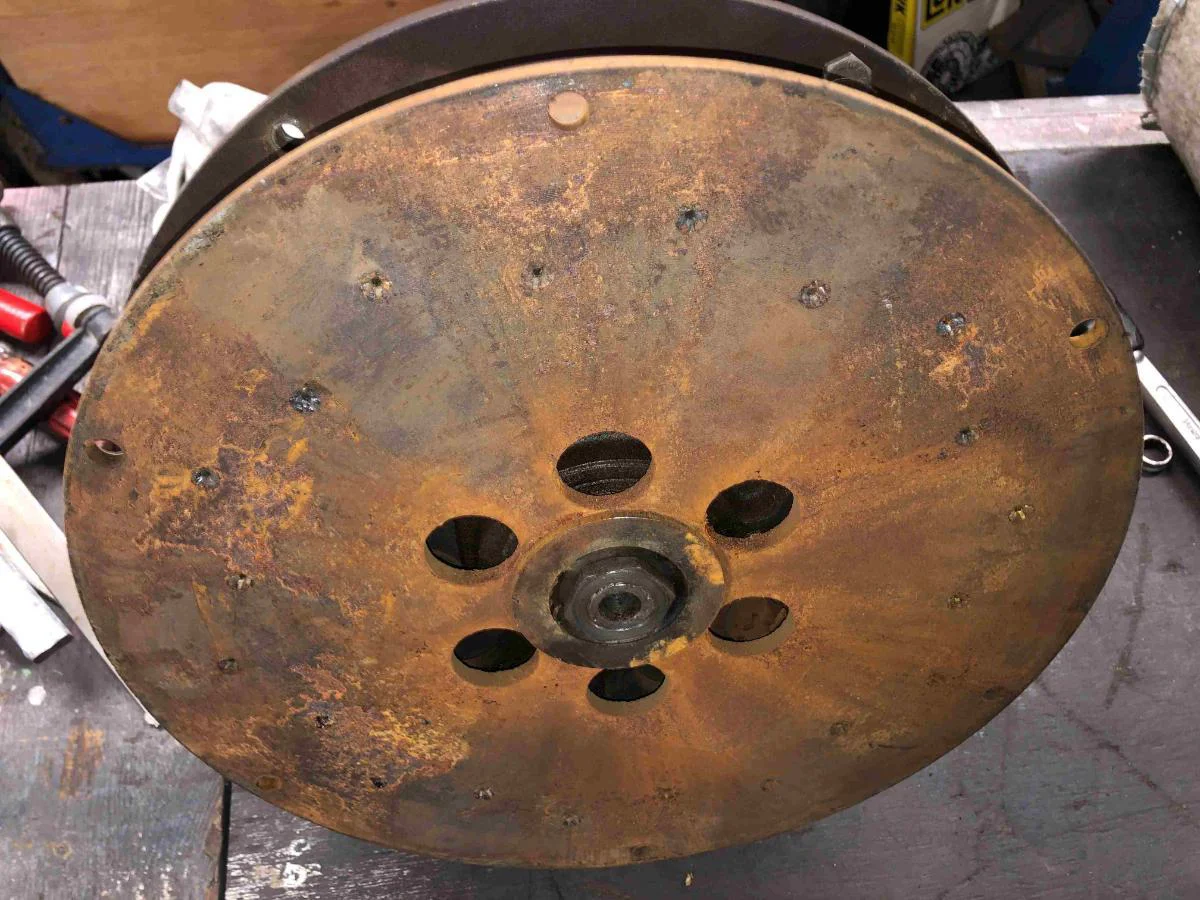
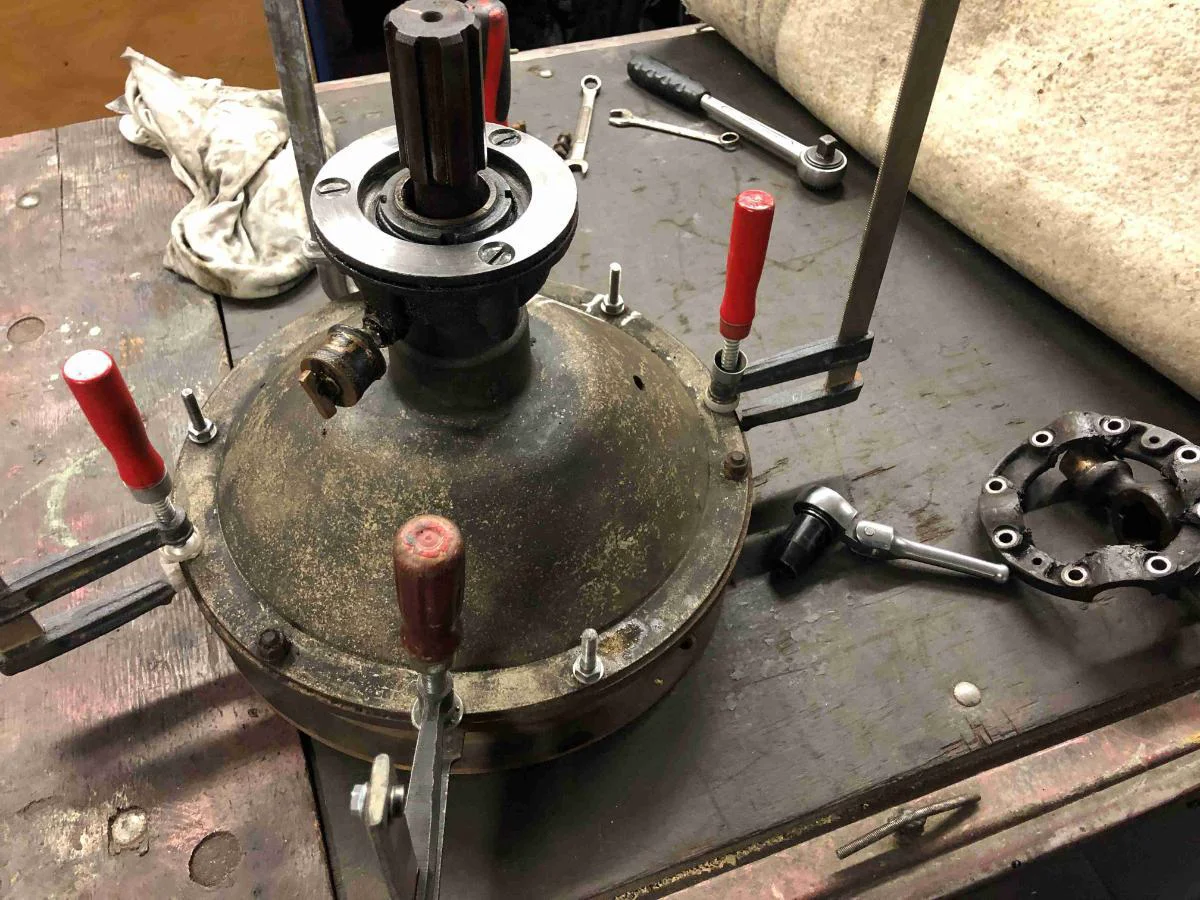
Dismantling the clutch is easy, provided you know how to release the spring pressure. I did that with 3 long bolts and met no problem at all.
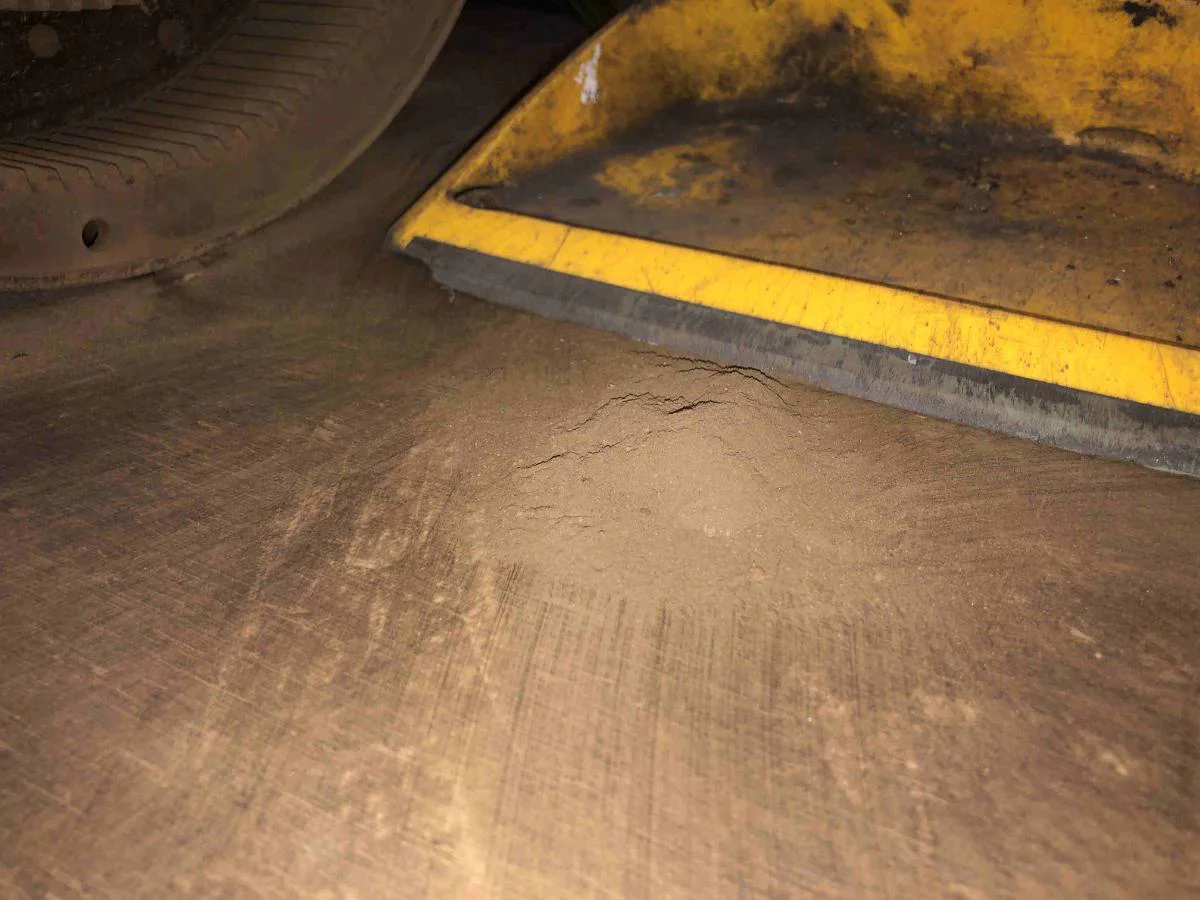
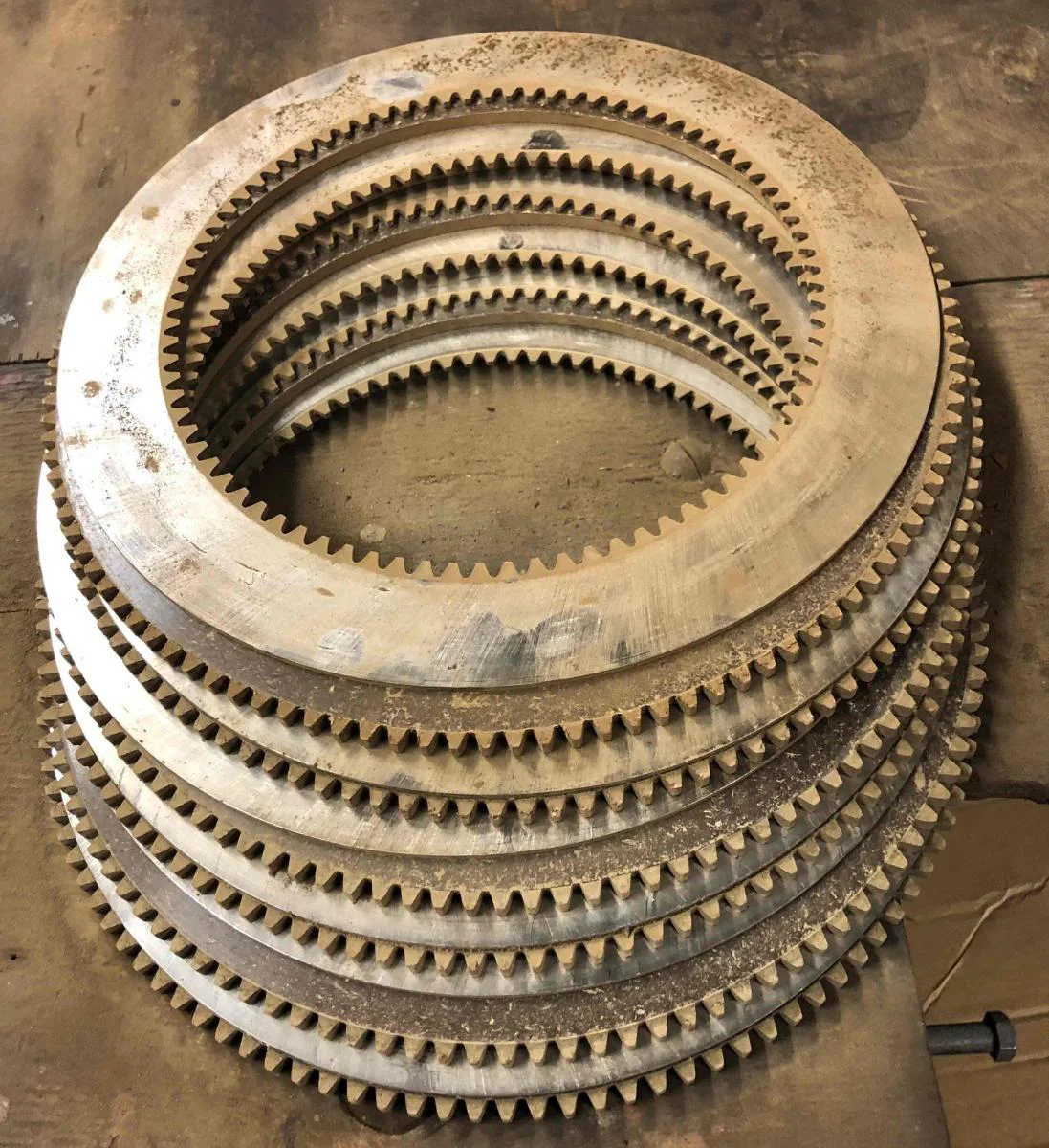
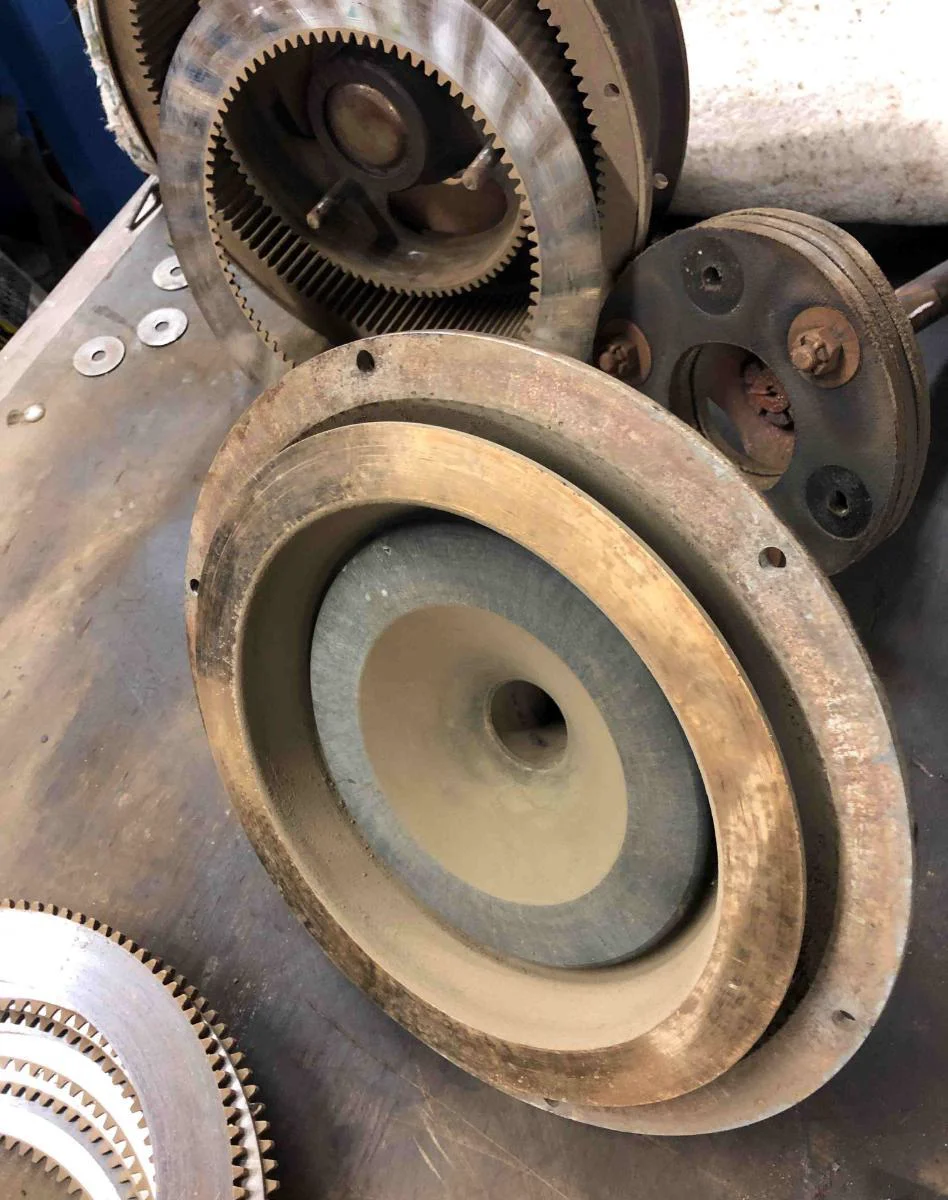
The other parts come off easily, and you see how dirty everything was. Of course you have to wear a mask for this work.
To join in the conversation, you must be a club member.
You’re welcome to read and like every post. Members can reply and start topics of their own.