

@IttenbacherFrank
The effectiveness of my 1916 Locomobile‘s head lights were disappointing when I first drove the car at night. The brightness when standing just in front of the car was good, but that was all. Simply accepting that, or blaming the old-fashioned 6V-system, or using the old age of car and parts as an excuse is no solution for me.
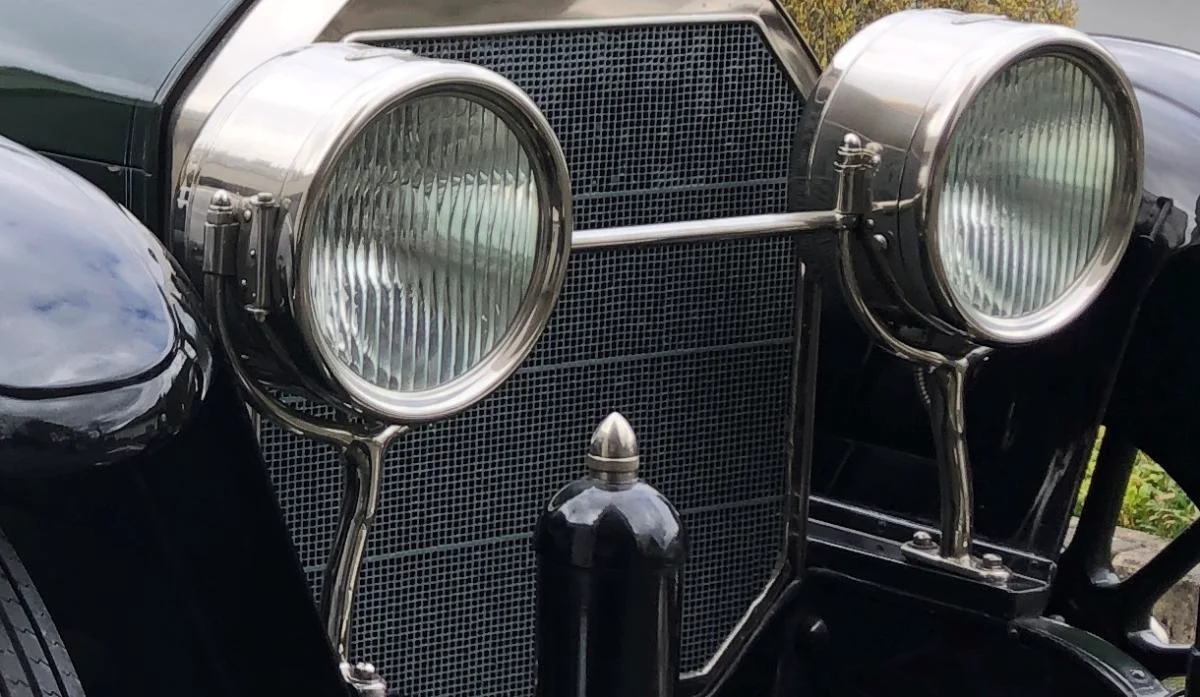
Firstly, I made sure that most of the 6V-voltage arrives at the bulb. Someone had replaced the cables in some areas with new cables of too small a diameter. I corrected that, now the voltage loss between battery and bulb was acceptable, but it didn’t help the road illumination.
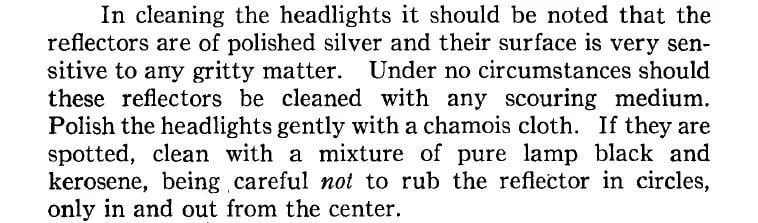
Then I cleaned and carefully polished the silver reflectors. They were not in bad shape before, so that didn’t really change much. The Locomobile instruction manual explains how to do that.
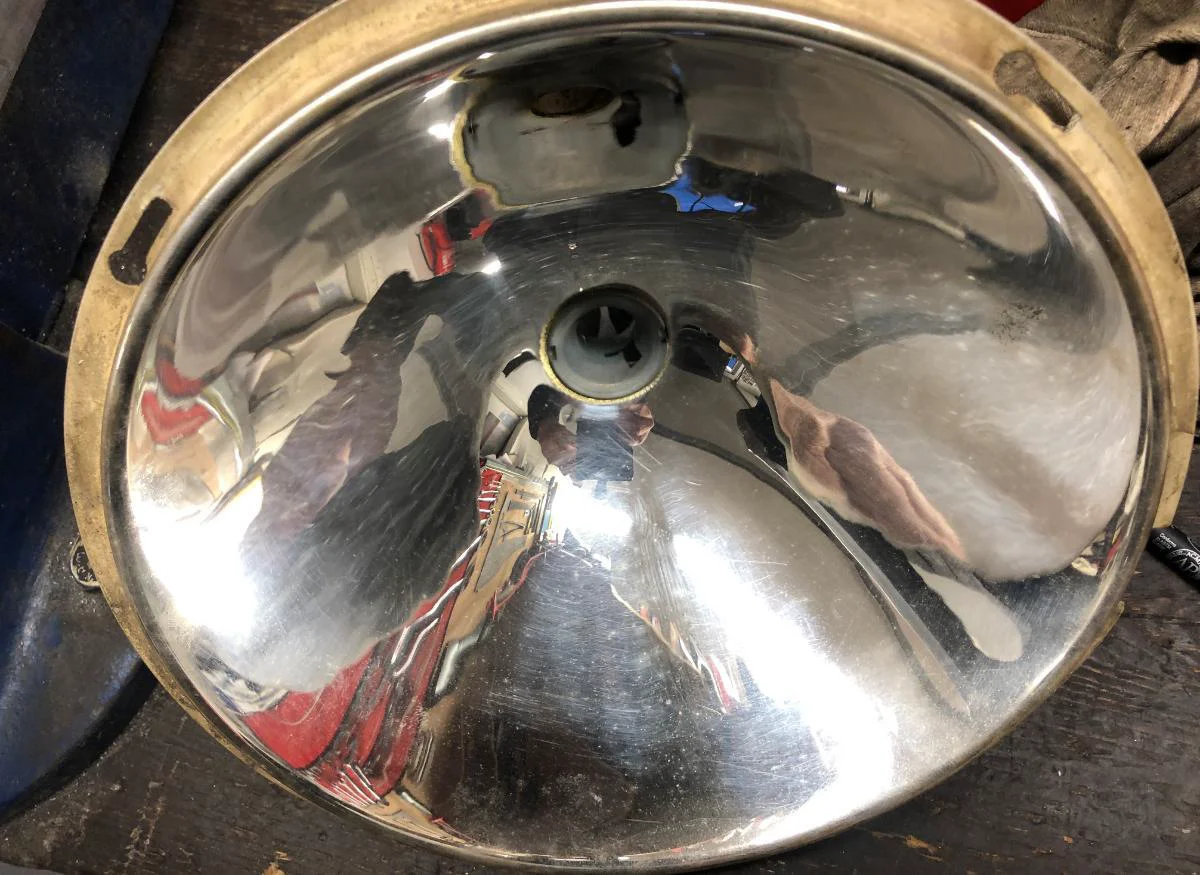
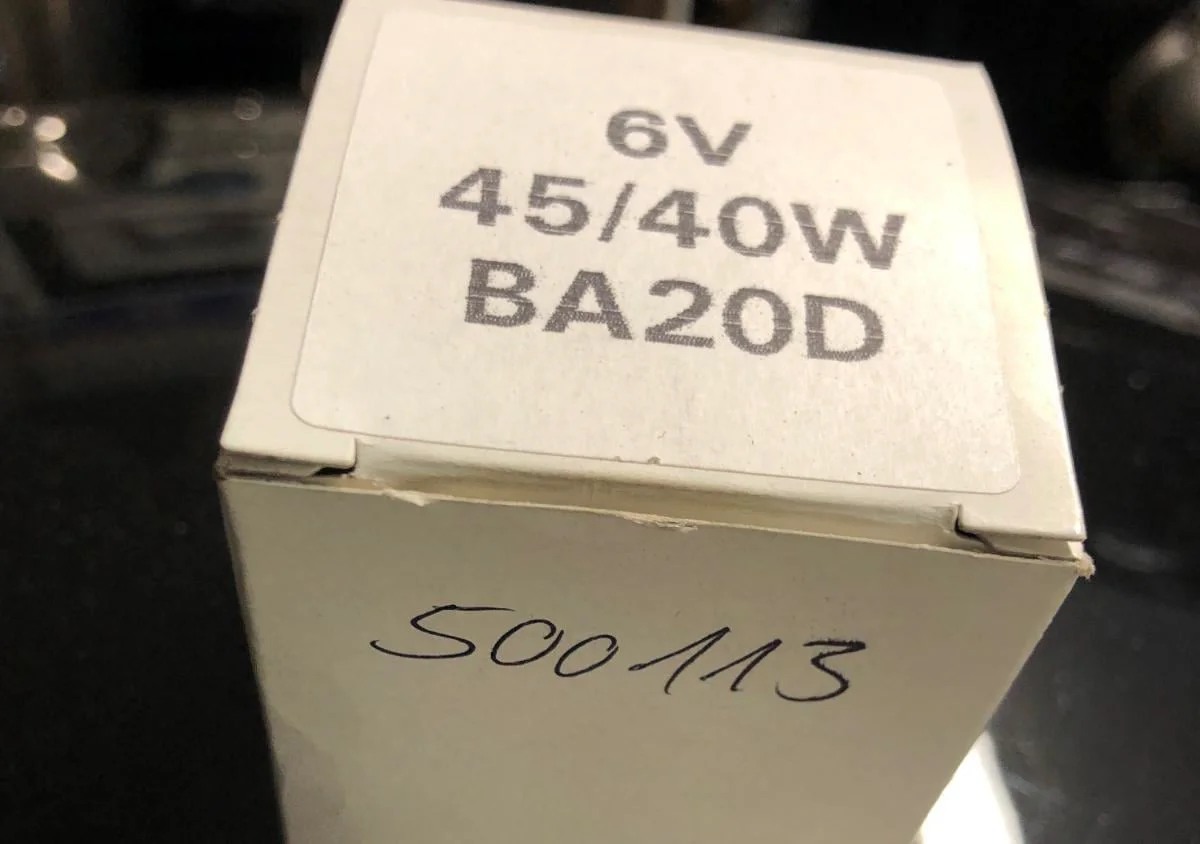
I noticed that someone had replaced the main bulb holder. He had used the type for BA20-D-bulbs, typical for the 1930s-50s. I think that this should not necessarily be a mistake. These bulbs are available in various types. I put new and strong bulbs in, but it still didn’t lead to the desired improvement.
Next, I waited for the night to come, opened the door and made a function test: I held a reflector in one hand and the bulb holder with bulb in the other, connected 6V, and while moving the bulb slowly in and out of the mirror, I observed the light: It was obviously badly focused, but I could not find a better position by moving the bulb holder more out. Moving further in is not possible because of its recessed seat.
The Locomobile instruction manual explains that the focusing is supposed to be done with a knob:

I thought about different ways how to move the bulb’s filaments closer to the centre of the focusing point. Now luck came to my rescue: I found another pair of bulb holders which are identical except they are shorter, which brings the bulbs deeper into the mirror’s bowl. This did the trick! The light is focused much better, just a small black spot remains in the centre.
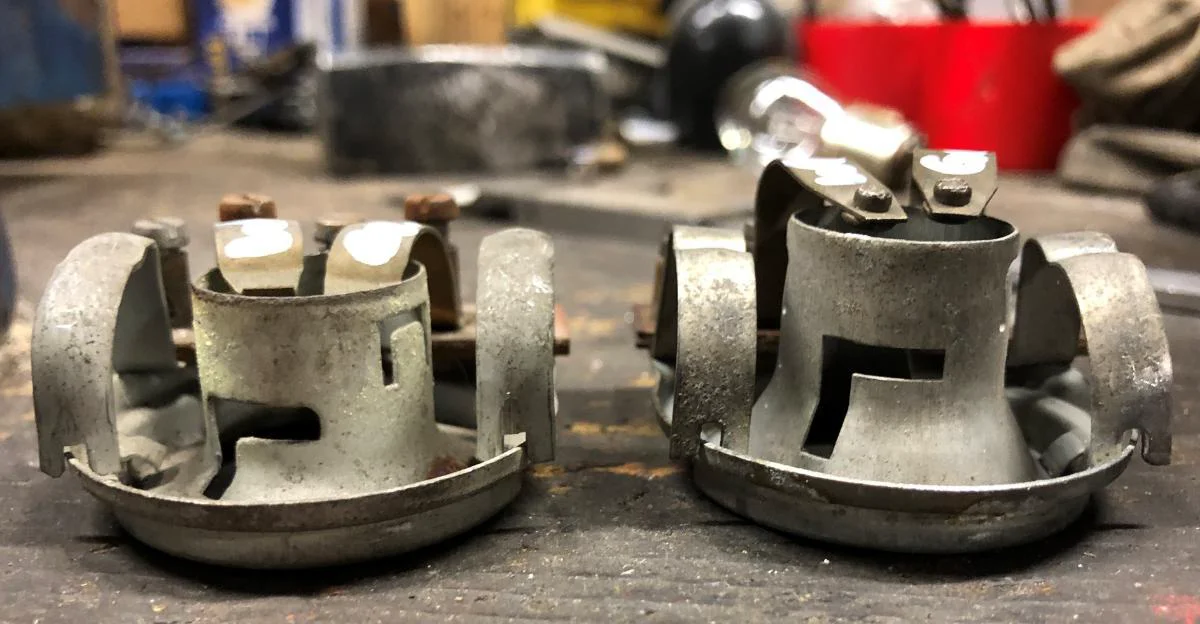
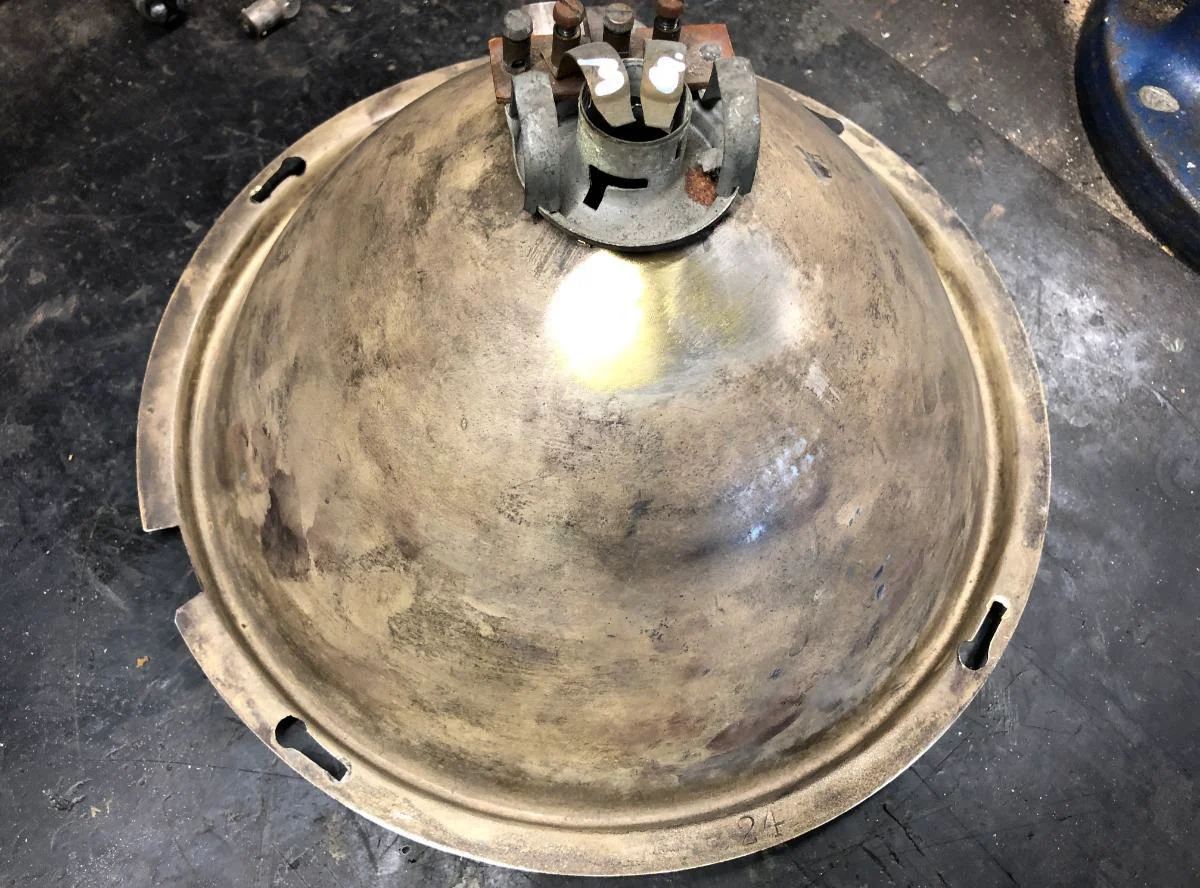
Now I adjusted the reach of the light by changing the angle of the head lamp brackets. The Locomobile brackets are very heavy and have no provision for such an adjustment. I made aluminium-shims at the flange which is bolted to the chassis with four long screws.
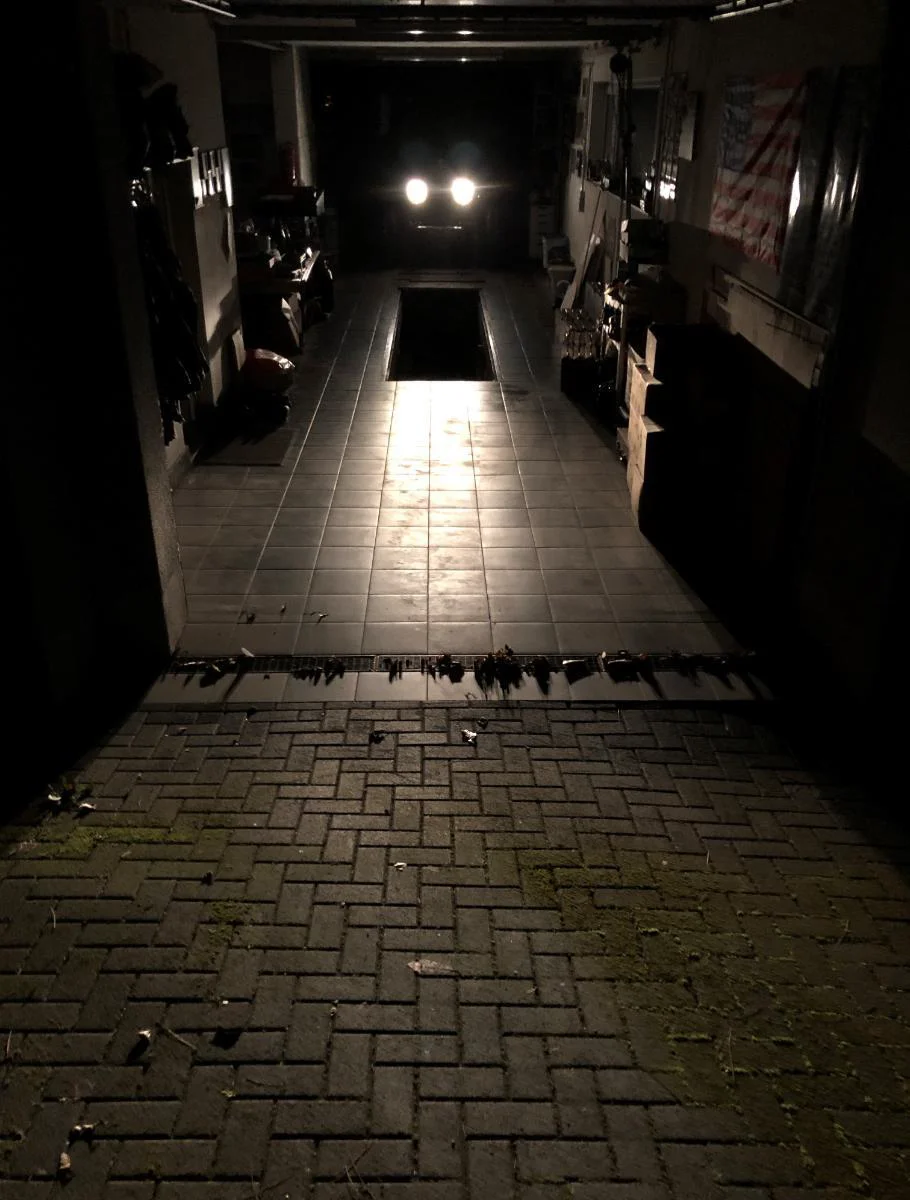
Now the result is ok. Not perfect but acceptable for driving at night. I know several cars of the 1960s and 70s with less light than this Locomobile…
If someone has by chance two reflectors in good condition with the original adjustable bulb holders, I would like to try them!
I notice that some Locomobiles of the era had a rheostat for dimming the headlights. Is that still operable on yours? If it is, and you are using higher amperage bulbs, you may want to bypass that.
Lee HJun 17, 2024I notice that some Locomobiles of the era had a rheostat for dimming the headlights. Is that still operable on yours? If it is, and you are using higher amperage bulbs, you may want to bypass that.
There is a push-button in the correct position in my dash-board, see position 57.
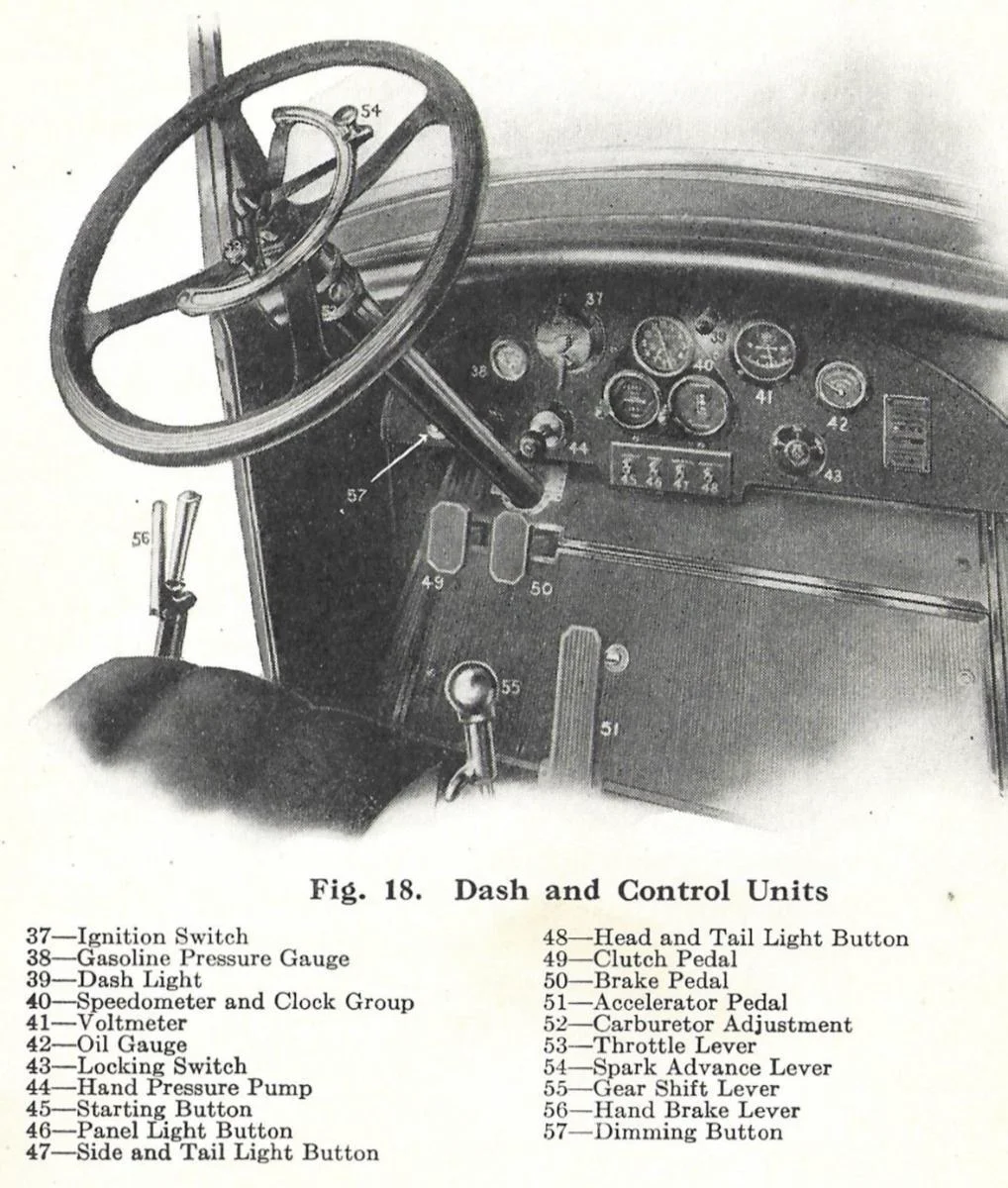
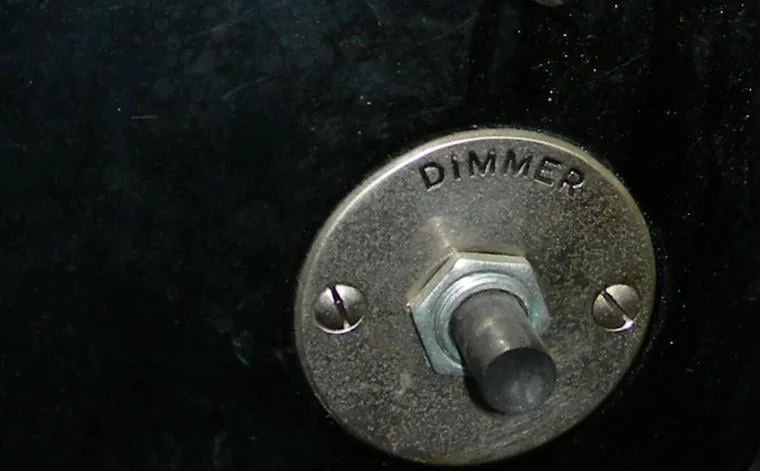
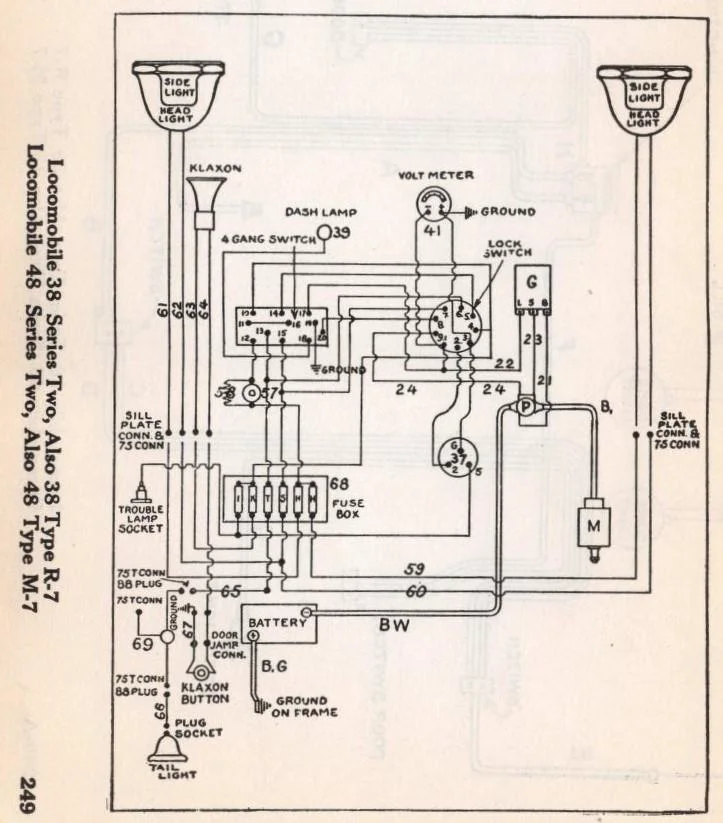
This electrical push button switch operates a relay which is definitely younger than the Loco. You press the knob once and it shifts from high to low, the next time you press it, it shifts from low to high, and so on. I am sure this is not the original layout any more. As I explained before, my car is equipped with the more modern two-wire-system with two-filament-bulbs. The wiring diagrams from 1915-1927 for Locomobiles with Westinghouse electrics all show a single-wire-single-filament-layout, with a resistance as dimmer. I believe this is what you call a Rheostat?
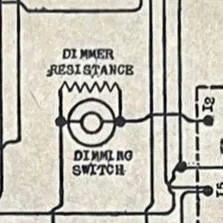
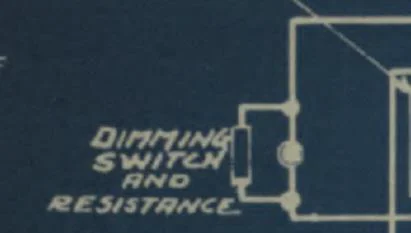
Here’s the schematic I was referring to…the variable resistor is circled. And it does show dual filament bulbs, at least from my source.
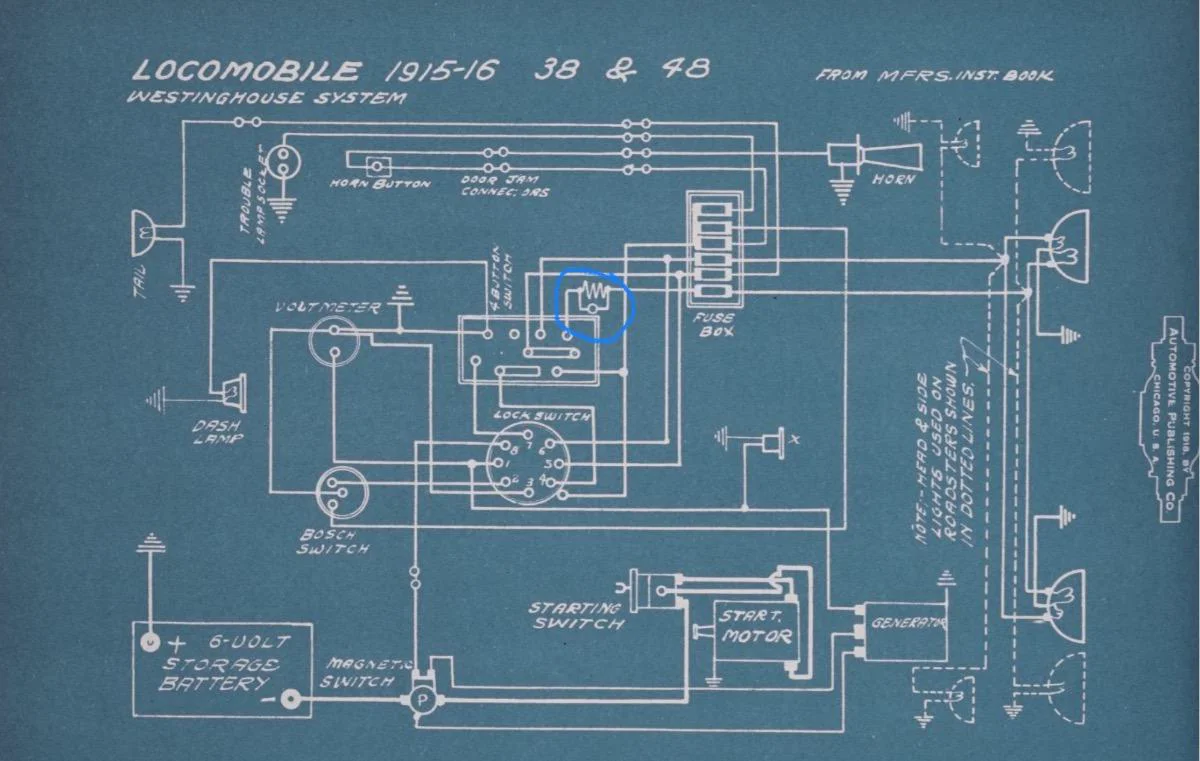
Thanks, this is basically the same wiring diagram which I have.
You are right, there are two filaments shown in each headlamp. I think that is two individual bulbs, not one bulb with two filaments: the bigger one is the head light and the smaller one is the side light or parking lamp. Both parking lamps are connected through the fuse to 15, next to it is 13 to the rear lights, both receive power from the lock switch contacts 6 and 7. Parking light and rear light work together, but independently from the head lights.
The head light wire goes from connection 12 on the 4-gang-switch through the dimmer, the fuse box and the sill plate connector to the head light. One wire for each side. I called that a single-wire-system. Today there are two wires going to the modern double-filament-bulbs in the headlights and another one to the side lights, in total three. Sorry for my poor explanation.
Frank,
I didn't bother to photo this on Friday (maybe I should have). In box 17 is a blueprint and a few pages of correspondence on the Rushmore bulb, circa 1913. I didn't have too much time at that moment and in the minute I lent to it I couldn't determine which bulb on the car it went to...headlight maybe? It only discussed the bulb and not the holder or focuser or mirror. The correspondence was from the 3rd party company manufacturing it and it sounded mostly like a public relations sale and I couldn't tell if it was employed in production. I have, as of yet, not come across more electric specifications or blueprints.
- Dan
To join in the conversation, you must be a club member.
You’re welcome to read and like every post. Members can reply and start topics of their own.