

@IttenbacherFrank
The crazy idea for this trip was born in May 2023, when I invited my friends for a Sunday-afternoon-trip with the Locomobile to a local coffee bar.
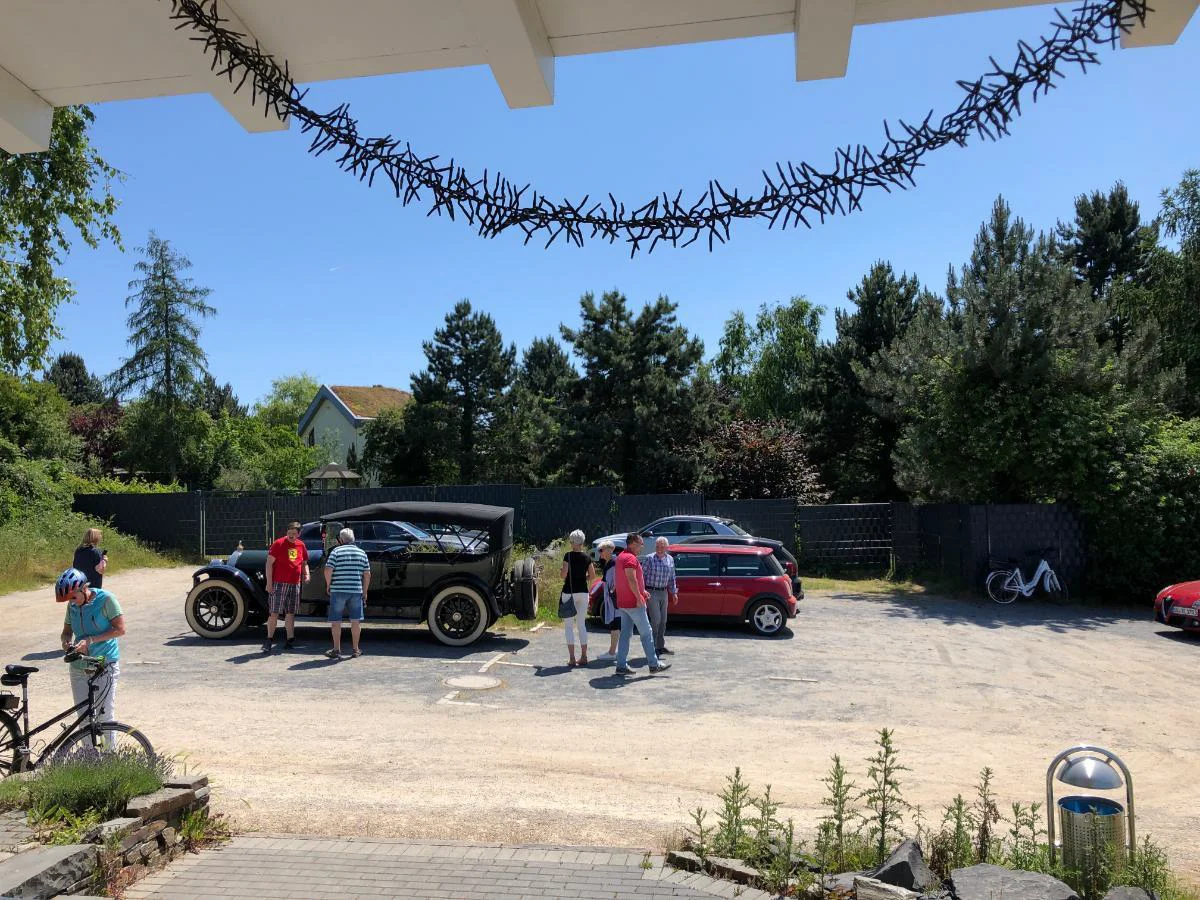
While sitting under the sunshade, enjoying coffee and cake while watching the Loco in front of the veranda, I suggested a tour to Italy in resemblance to the Harriet Fisher world-tour in 1909. To my surprise and delight, they agreed to join. We fixed the starting date to May 16th, 2024. One year for proper preparation sounds long but was necessary. I made a to-do-list for everyone. Later we met for the seat- and luggage-arrangement. Five adults with all related luggage in one car without a trunk can become tricky, you don't want to figure out solutions on the starting day.
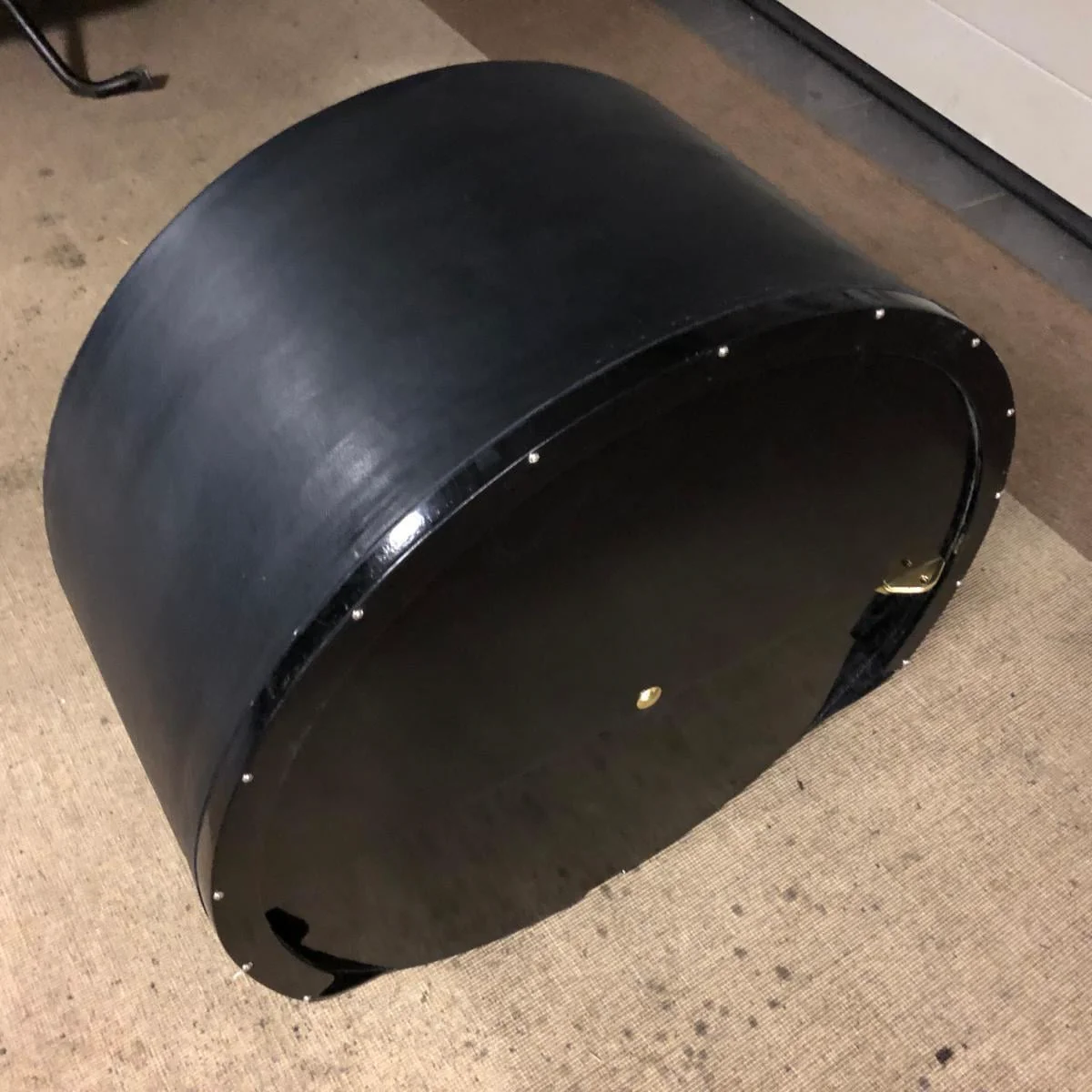
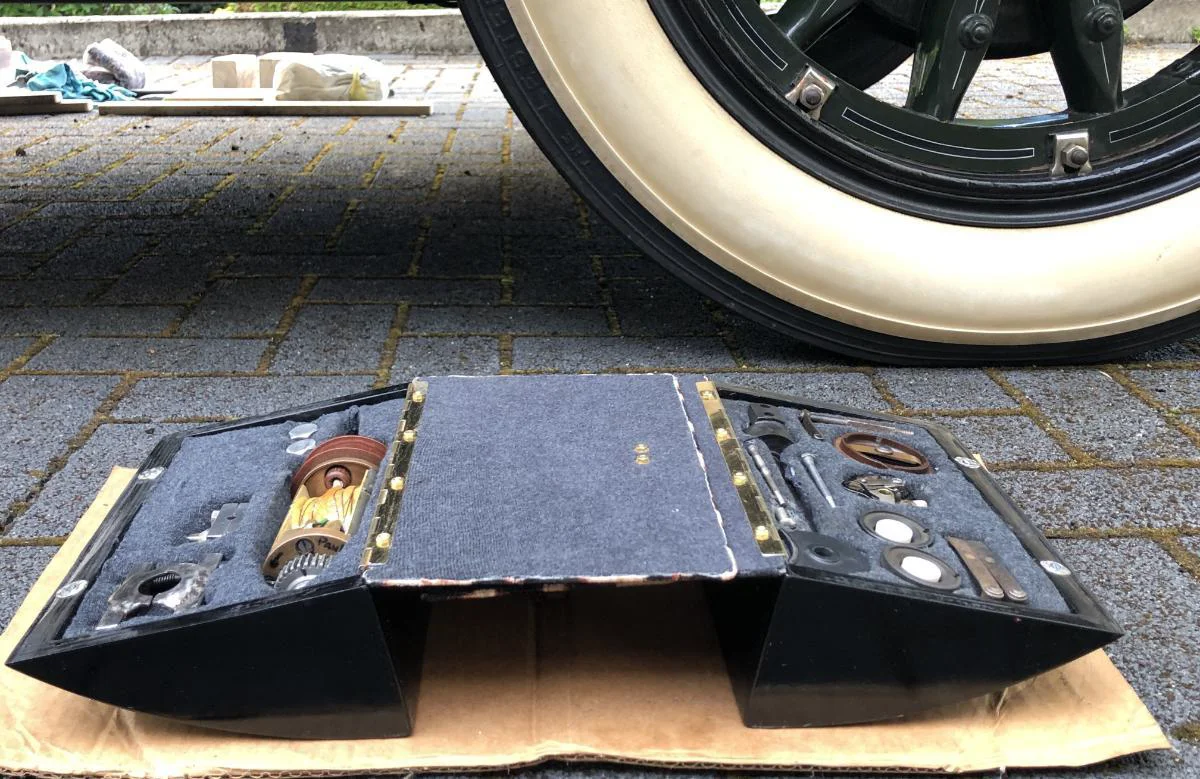
Because I don’t like suitcases strapped to the running boards and scratching the paint, I manufactured the additional suitcase for the twin spare tires, see the other thread for that: https://forums.aaca.org/topic/396446-touring-equipment-for-your-locomobile-touring-car/
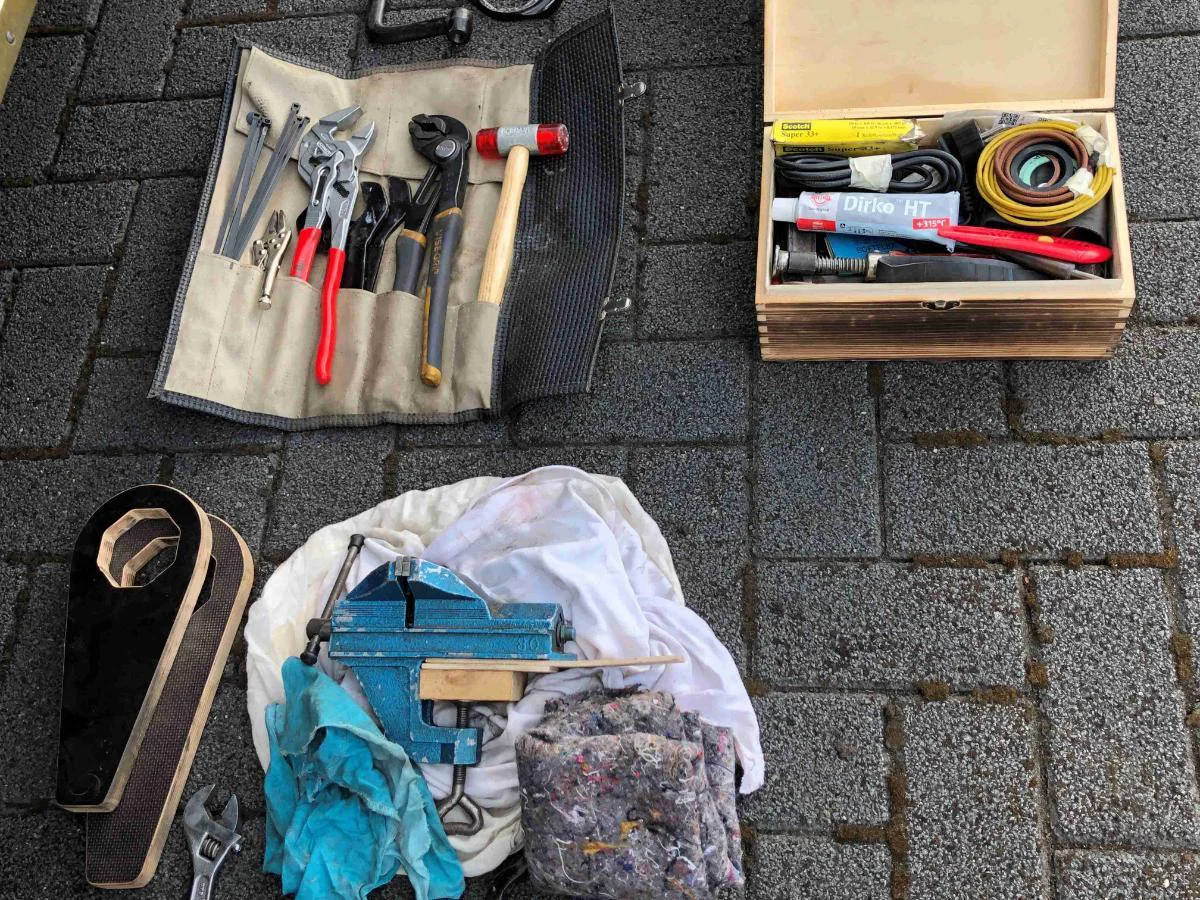
The technical preparation and selection of tools and spare parts kept me quite busy. Again and again I got ideas for improvement, found better settings, adjusted and lubricated, cleaned, waxed and polished. The last item was a spare armature for the Berling magneto which I received a week before departure! I even invented a conversion kit for bypassing the magneto with a temporary battery ignition for the second set of plugs in case of repeated failures. I believe the saying “you always need what you don’t have on board”, therefore I used every little bit of space in the left and right tool boxes. Even soldering equipment and a vice which I can clamp to the running board fits inside! The original jack, cranking handle and wheel wrench are locked in their designated place. All other things had to be placed around: Oil, grease, puller, a spare valve and spring assembly, a spare float for the carburettor, several pullers, wooden blocks, …, a long list.
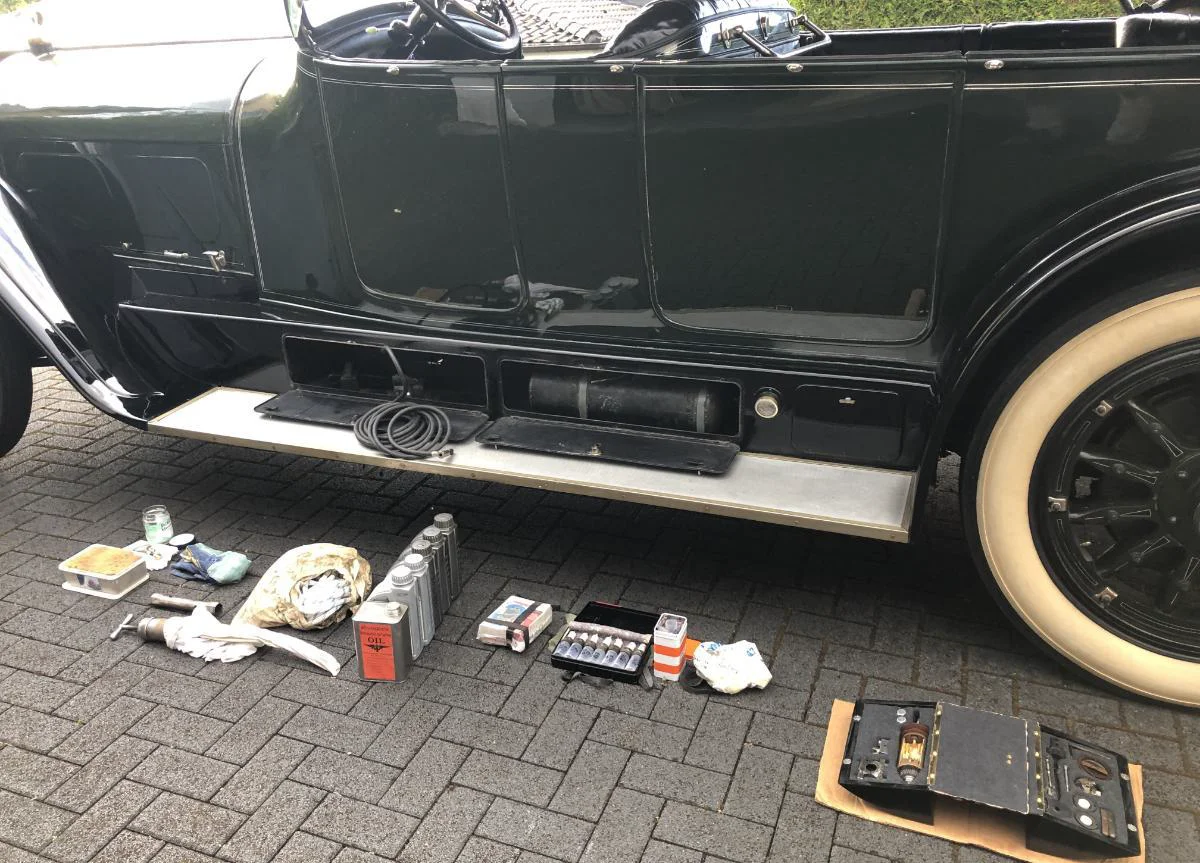
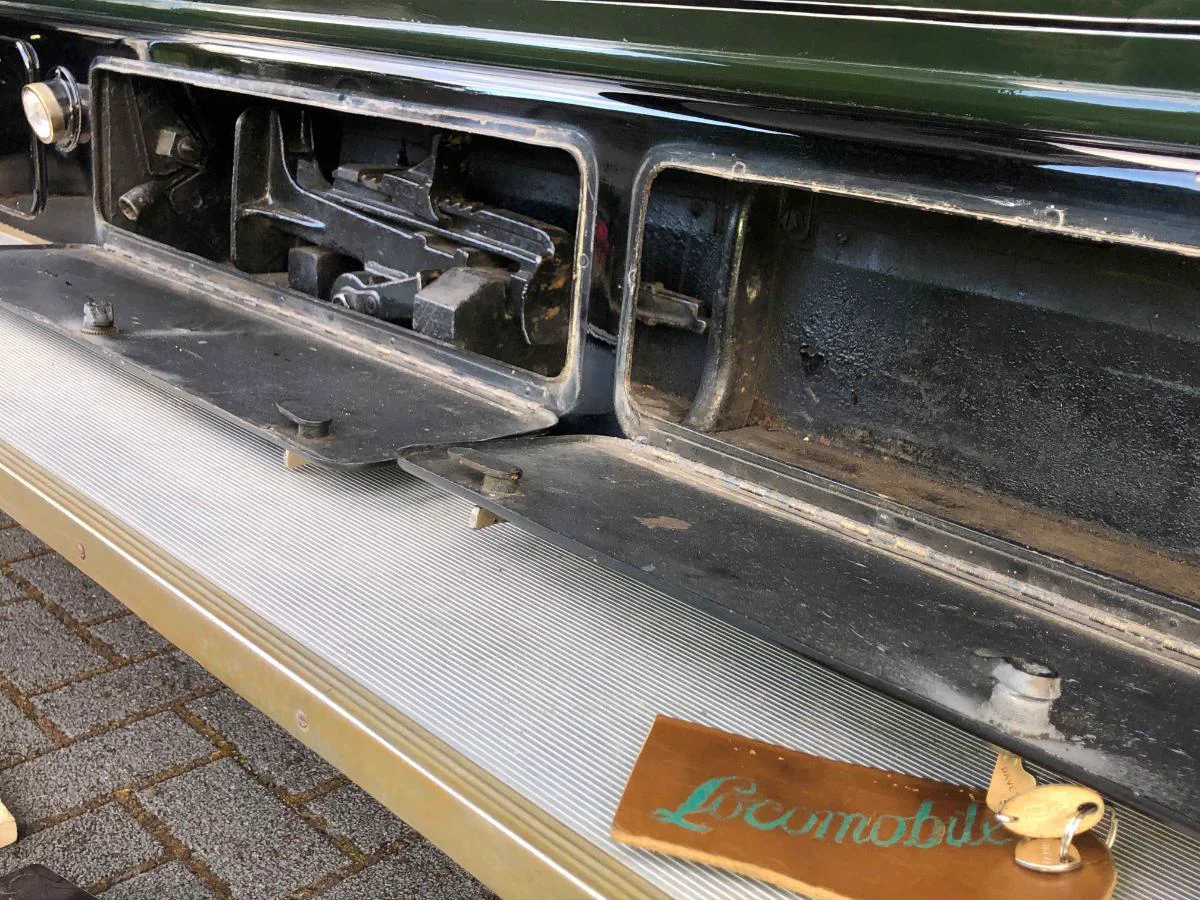
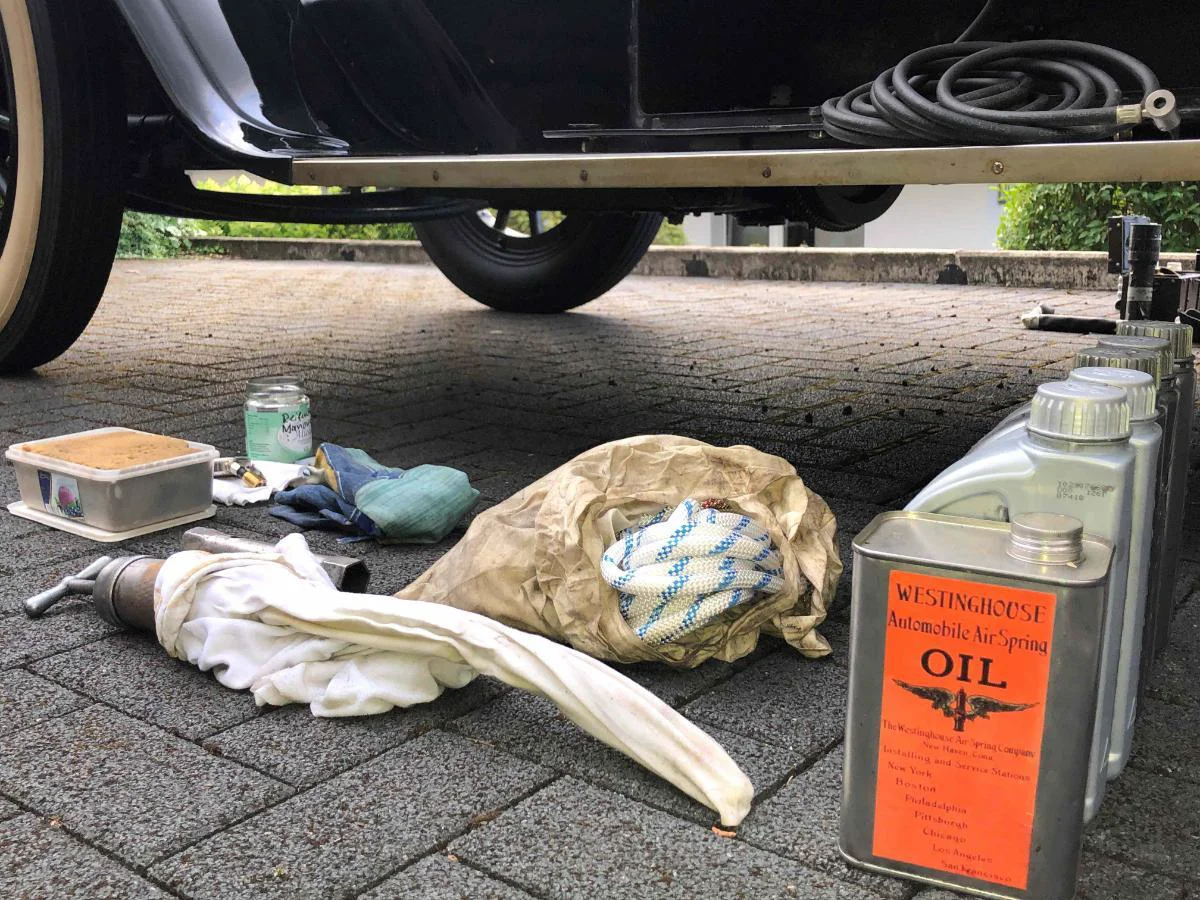
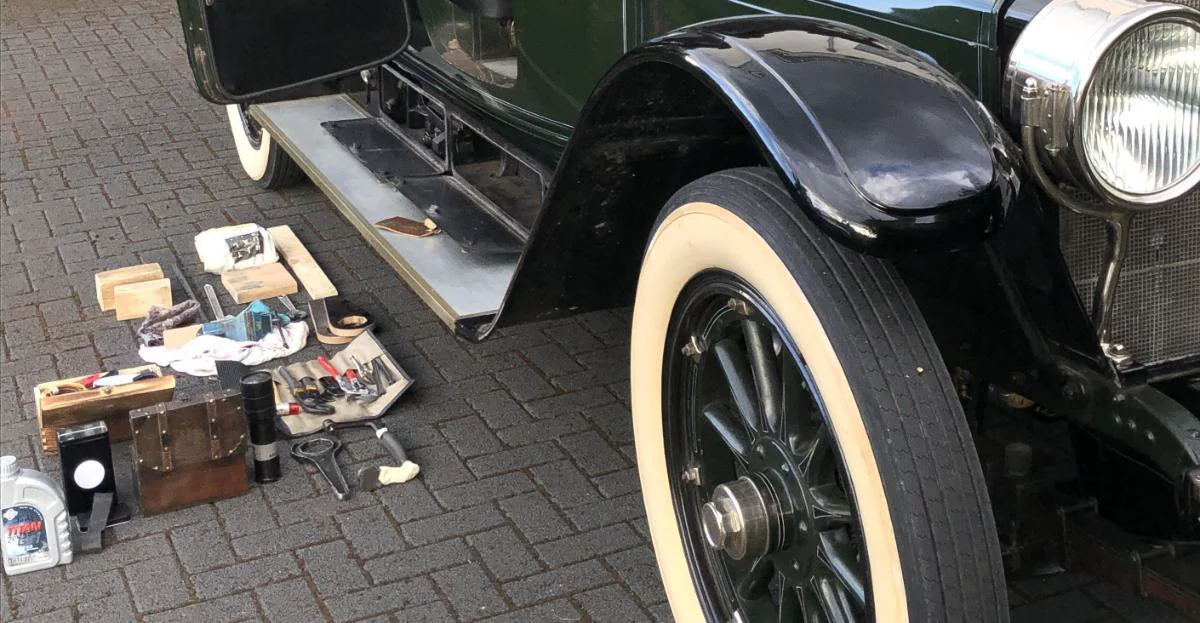
The Berling Magnetos spare parts are safely located in the bottom of my new tire trunk.
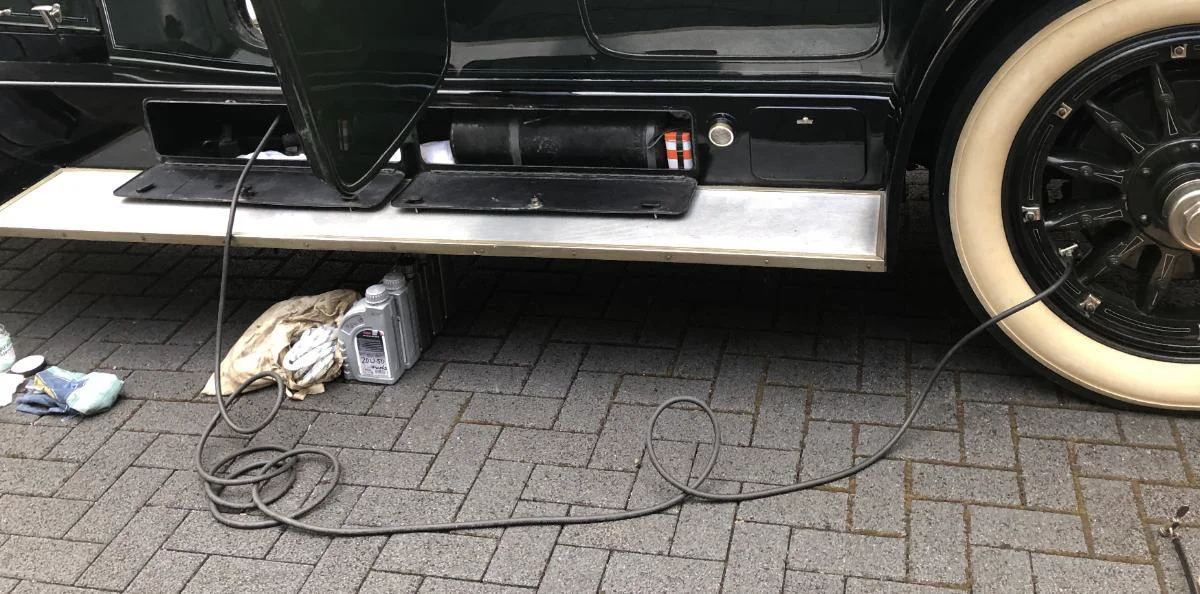
I tested the air compressor function and kept the hose connected, ready for usage. Actually I got used to filling the tank for the air horns every morning, which were very useful.
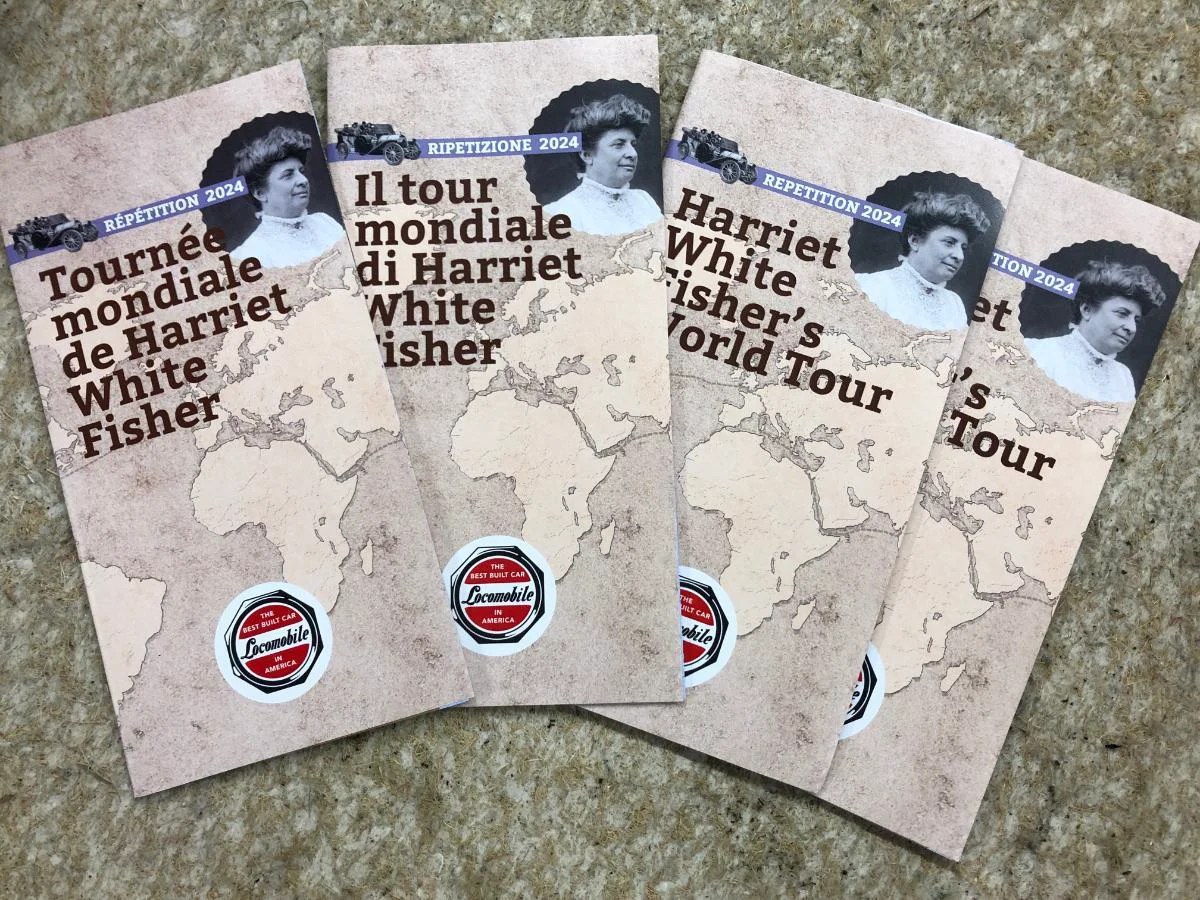
The organisation required contacting several officials, such as museum directors, road authorities, hotels and various offices in advance. For an easy introduction of our idea to the relevant people and friends, I prepared this flyer with the text in four different languages: German, French, Italian and English. Please try to imagine these two pages printed on both sides of a glossy paper, then folded twice. It turned out really nicely and impressed many people before and during the trip.
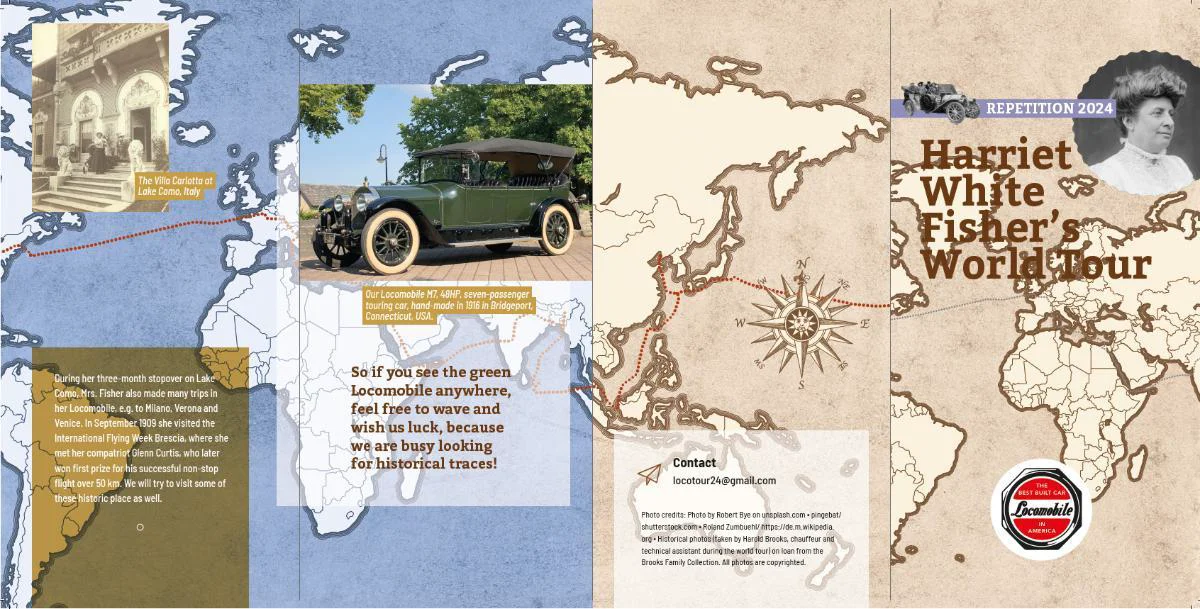
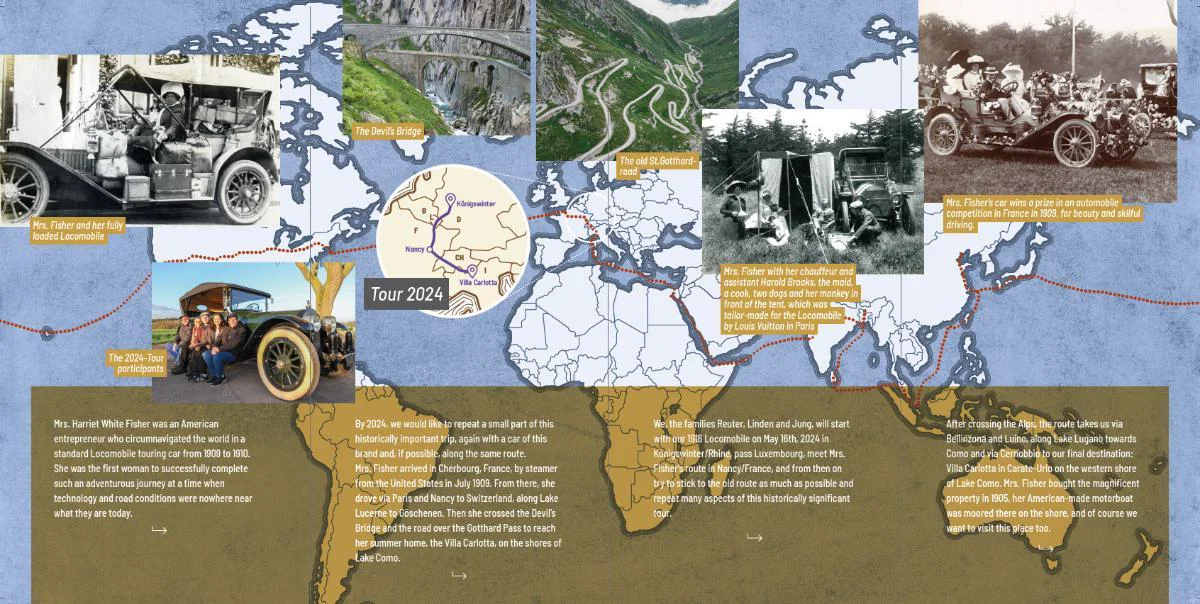
We planned visits to the famous Schlumpf Collection in Mulhouse (France), the biggest Italian car museum in Turin, the Rolls Royce Museum in Dornbirn (Austria), and several private collections. We wanted to stay in the most historic Hotels along the route and meet the horse-drawn Gotthard-coach on the way through the alps, too. All replied very positively after they received the flyer. Hotel receptionists even arranged safe parking locations for our Loco!
One week before the planned start date I contacted the Swiss road authorities. I wanted to make sure the old Gotthard pass had been opened after the winter closure. Unfortunately the reply was negative: They had stopped the road clearing because of too much new snow and many avalanches. Up to 8 m (26 feet) of snow on the St. Gotthard roads and a large landslide on the neighbour pass St. Bernadino!
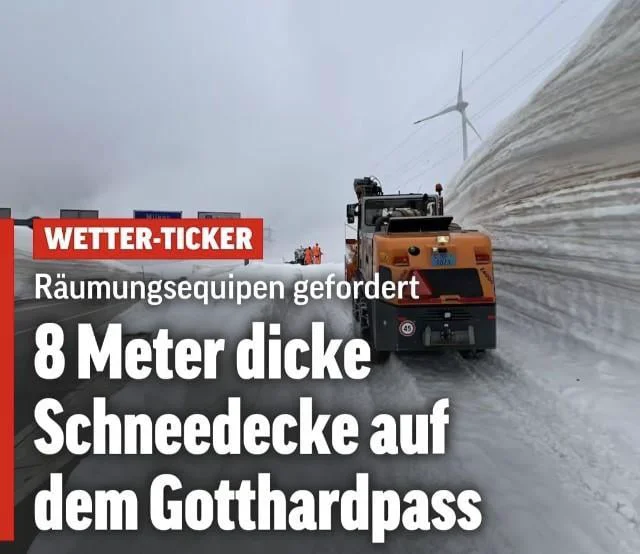

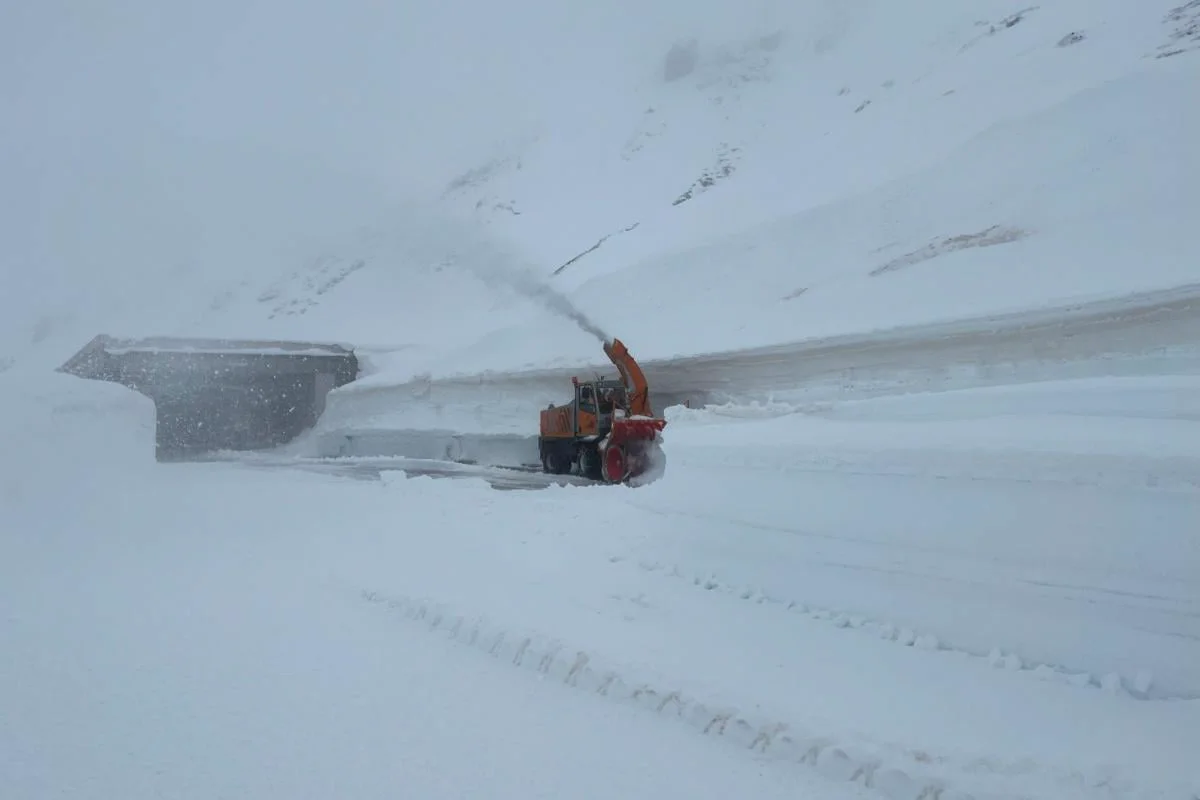
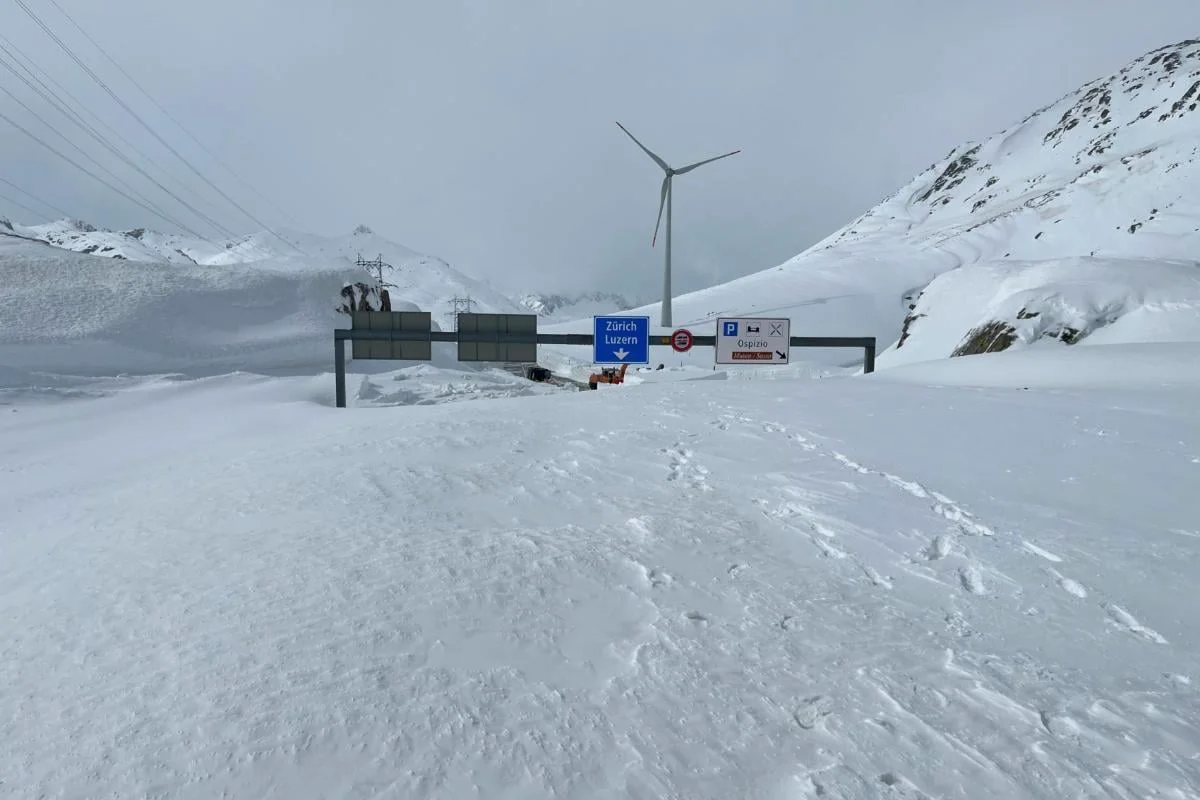
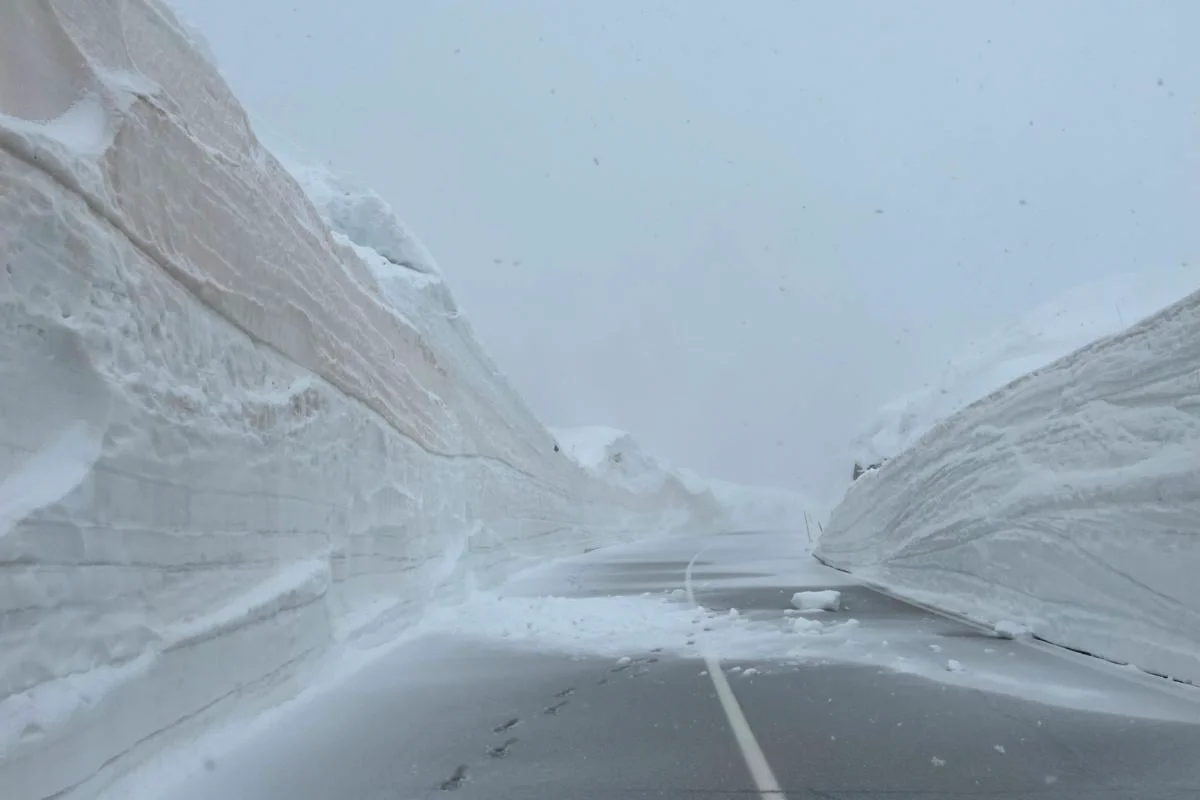
Many roads in that region were closed and the main traffic through the tunnel jammed every day. No way to have an enjoyable trip over the scenic mountain pass same as Ms. Fisher did! We were forced to delay our trip. The new date was set to two months later.
I think the easiest way of presenting this trip is day by day. Let’s start with DAY ONE.
Additinal Info added 2025-2-14: this part of the trip is available on youtube, see
My daughter arrived by train the night before, and we got up at 6:00 on July 18th, 2024. We picked up our friends Renate and Kurt in Bonn at 8:00. Shortly afterwards, when we arrived at Ulis home, our friend Joachim with his 1953 Mercedes-Benz 170S was already there.
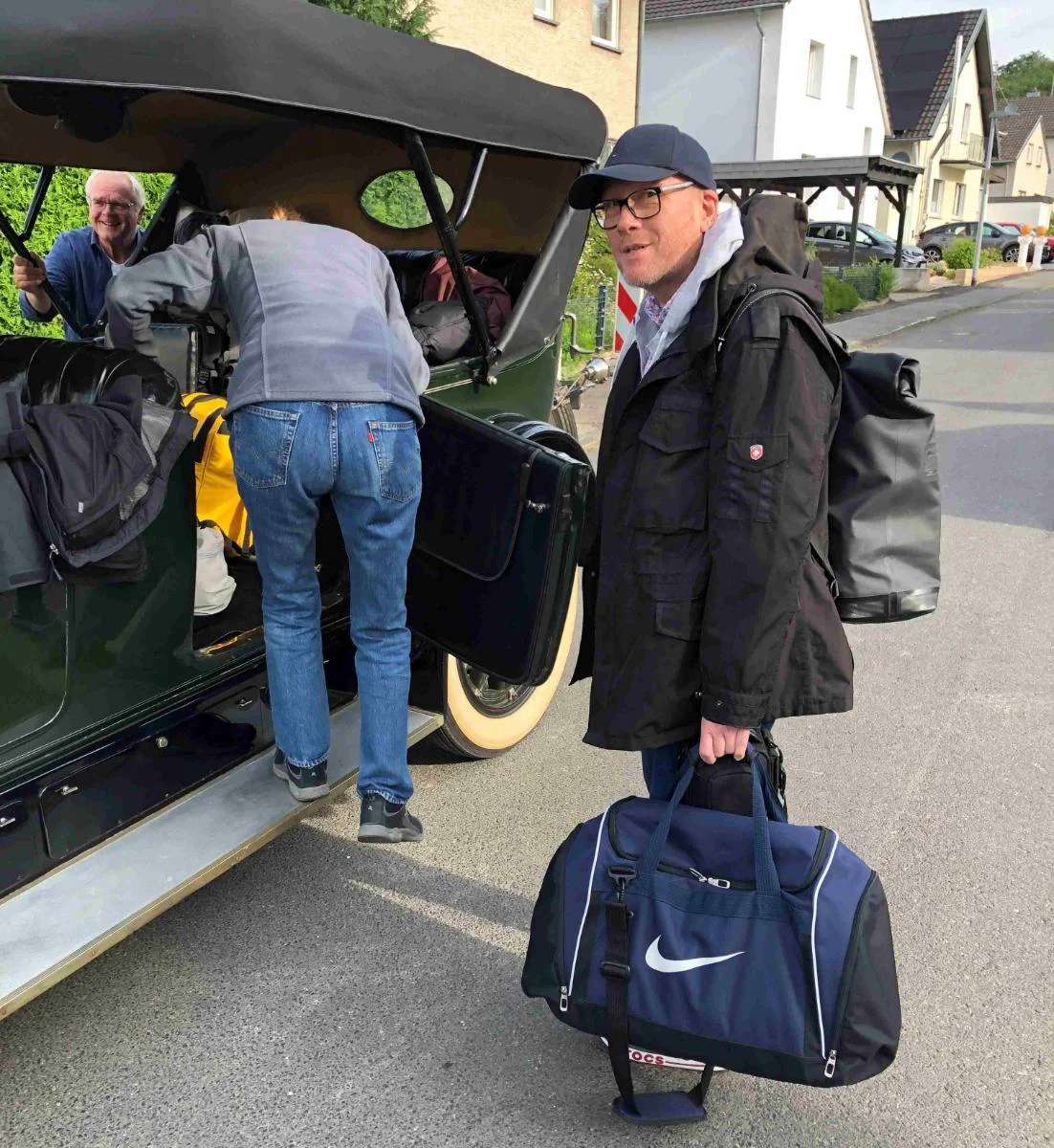
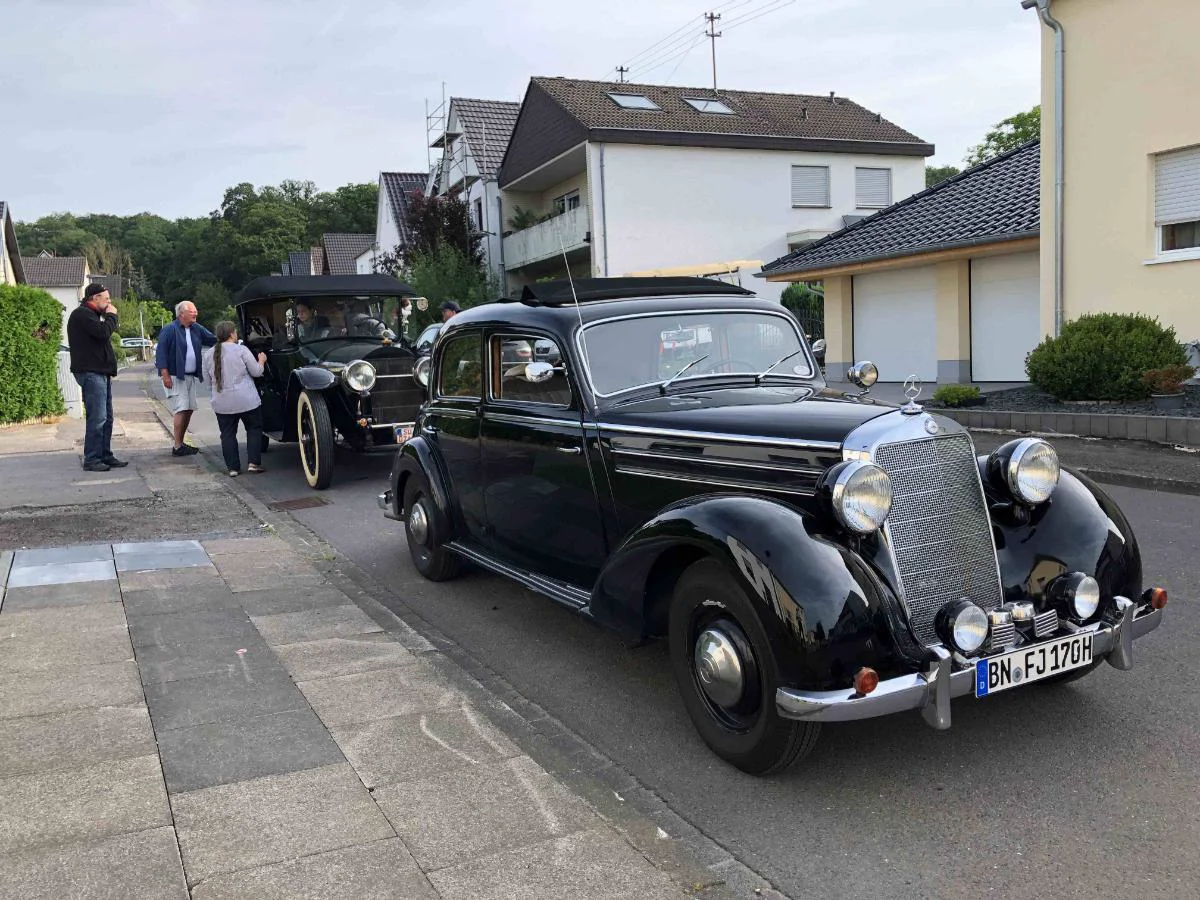
Now six people and two cars were complete, and we started our trip in south-west-direction through the Volcanic-Eifel-Mountains which is a region defined to a large extent by its volcanic geological history, some areas are still volcanically active today. We stopped at one of Kurt’s Friends who’s garages are filled with many antique motorcycles, some with sidecars, even a 1918 Indian Powerplus is there.
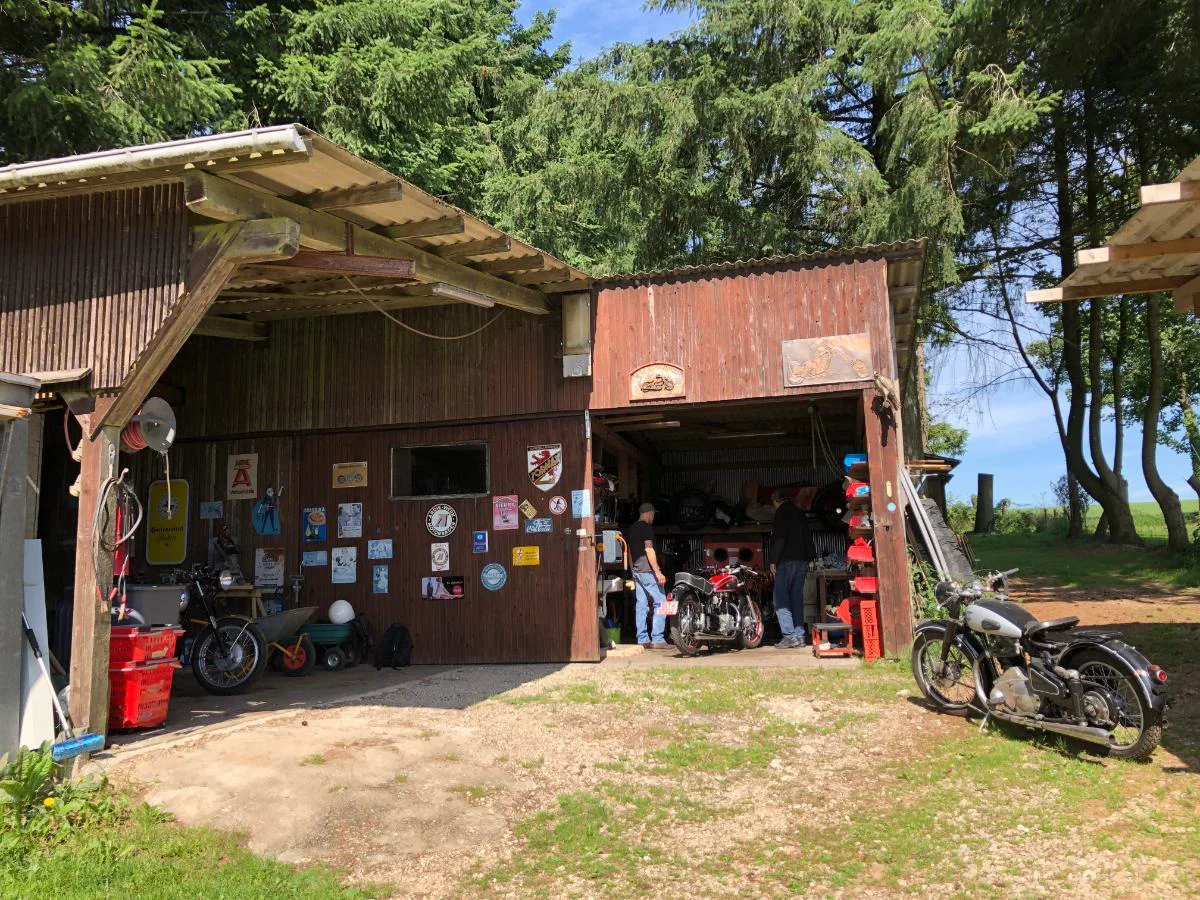
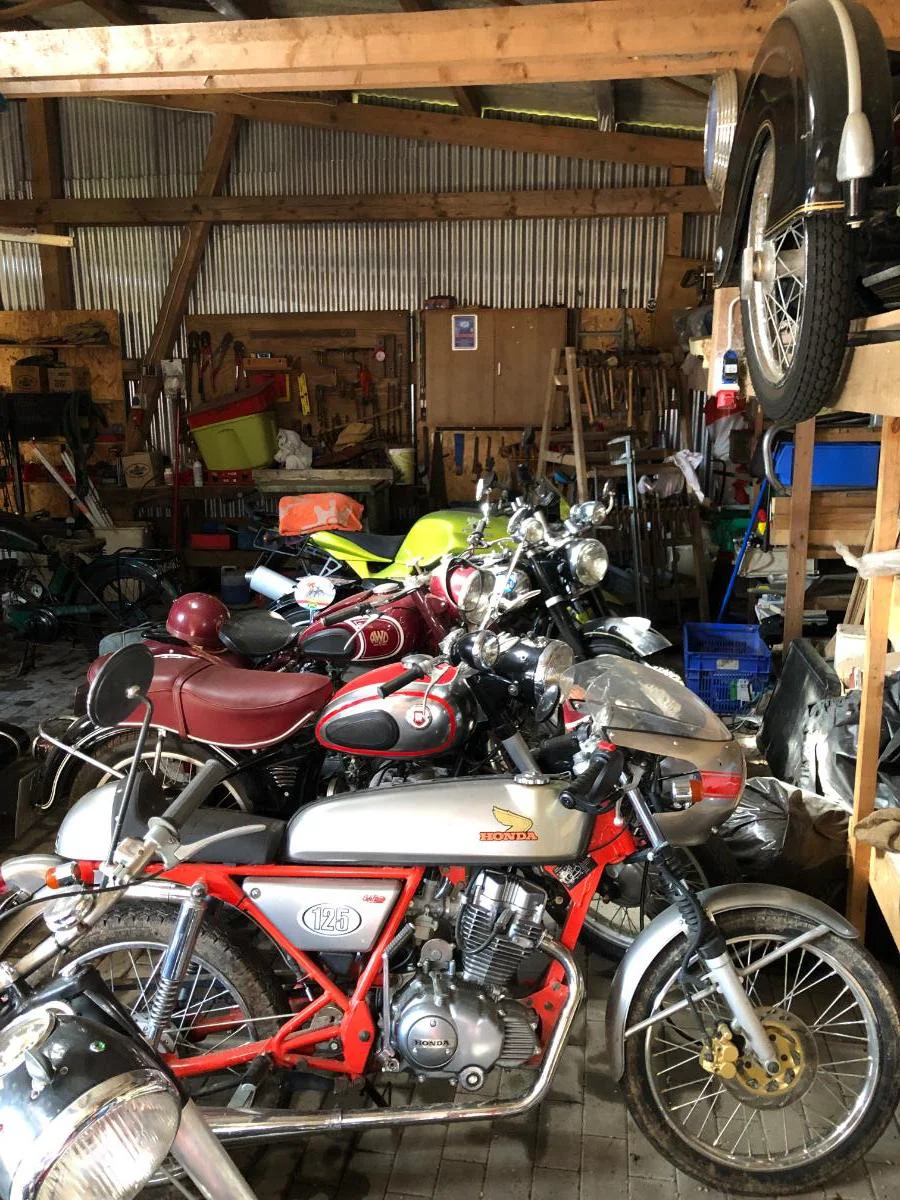
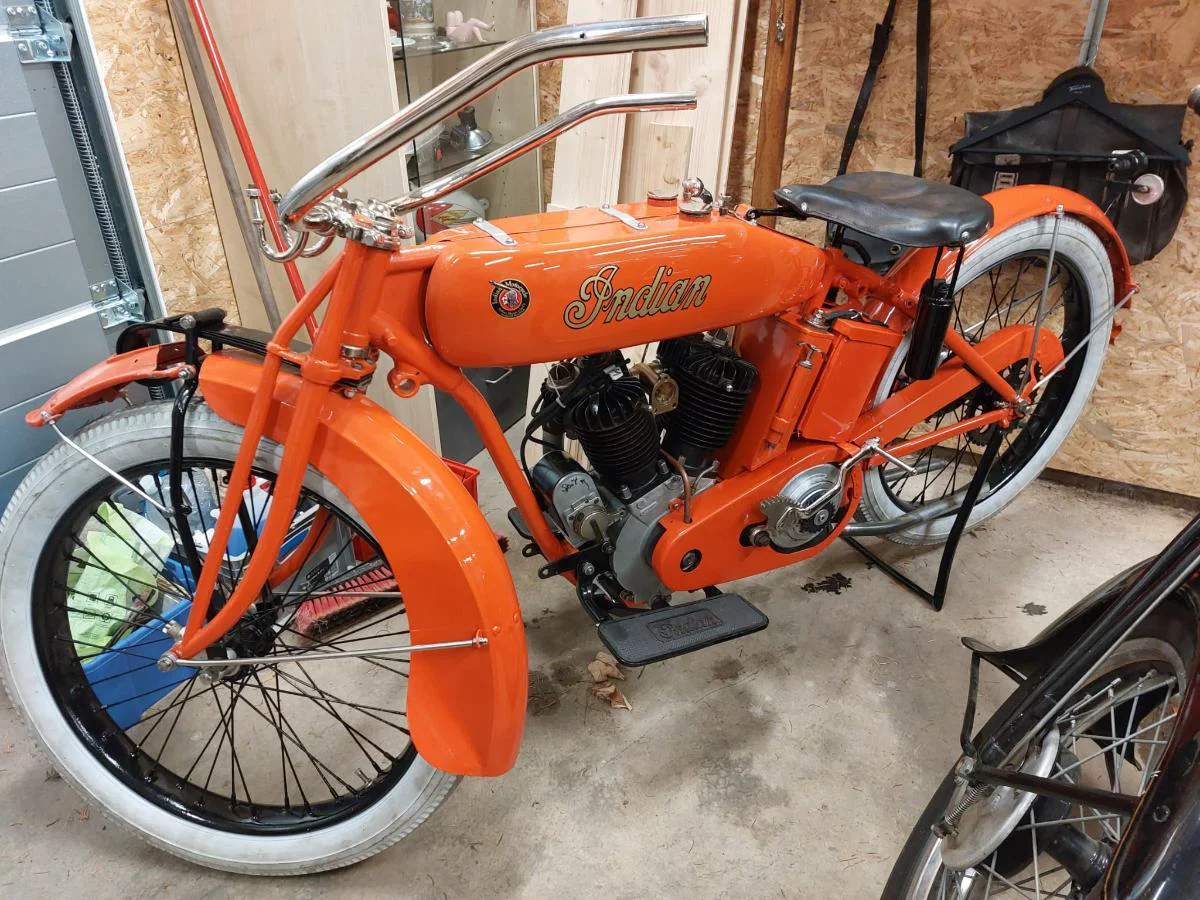
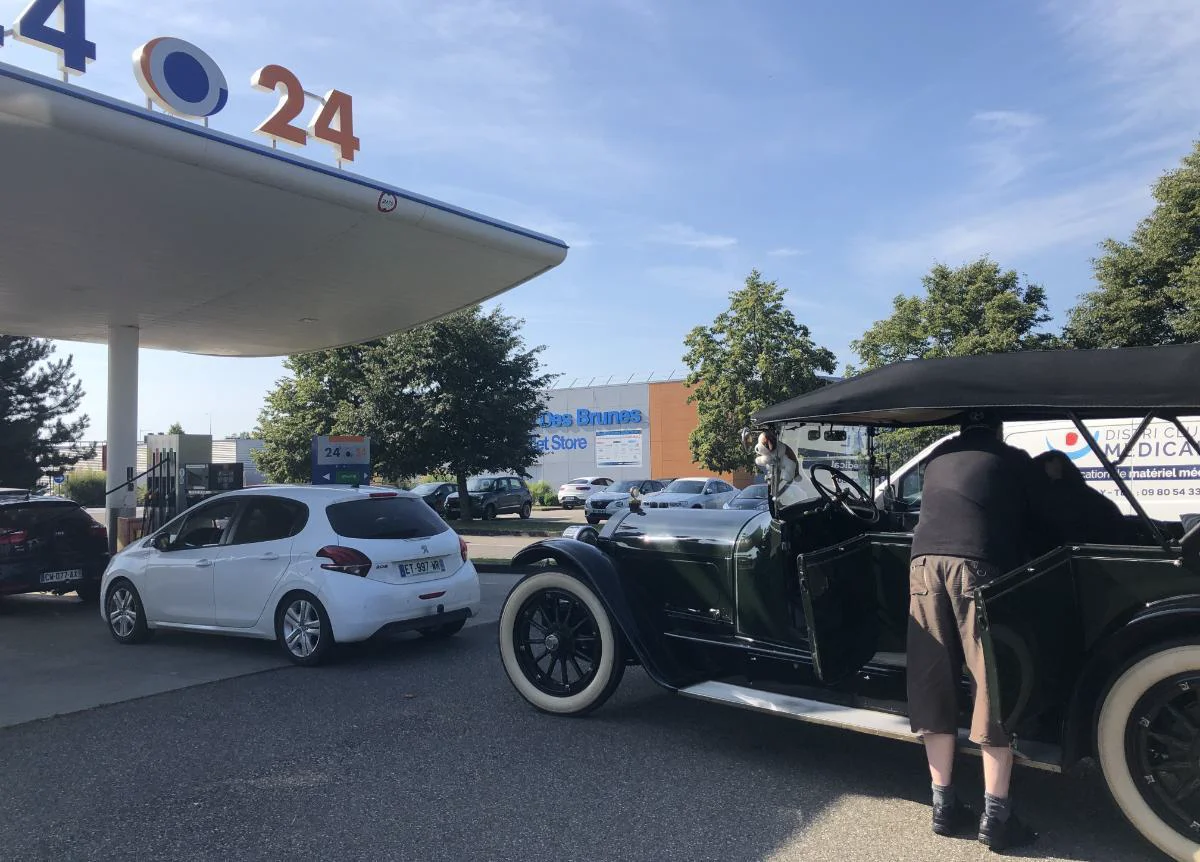
Half an hour later we continued towards Luxembourg. Here we filled the fuel tanks. Then we followed the Mosel river with its beautiful valley into France. Nancy was one of the cities mentioned by Ms. Fisher in her book. Instead of using the conventional paper map, we tried google maps with the setting “no highway” and “no toll roads”. As a result, we used mainly very small roads, narrow and hilly, only countryside, through little villages and lots of forest, always accelerating and braking in between many bicyclists and tractors with trailers and the normal rural traffic. We hit the harvesting season. To our big surprise we found: The French maintain their roads (even these secondary roads!) very well and keep them nearly everywhere in good condition!
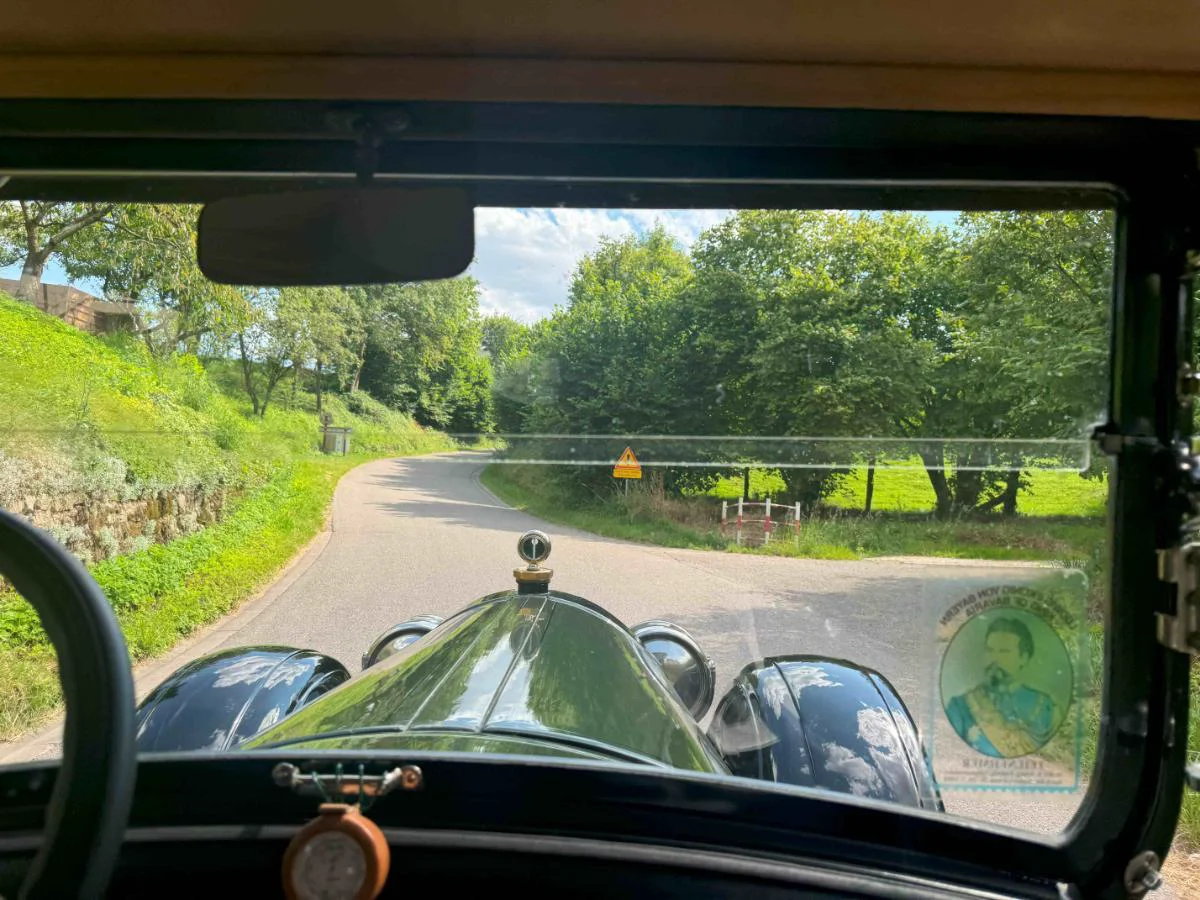
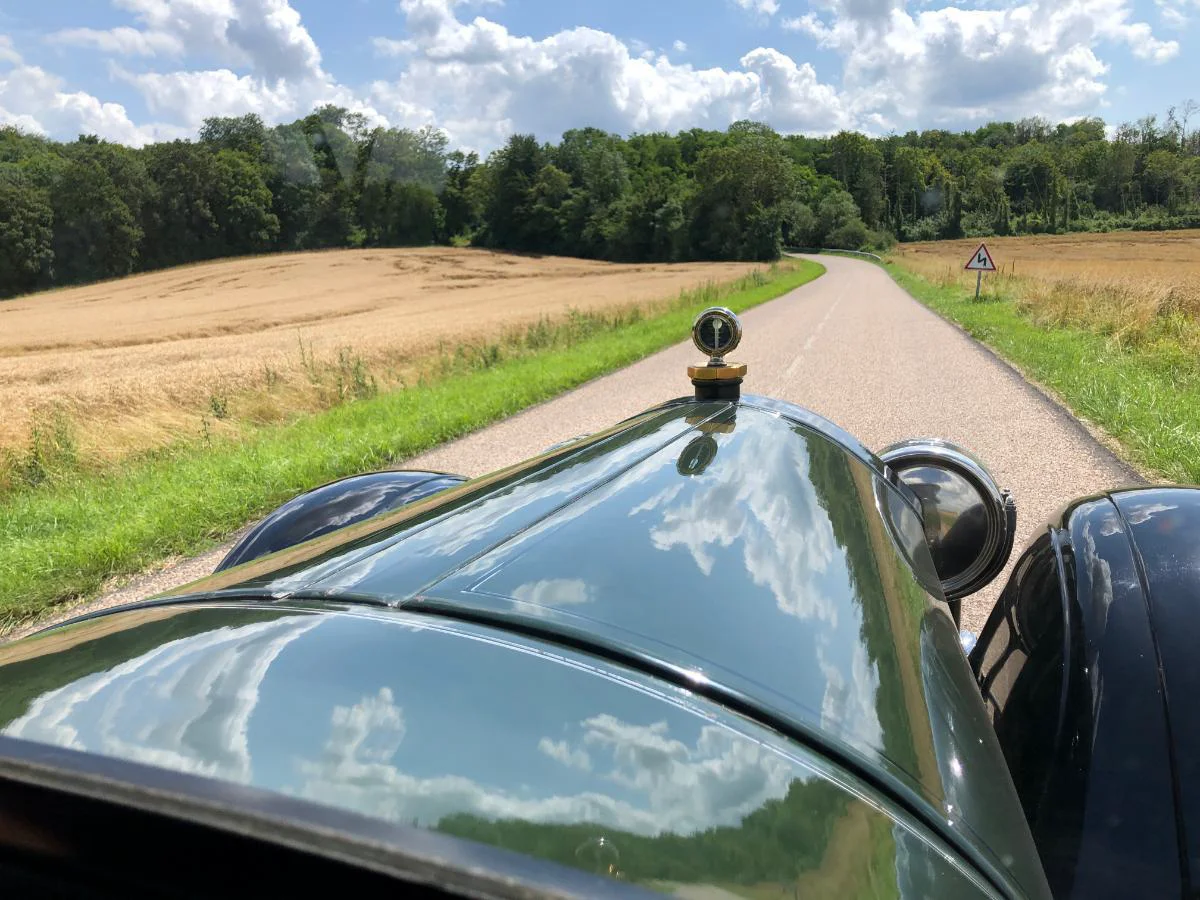
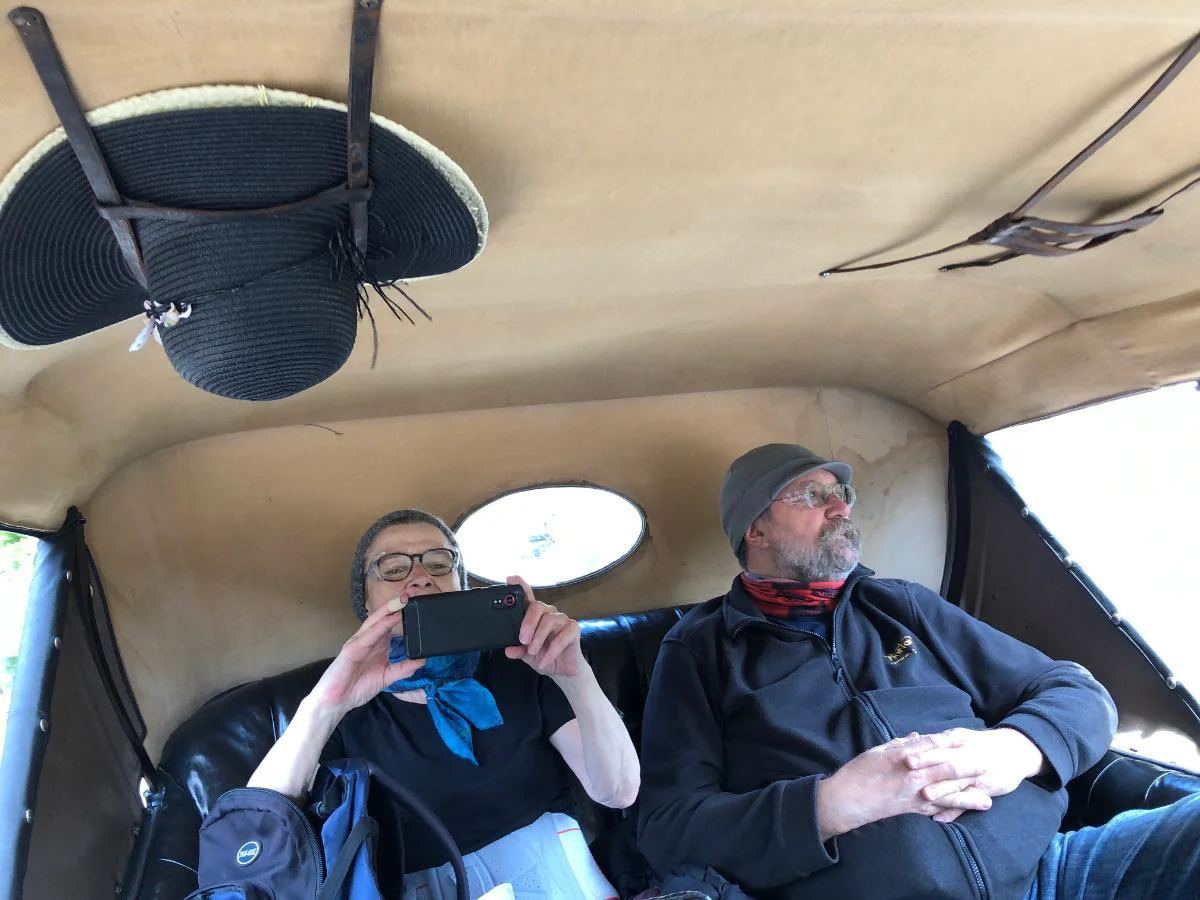
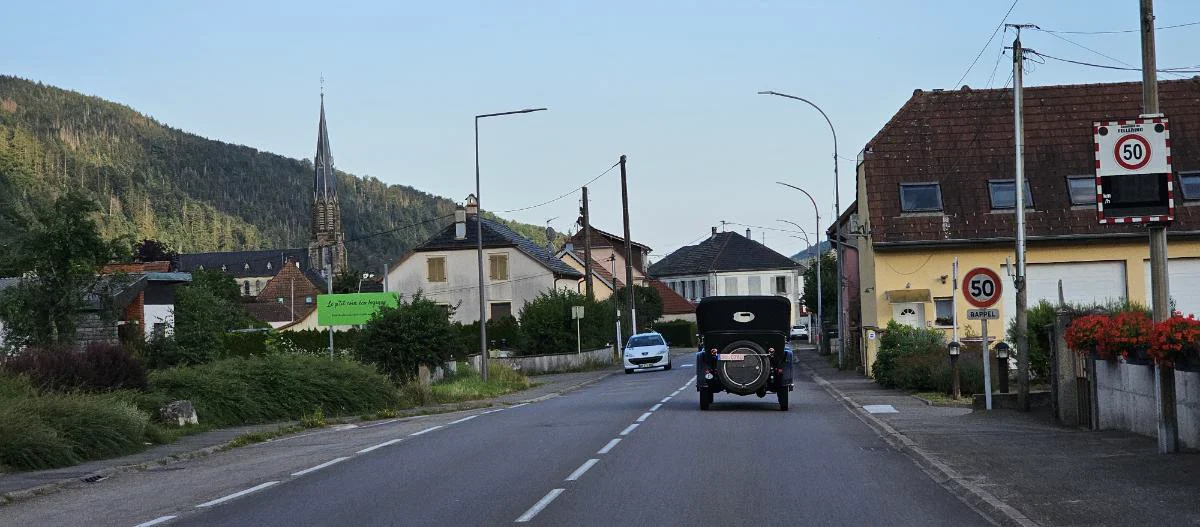
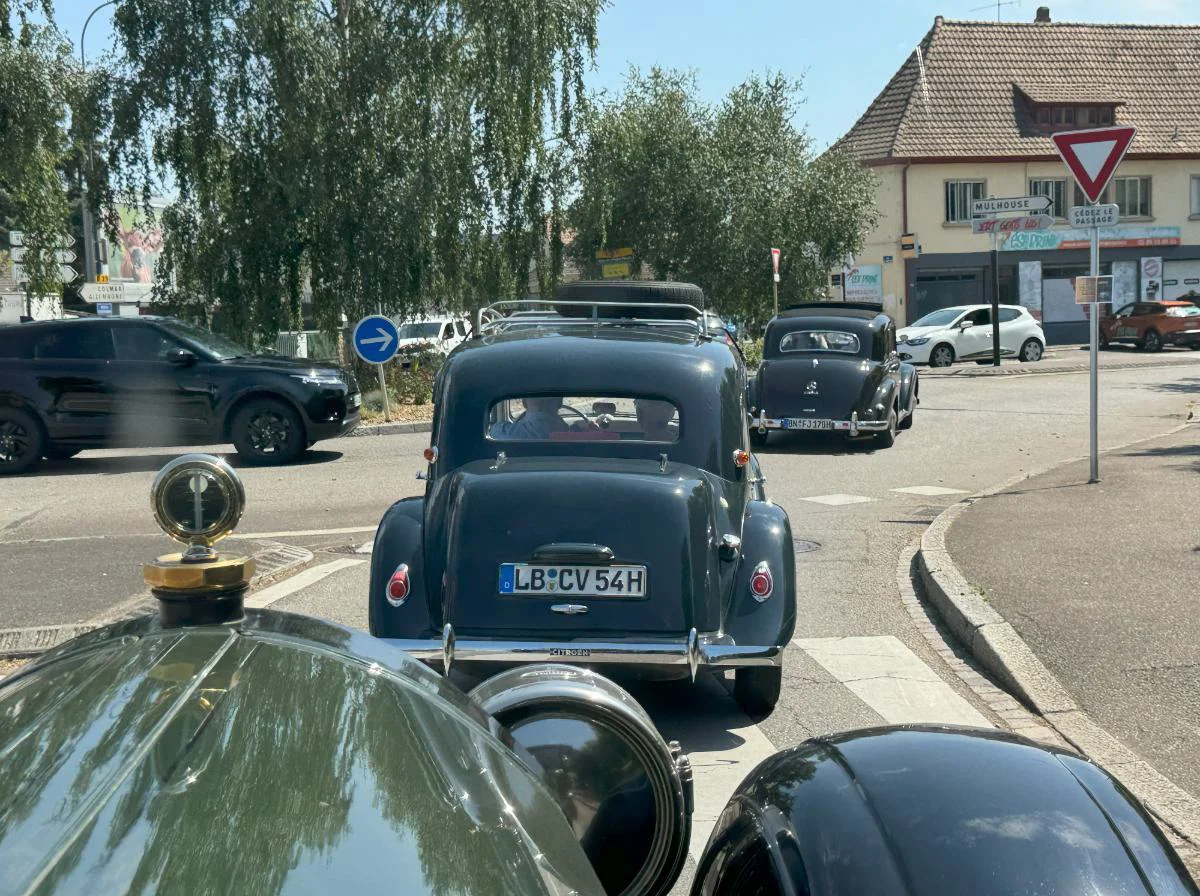
In the late afternoon we reached the Vosges, which is a low mountain range in France with the highest elevation of 1424 m. Some hairpin-turns gave us a first impression of the coming days. At 8:00 pm we arrived at the hotel in Thann (close to Mulhouse), where our friends Doris and Peter were waiting for us already. They came from Marbach/Neckar (app. 180 miles) in their 1954 Citroen 11CV Traction Avant Legere. Now the group had grown to eight and we had a lot to talk about during dinner!
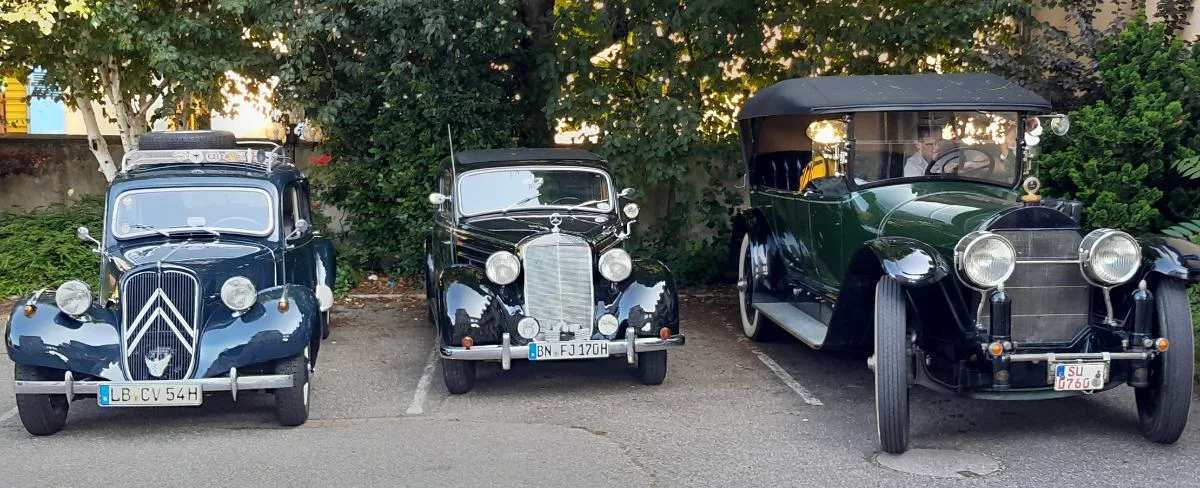
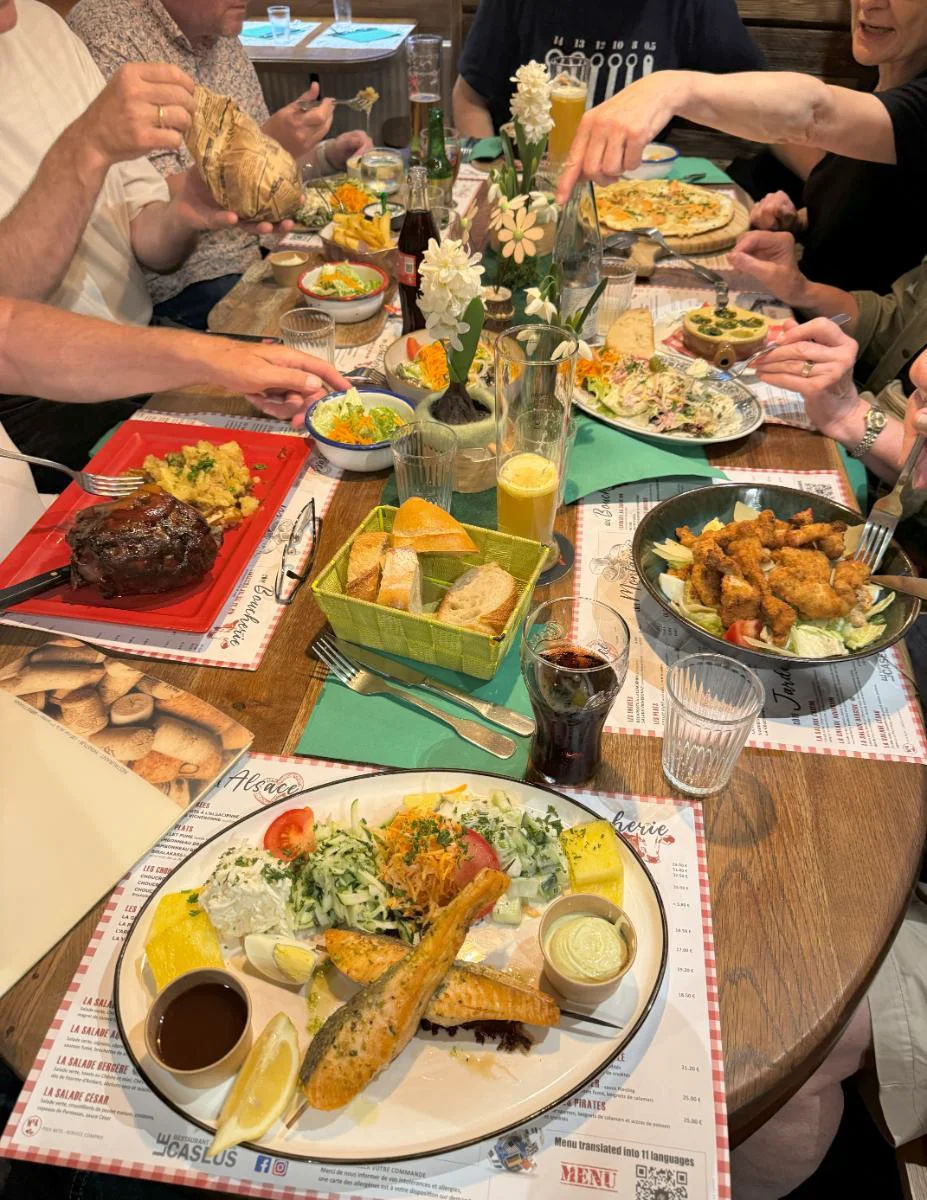
This first day was the test for the Locomobile and the passengers: more than 320 miles during 12 hours on demanding roads with only a few short stops (in total perhaps 2 hours?) should reveal any weakness. But the Loco behaved perfectly, no oil, grease, water or air had to be added, and the complaints from my passengers were still acceptable. They all said that my daughter drives much more smoothly and comfortably than I do. After the first few beers, they started enjoying the tour, I just had to promise less miles for the next few days.
From the technical point of view, I can report: At an ambient temperature of approximately 30 °C (86°F), the engine cooling is no issue, but everything behind becomes really hot. For example the gear shift lever and the instruments. A water bottle standing on the front right floorboards became so hot, it felt like drinking tea. I think I will install a heat shield behind the exhaust downpipe (same as the 1924 model had), and I left the false dash at home because I didn't trust the electrics yet. Must put it back in place after the tour, it will protect the instruments. Wheel bearings and tires are all at normal temperatures. Brake bands are becoming quite hot when used hard but they still remain very effective. I will report more after descending the Gotthard pass.
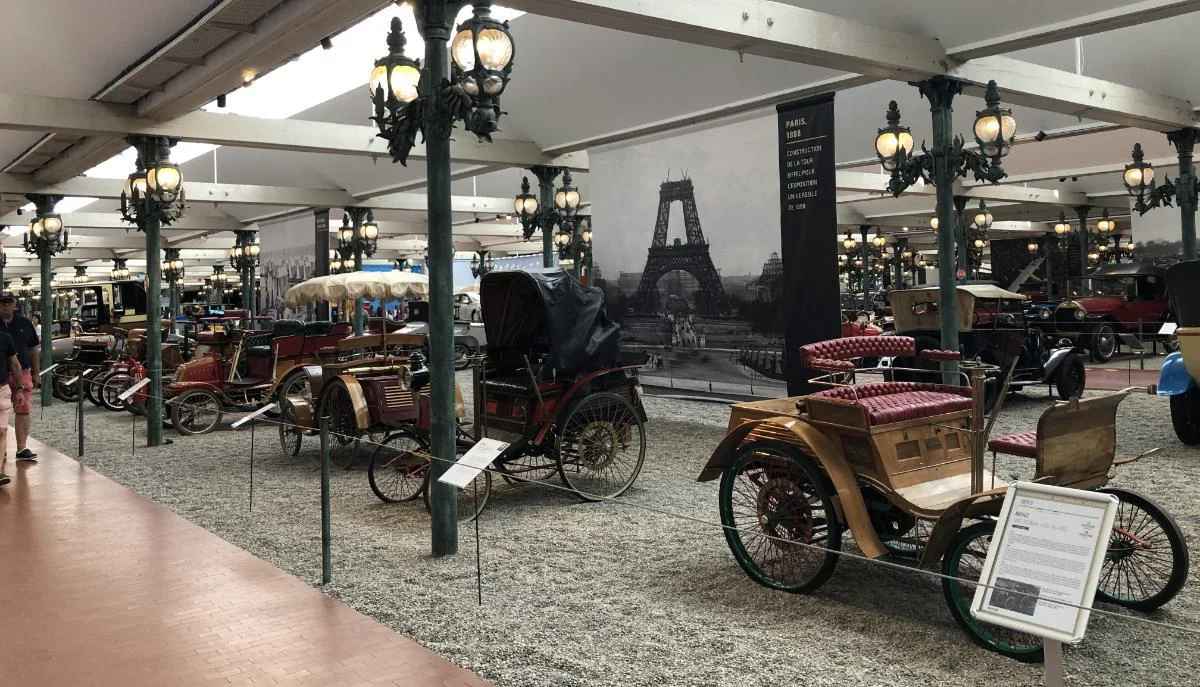
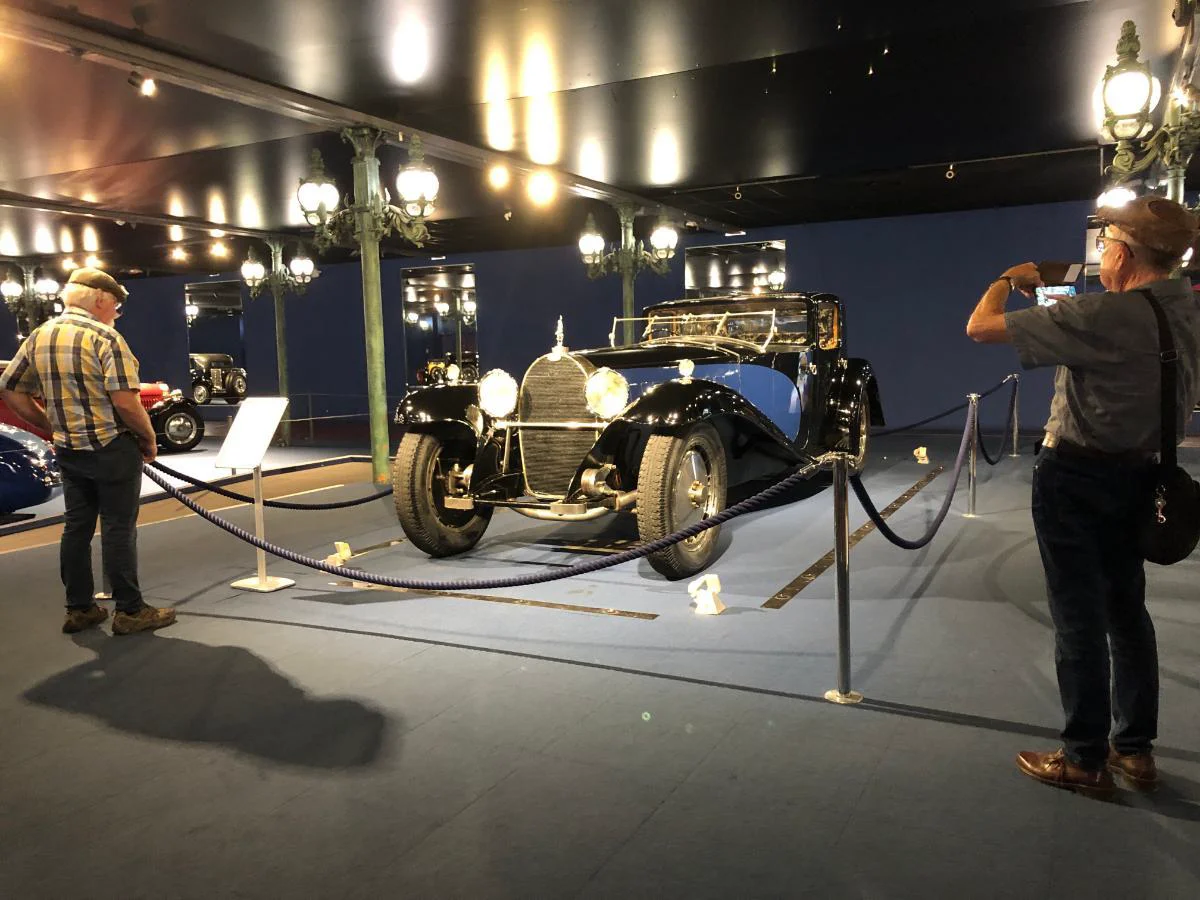
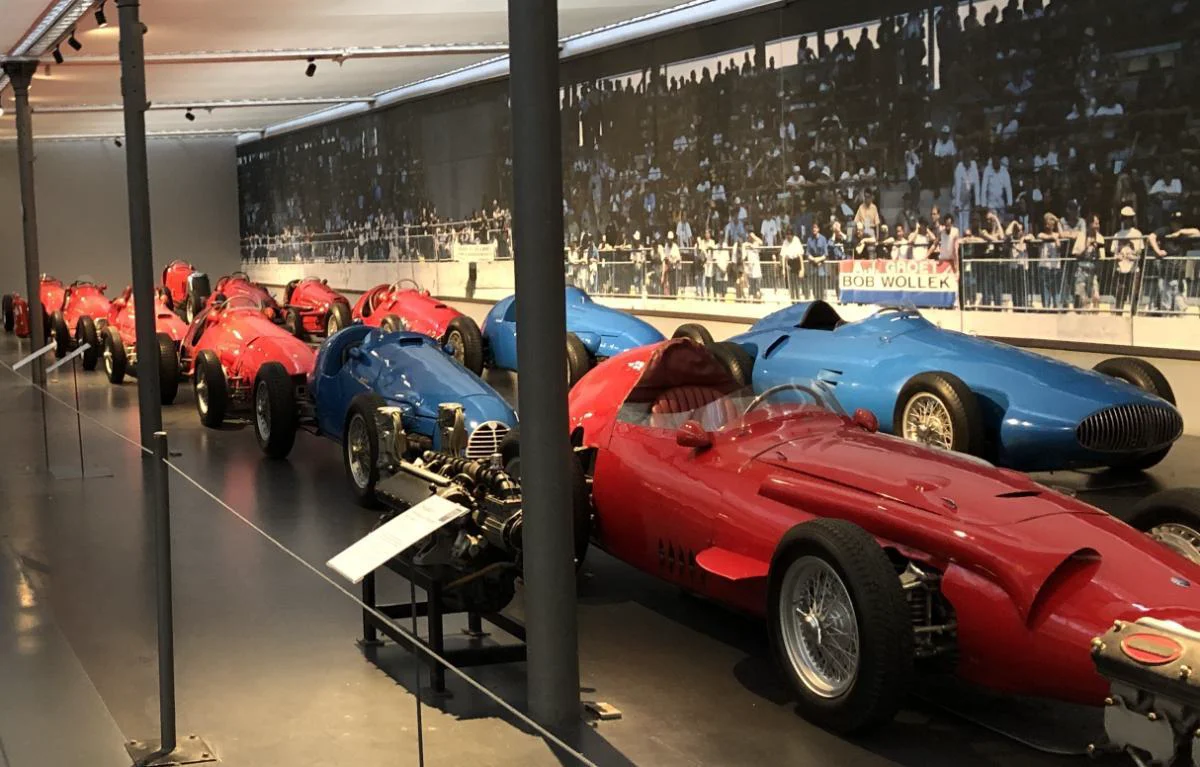
DAY TWO started with one of the tour’s highlights: we visited the Mulhouse Auto Museum (Musée National de l'Automobile) which has a really famous history: The National Automobile Museum houses one of the most beautiful automobile collections in the world with more than 450 exceptional cars. Their focus is on Bugatti. Founders were two brothers Hans and Fritz Schlumpf, textile industrialists who started hunting for antique cars in the 1950s, after having raced a Bugatti before. The collecting virus took over, they bought amazing treasures all over the world, sometimes a complete train load! In 1957, the Schlumpf Brothers bought an old wool mill where they installed their entire collection in a professional way, they even illuminated the lanes with original cast iron lamps from Paris. They had planned to open their collection to the public, but in 1976 they went bankrupt, the laid-off workers discovered the secret collection, and the affair came to light. The brothers flew to Switzerland. Before the collection was sold, the French government interfered. In 1982 it was opened as the "National Automobile Museum".
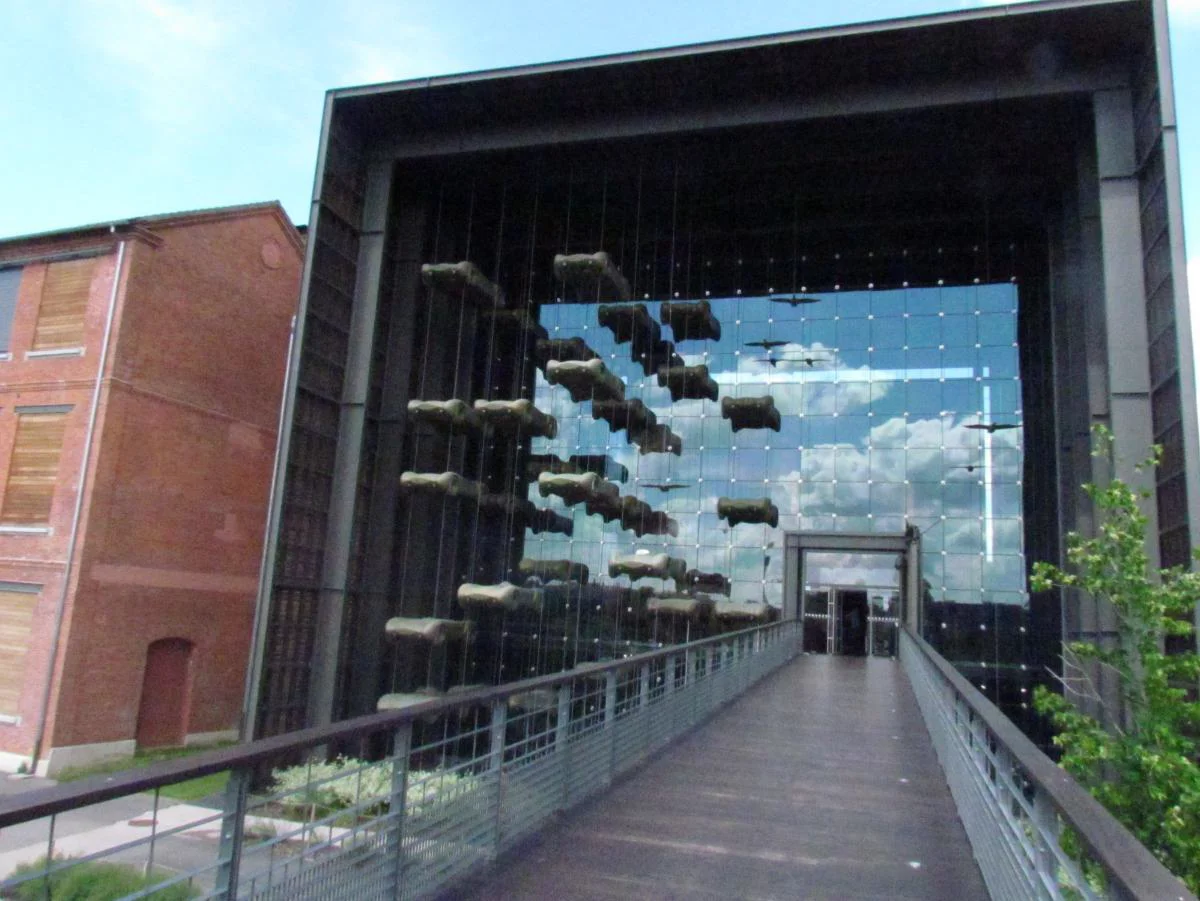
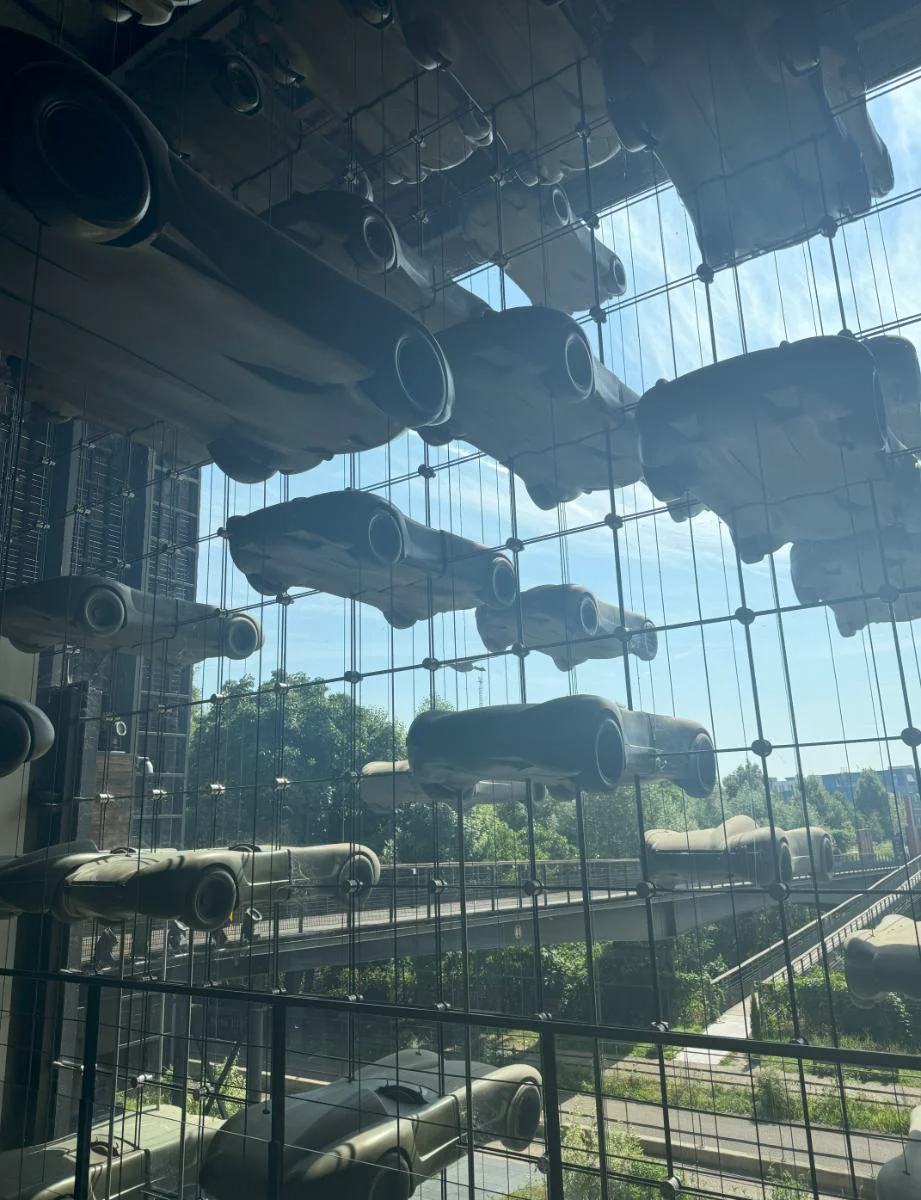
On the way from the hotel to the museum, we filled fuel. Just now when sorting out the photos I realize the strange proportions between our giant Kurt, the Locomobile and other cars. By the way, Renate and Kurt had prepared T-shirts for our Loco-tour, which we used for this occasion.
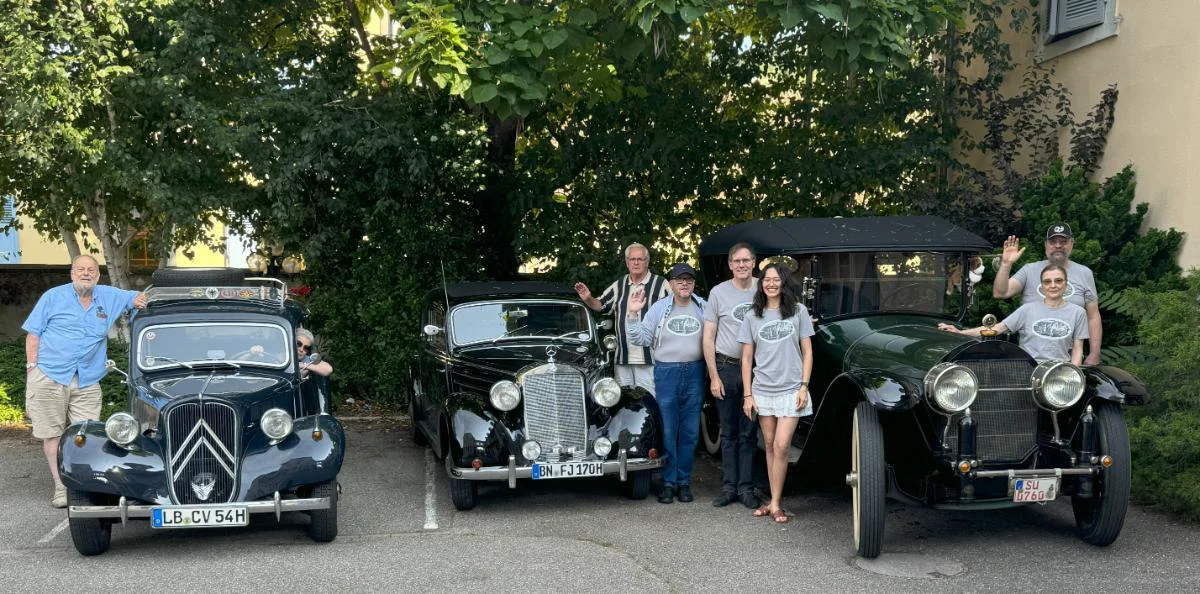
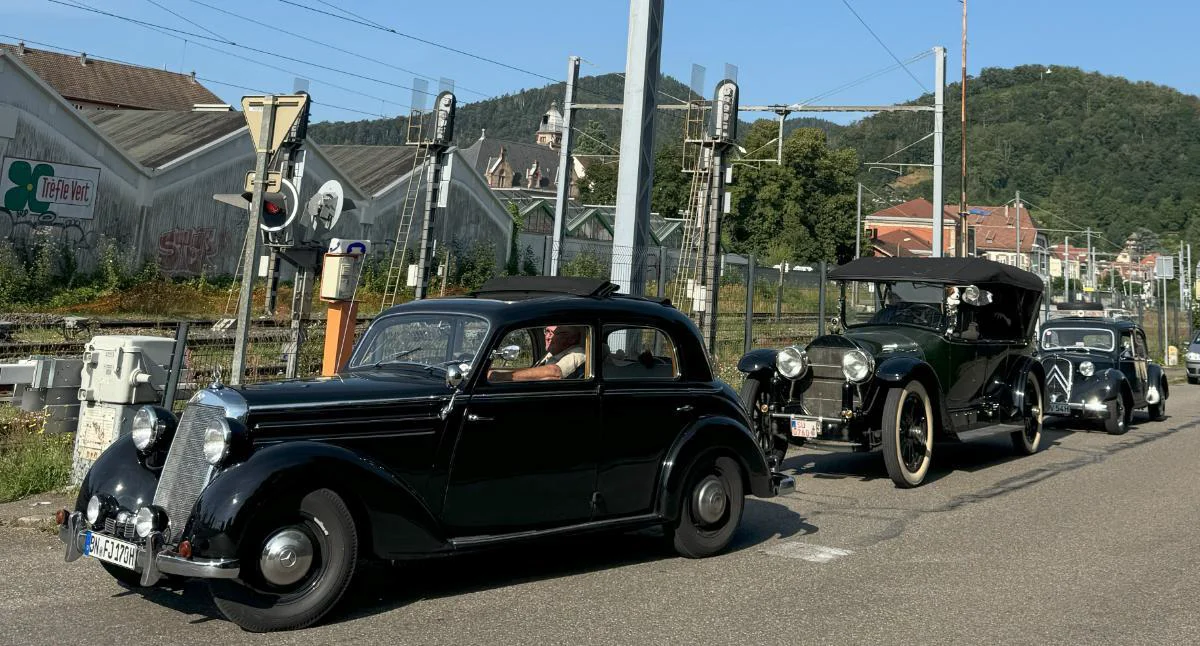
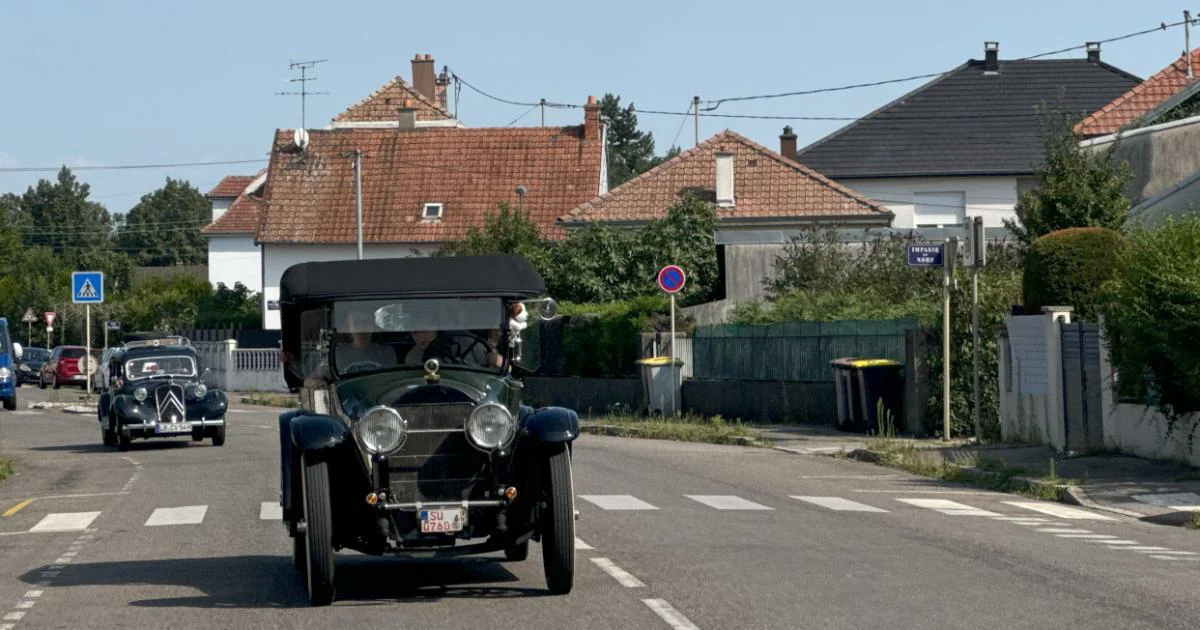
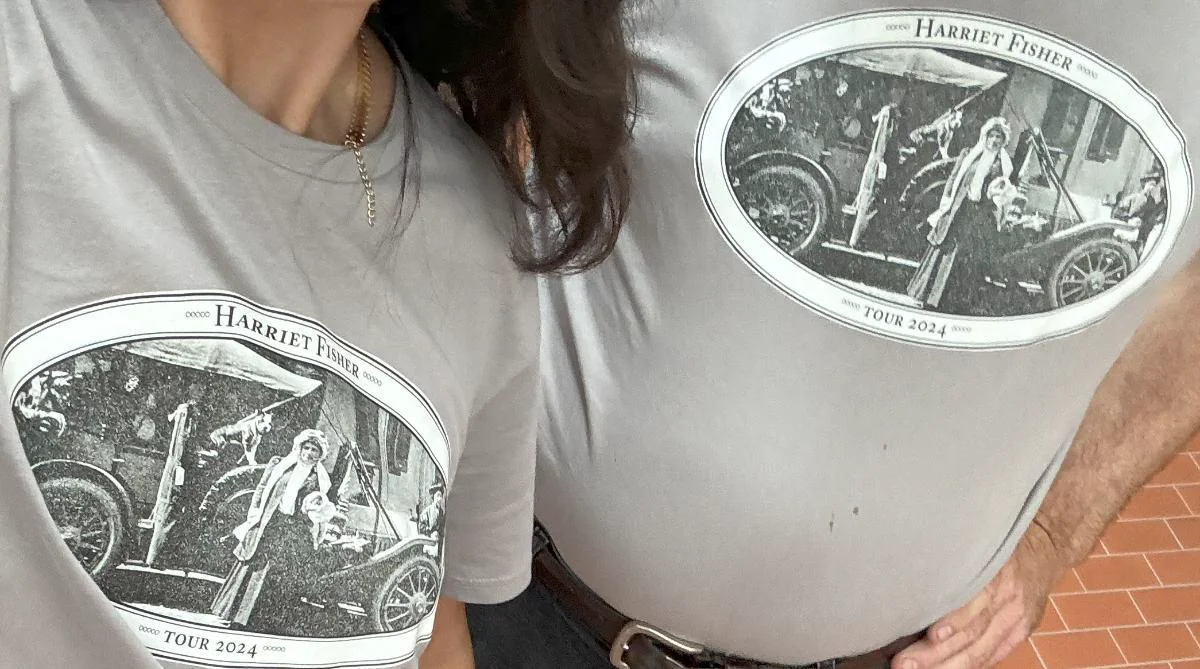
Our Friends Peter and Juerg were already waiting for us at the entrance. They came with their 1925 Buick Master Six Sport Touring from the northern border of Switzerland. For the next one and a half days our group consisted of ten people and four cars.
The Loco-tour had been invited, so we had safe parking inside the yard, and the staff took good care of us. For the short drive from the meeting point to their yard, the director's assistant, the press lady and the photographer got a lift from Juerg and Peter in the Buick.
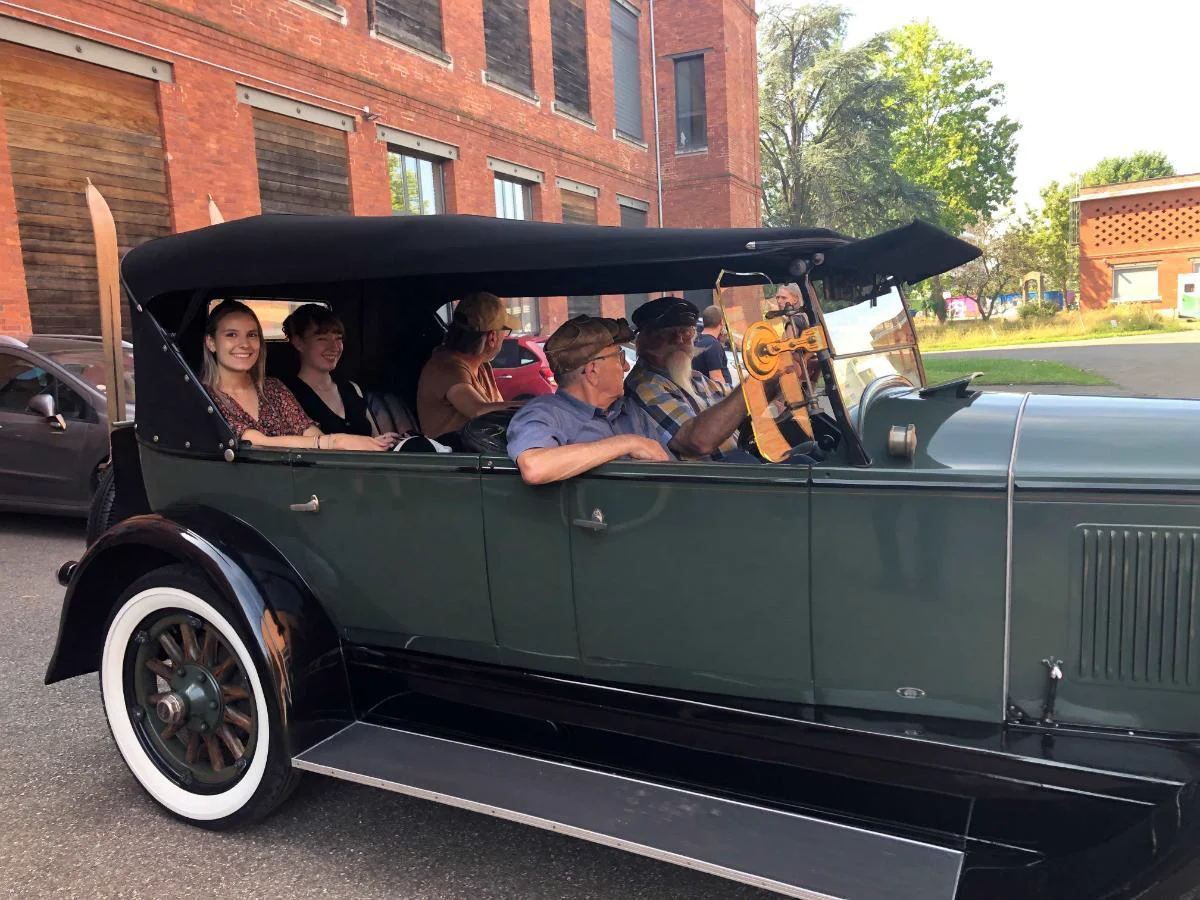
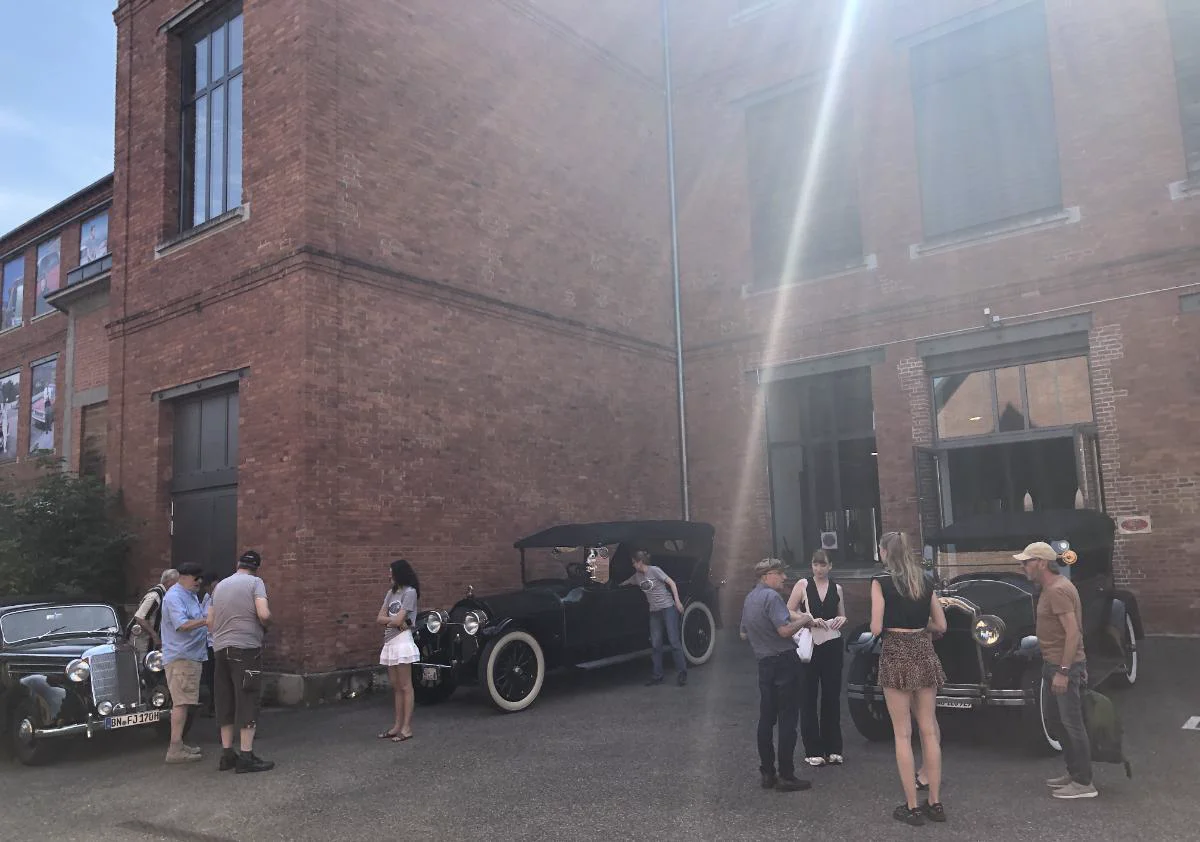
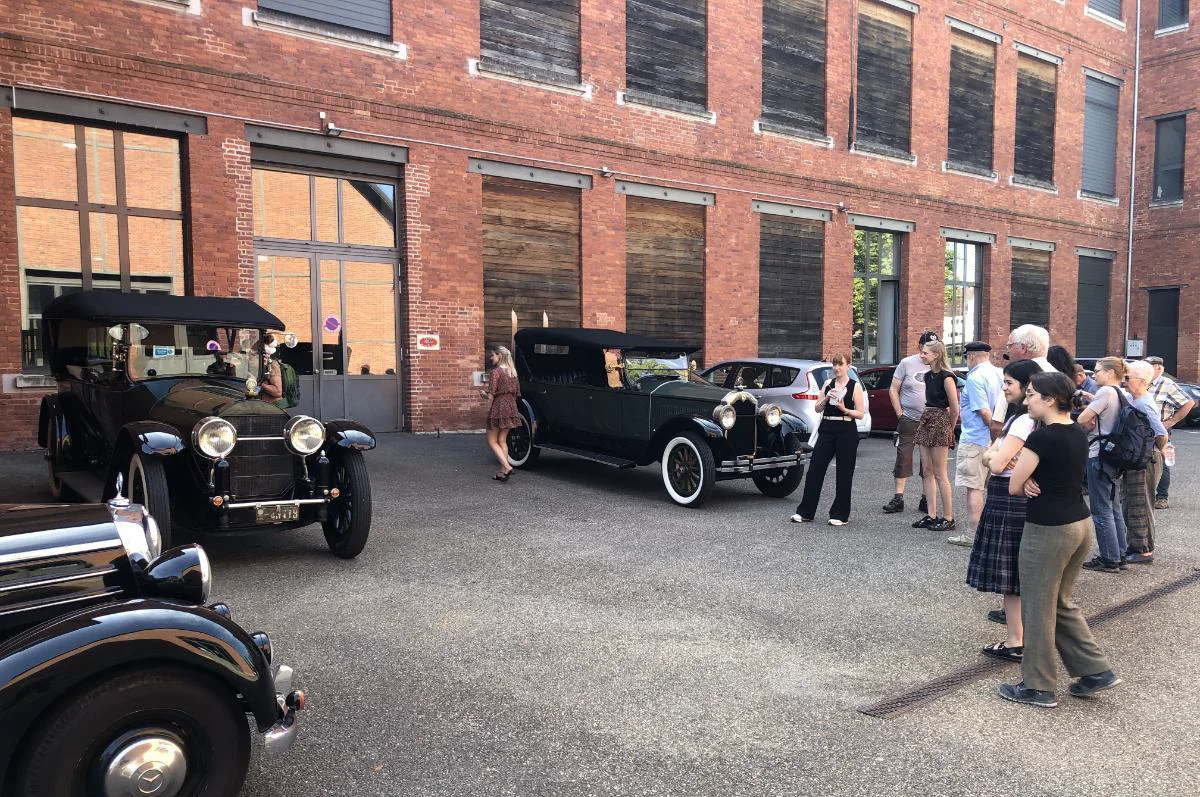
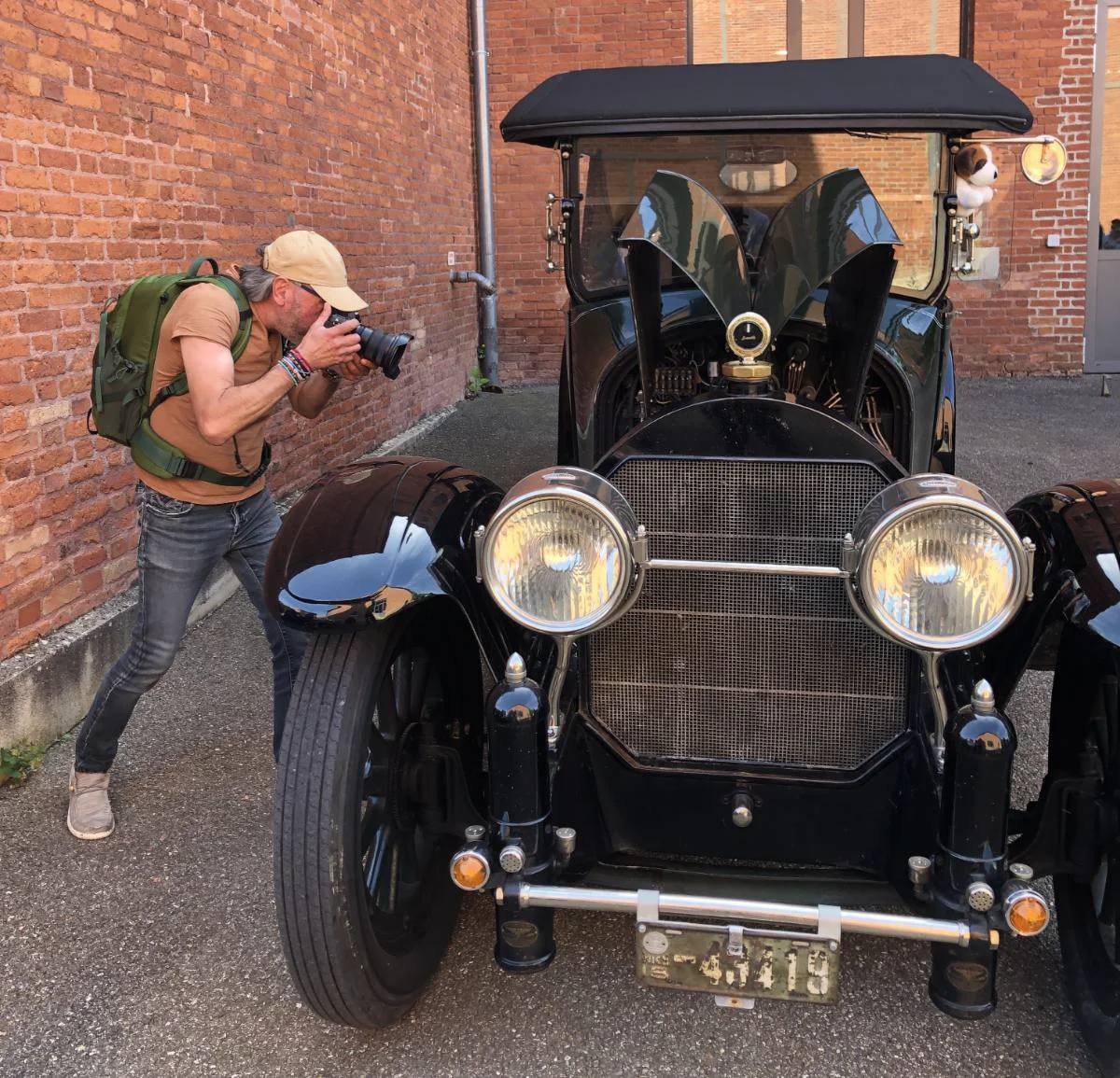
I will not add my countless photos of all these great cars but just a few. You can find a lot of information online, or you come here yourself, it is absolutely fascinating.
After your visit at this museum, you must think that Bugattis are mass-produced cars, a real commodity, because there are so many of them here, in all kinds of colours and shapes!
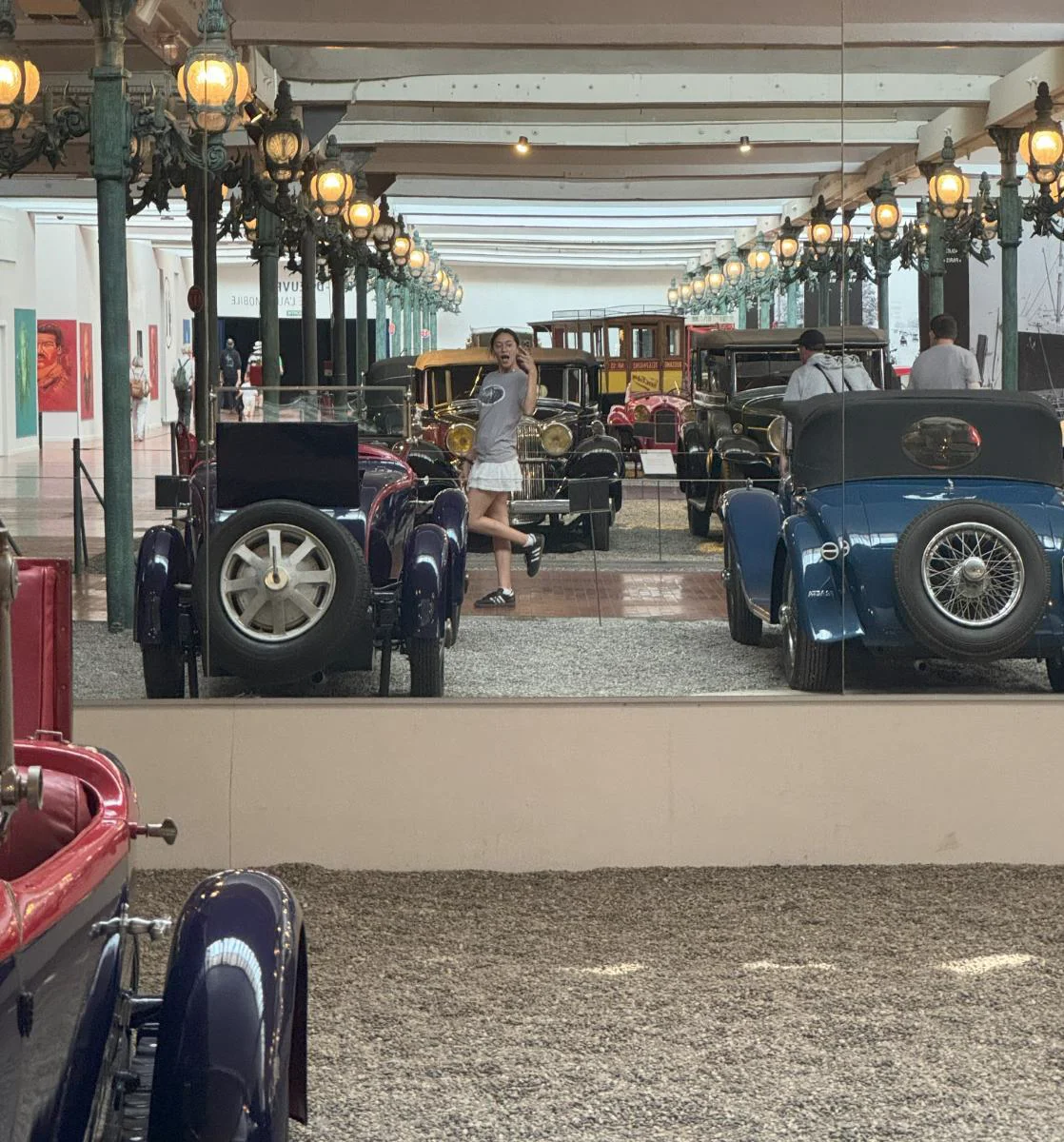
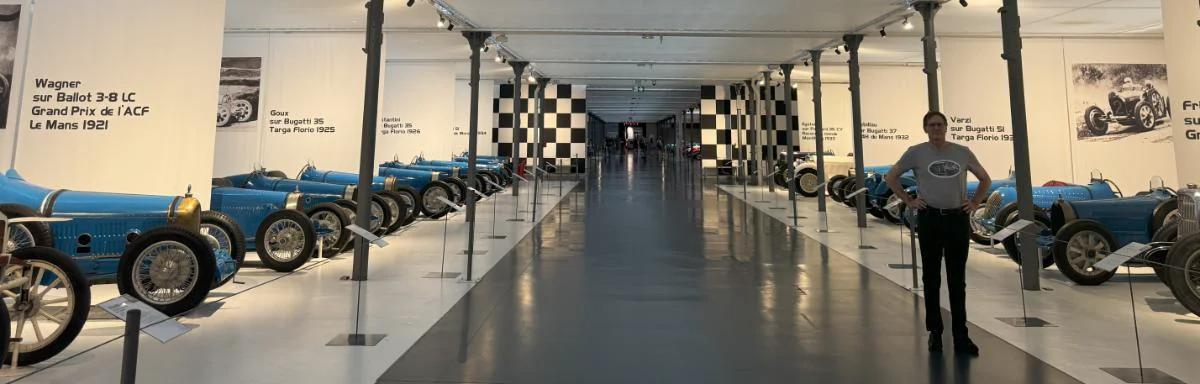
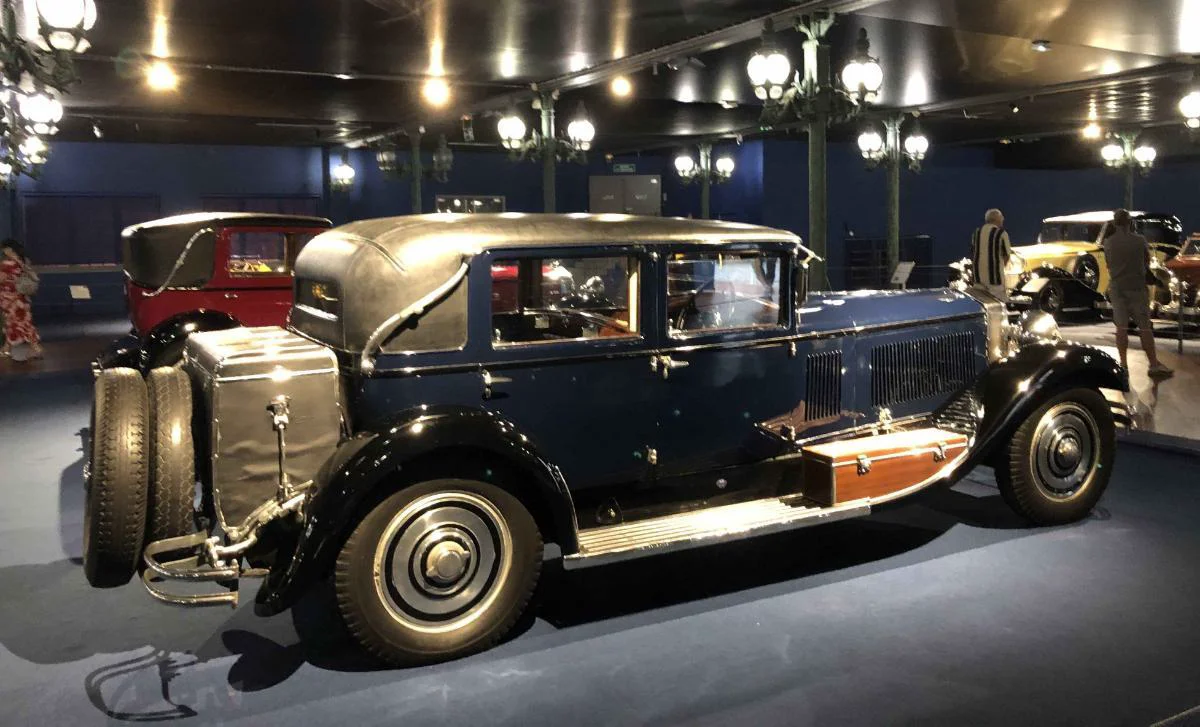
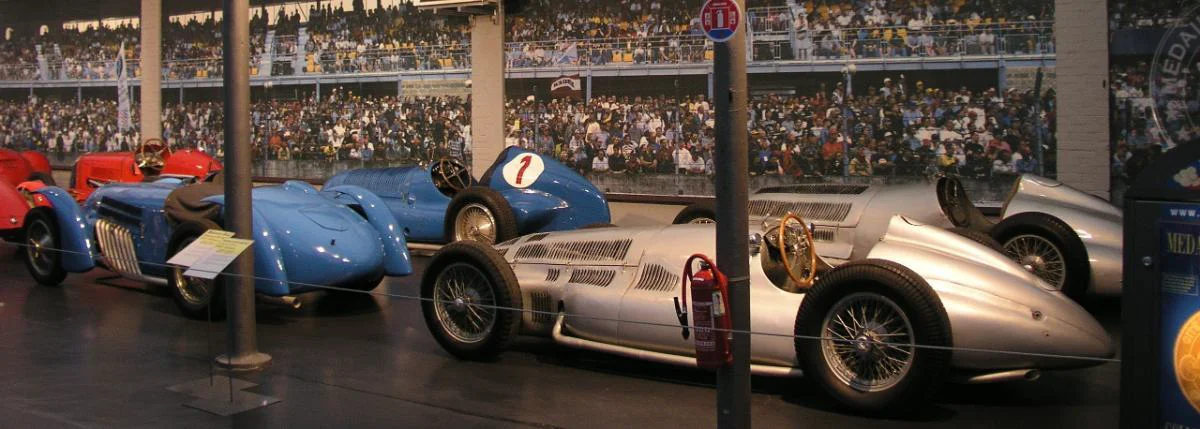
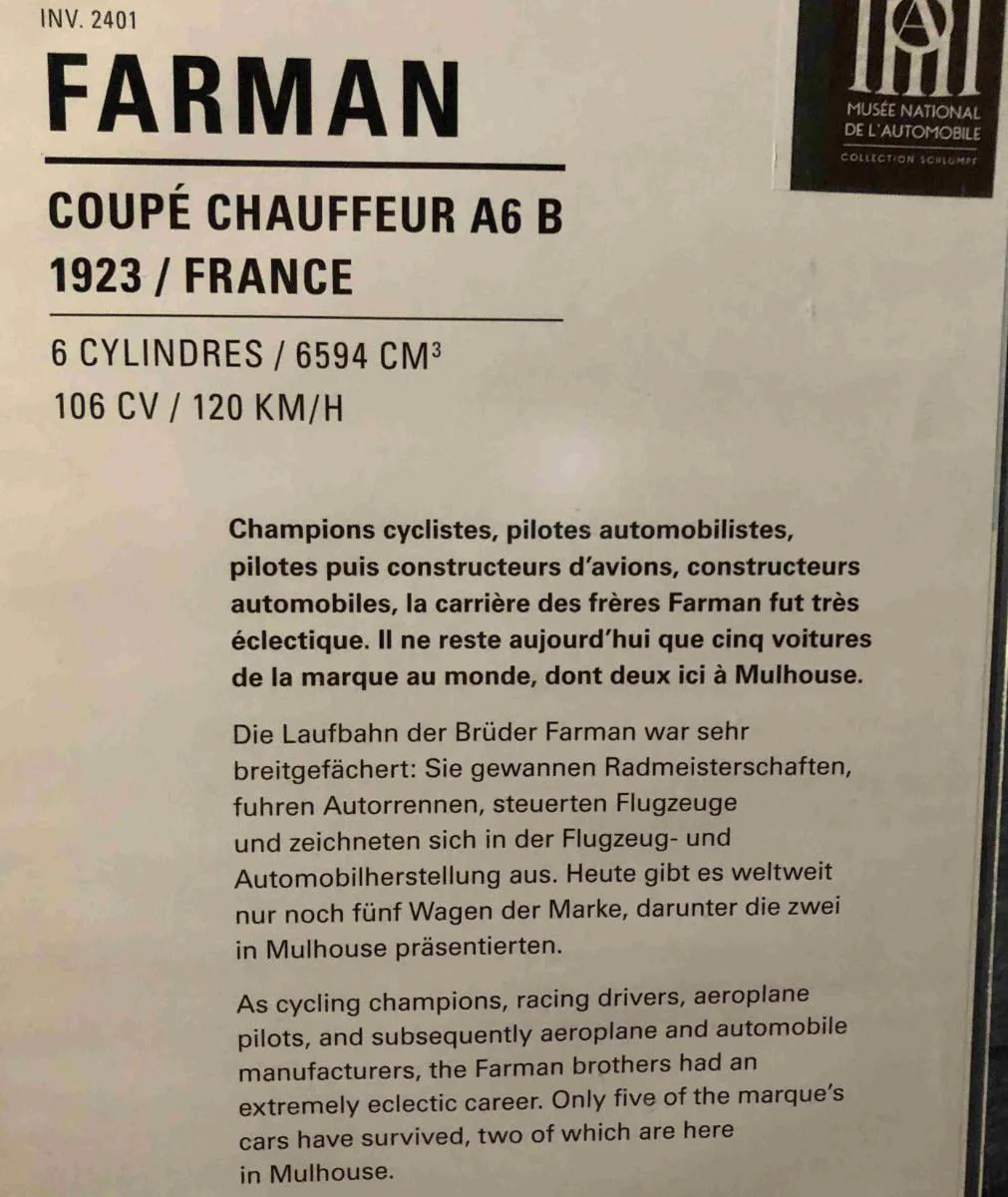
A brand which impresses me more than others is Farman. This French manufacturer with British roots built airplanes and cars, some really exceptional designs. I learned from a book that they created some fast cars with aerodynamic bodies, and the chassis details were non-standard, too. Special suspension, an incredibly complicated steering linkage and four large brakes with servo-assistance in the early 20s! The museum displays even two and a half of these rare beasts: one 1923 Coupe Chauffeur A6B and one 1928 Limousine NF (New Farman), plus one complete engine with transmission.
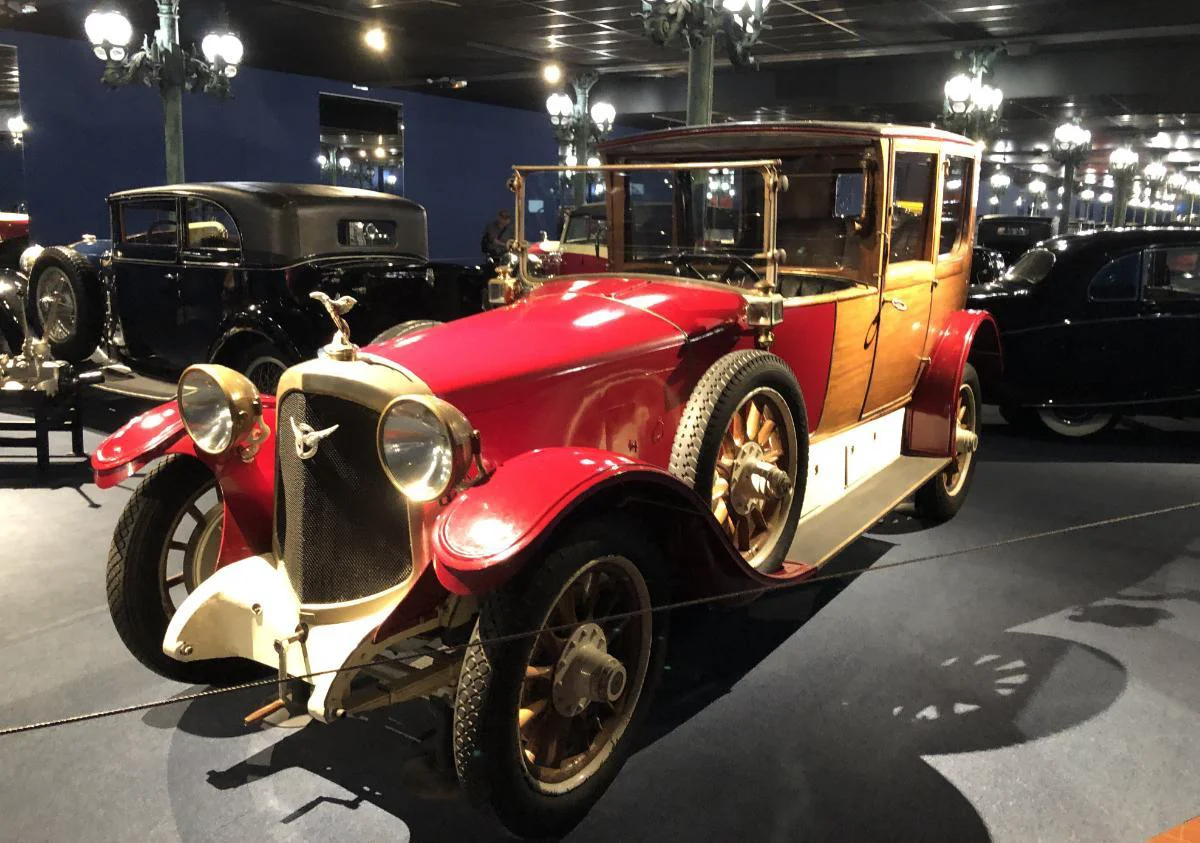
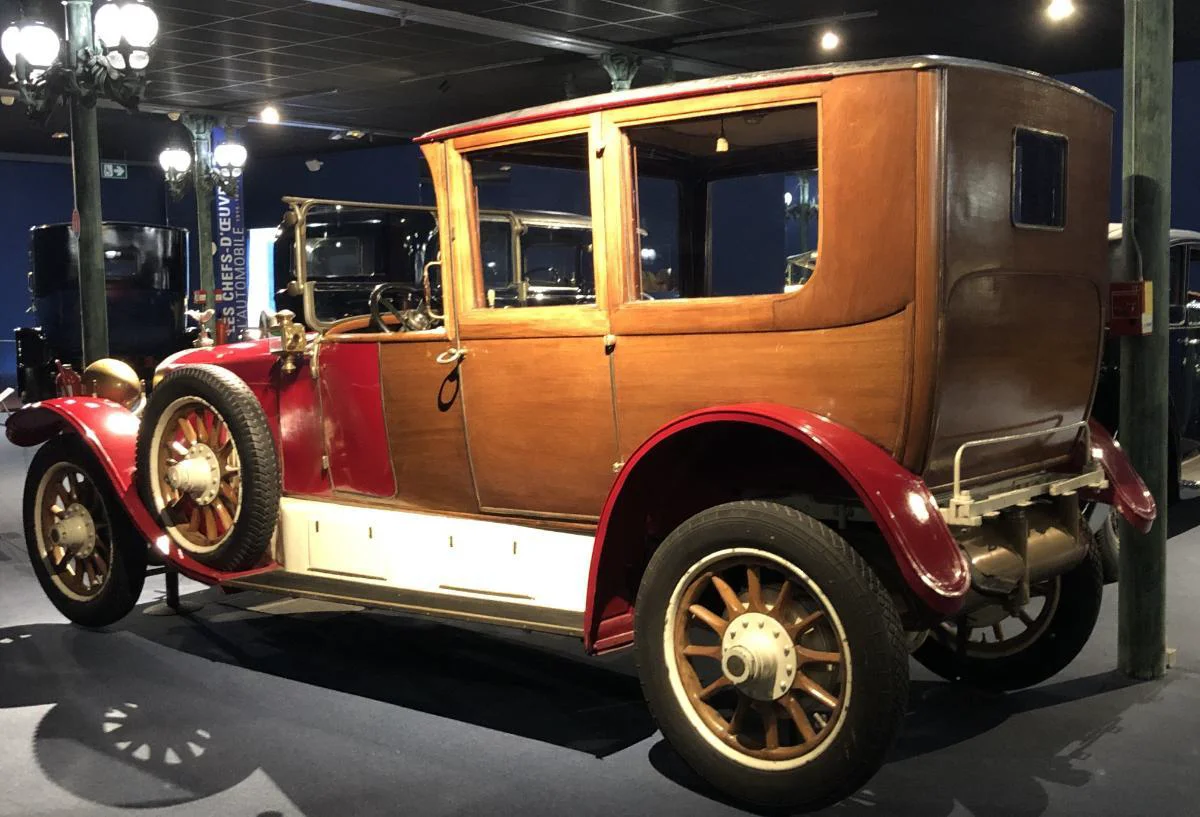
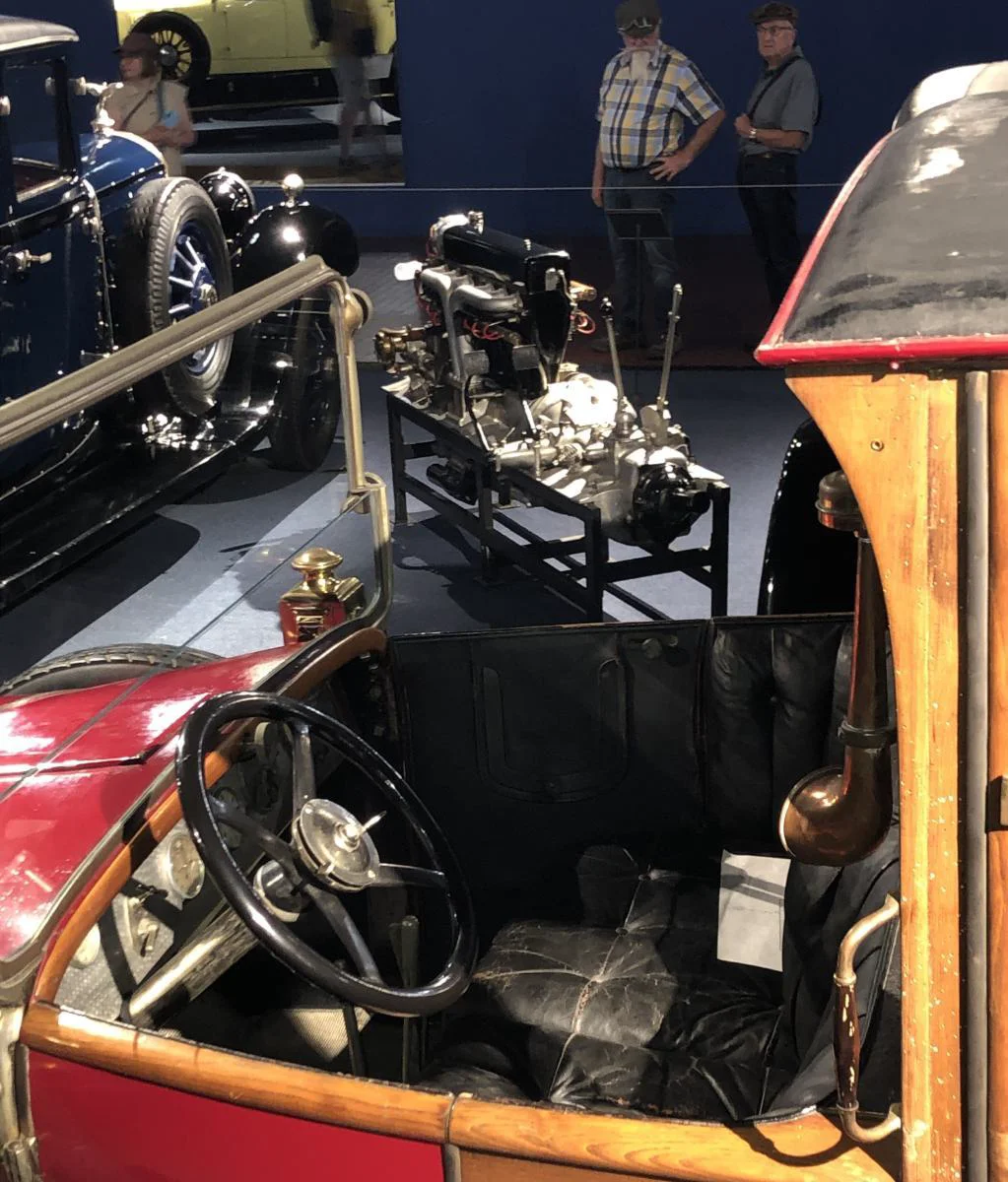
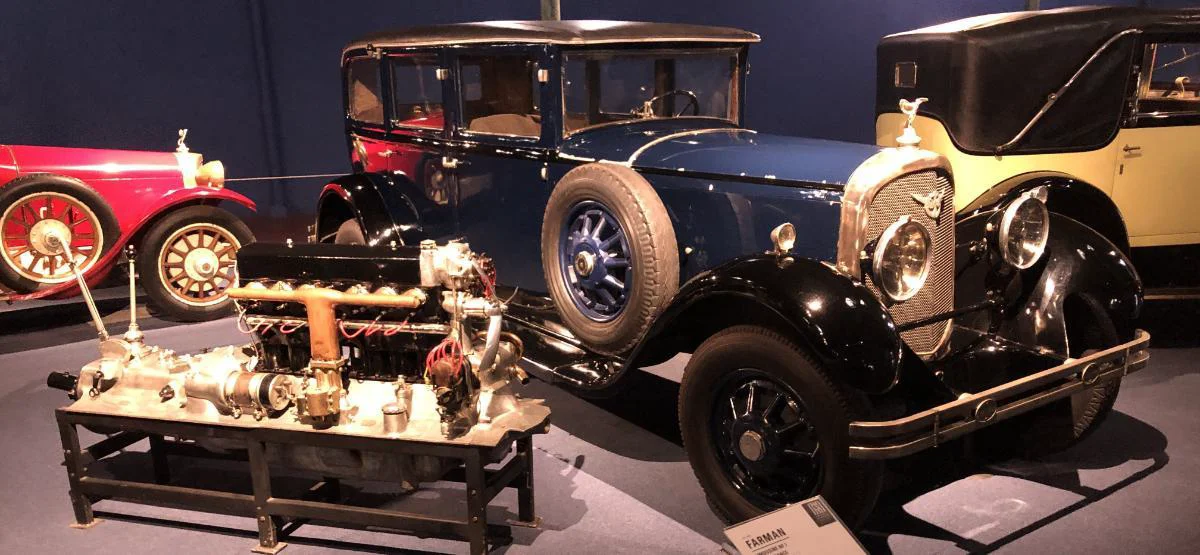
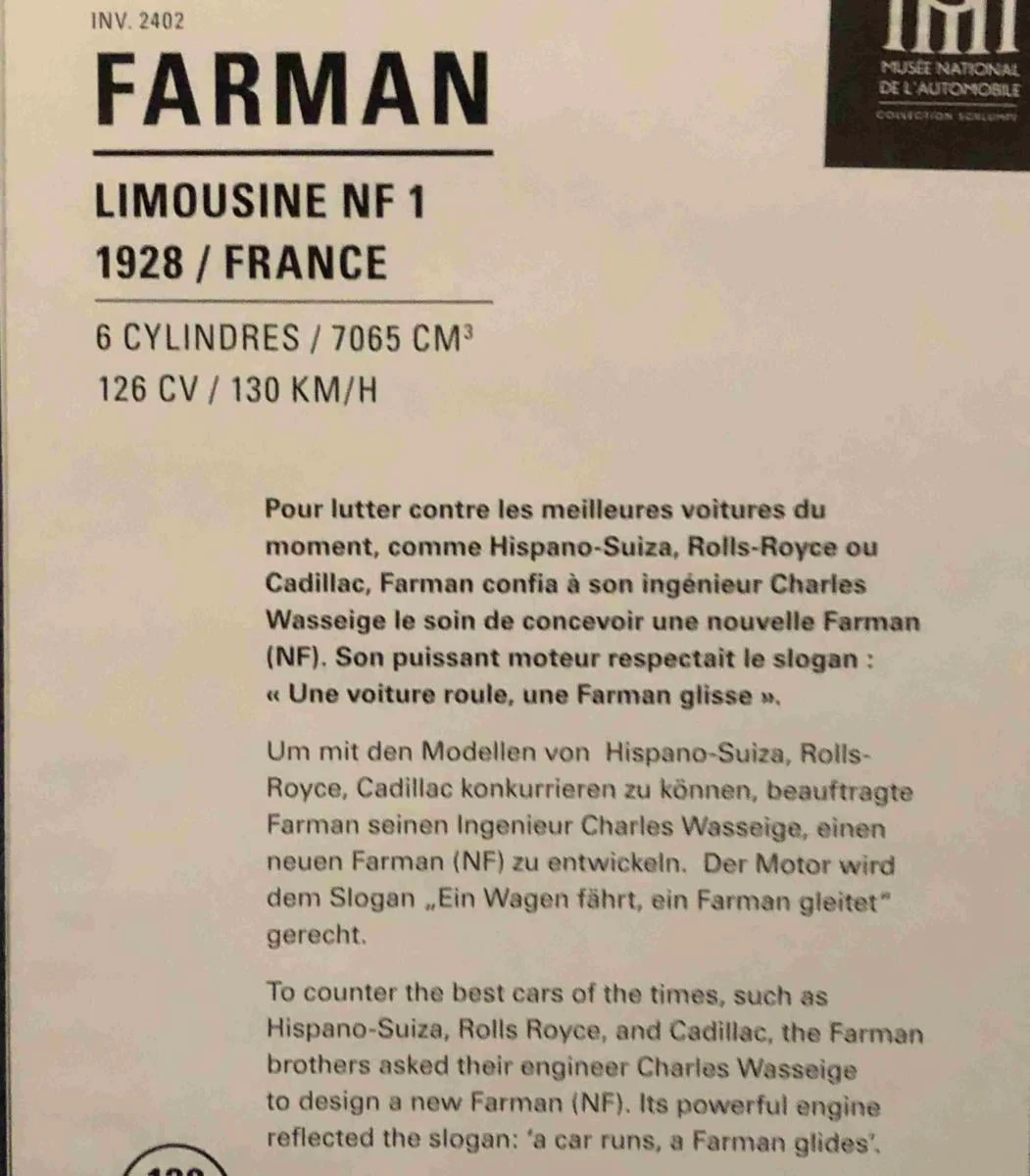
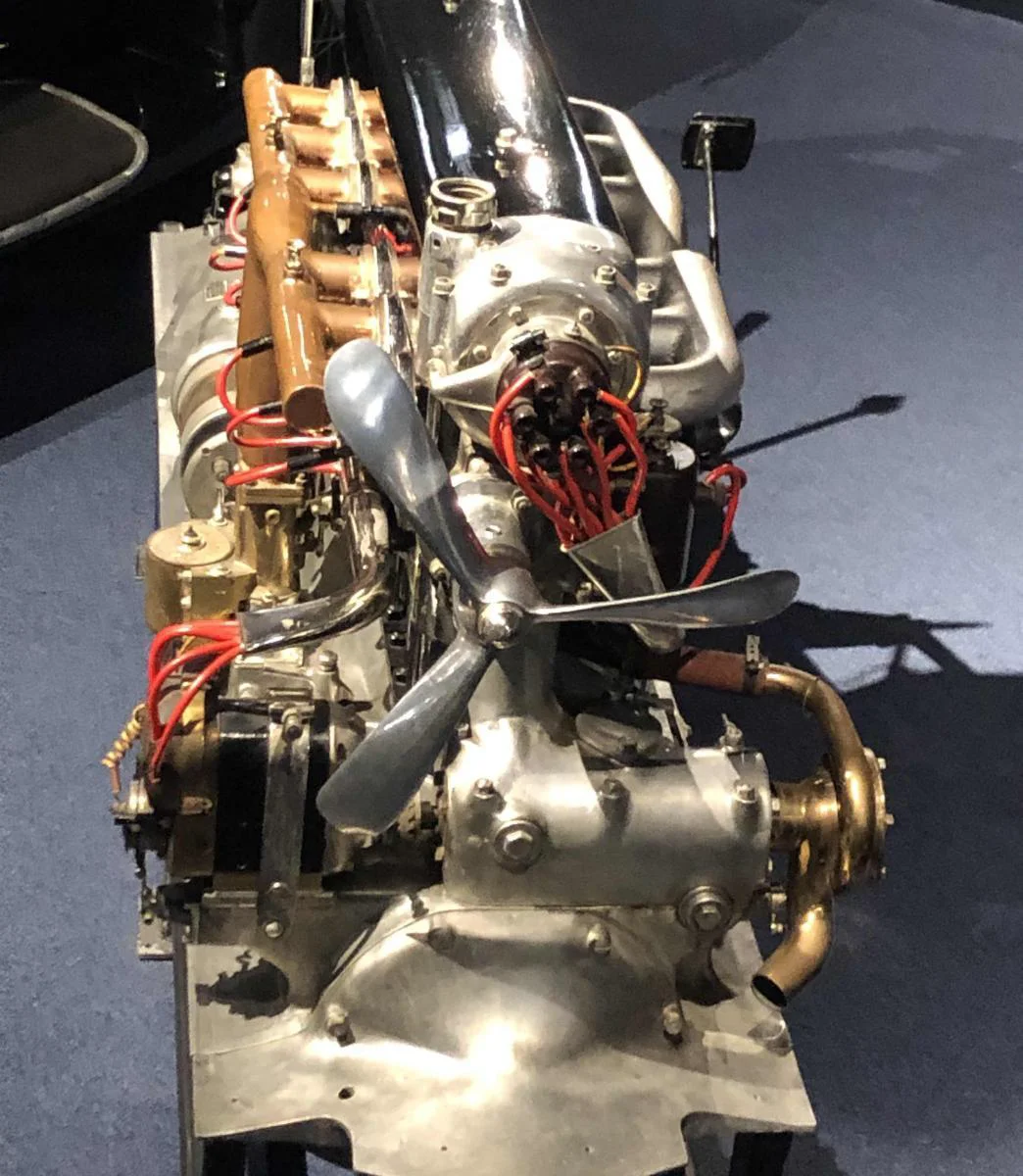
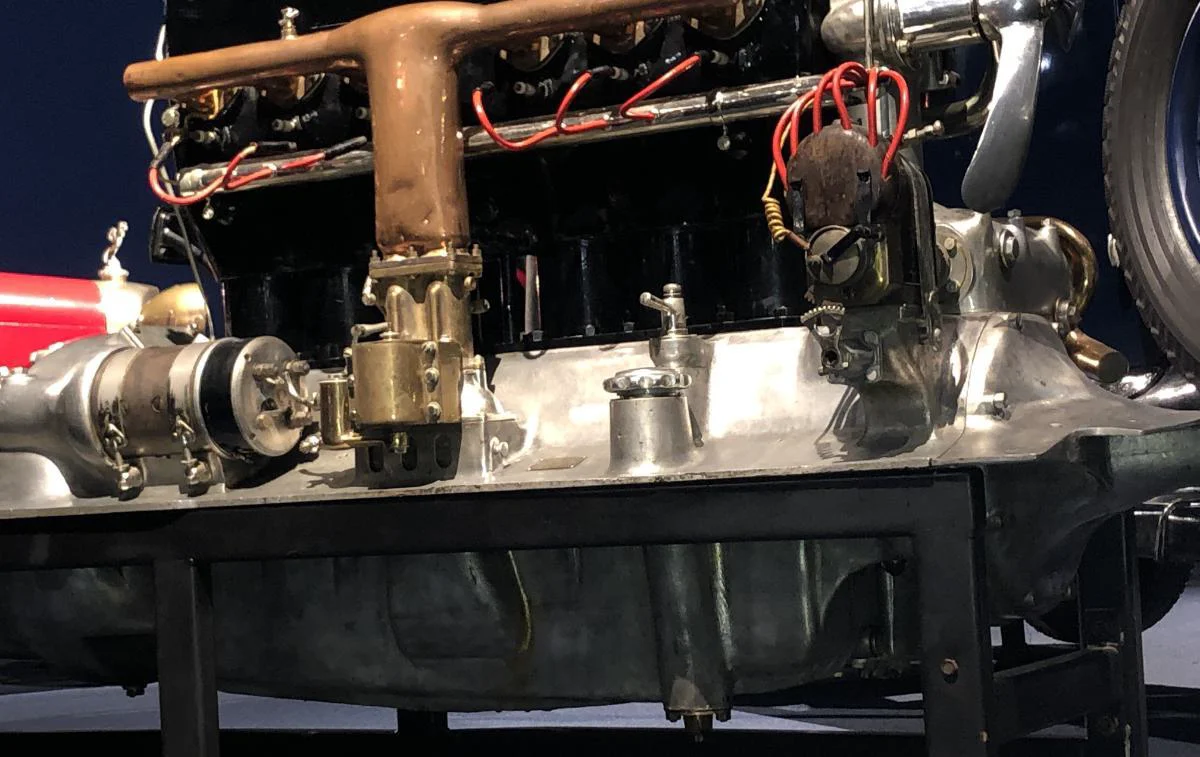
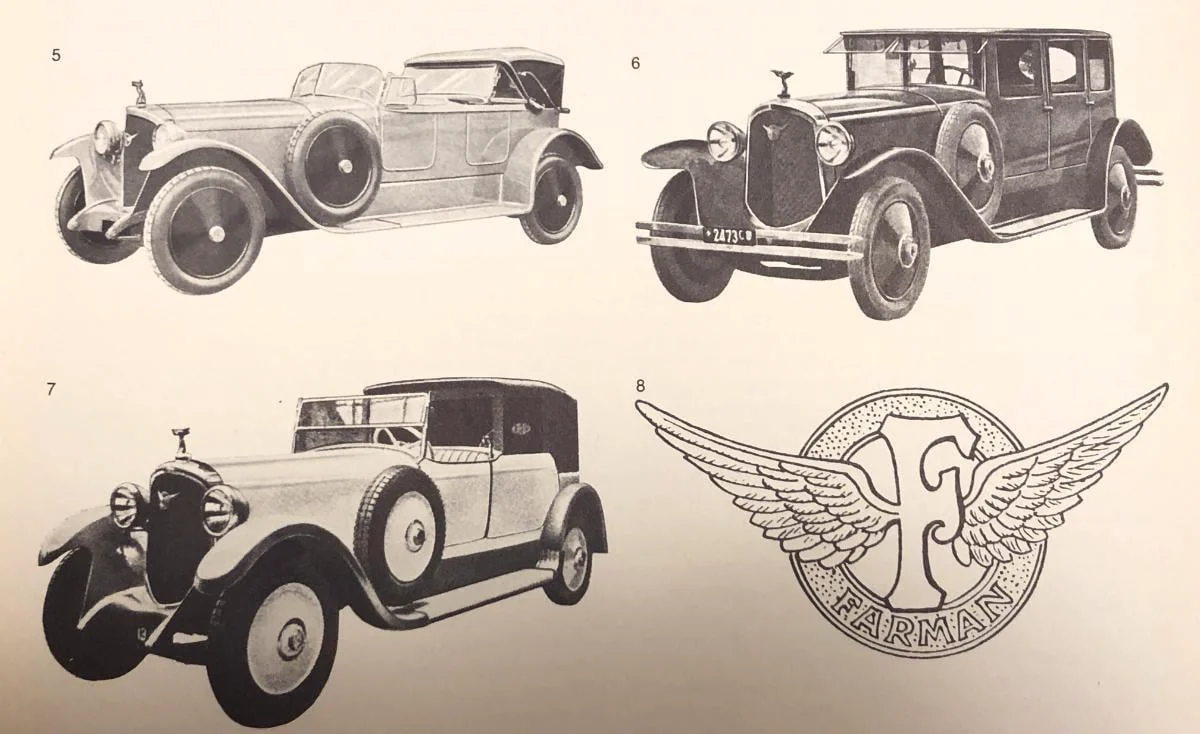
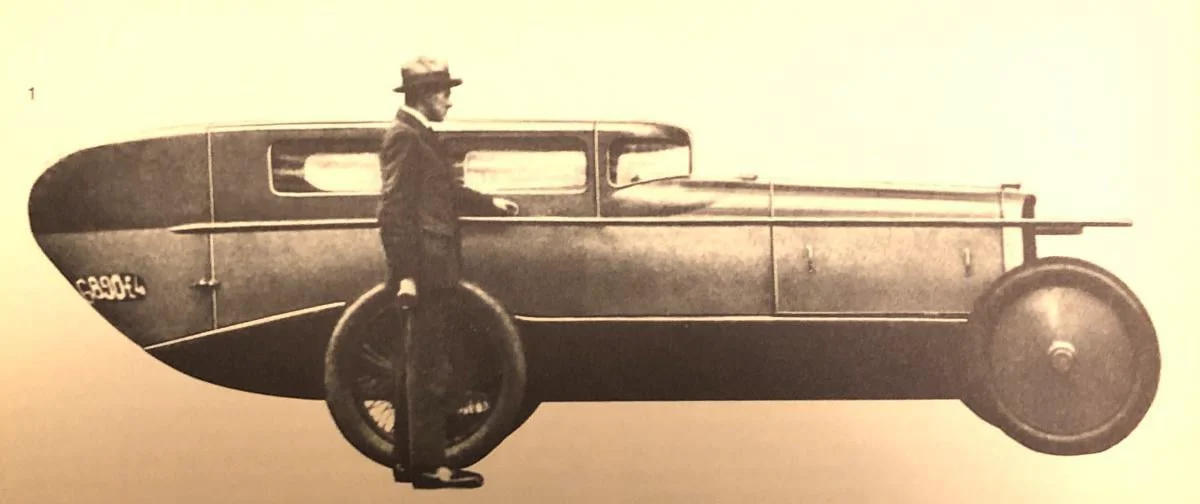
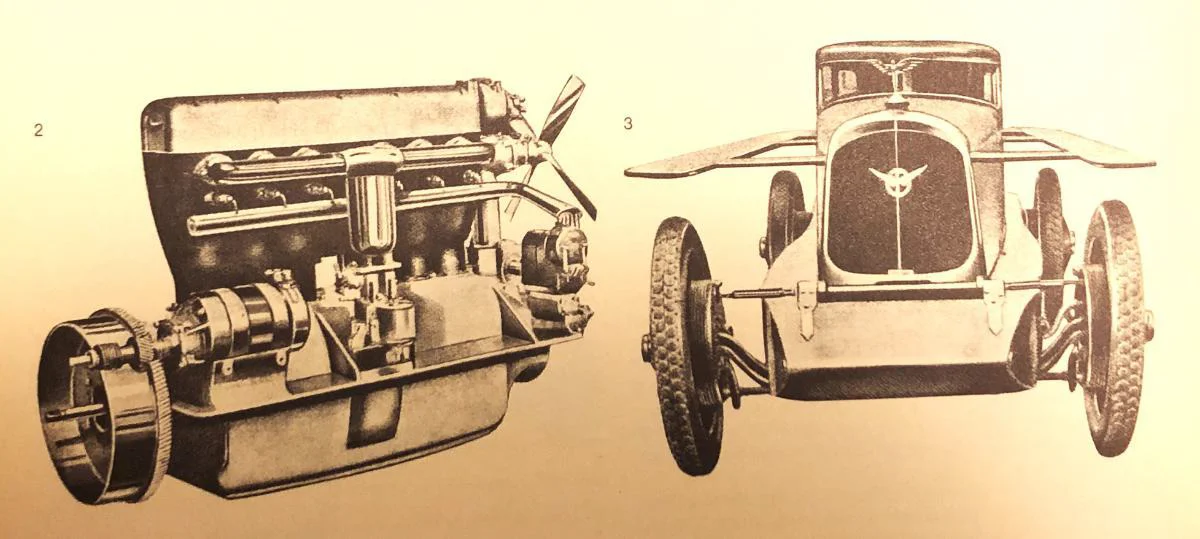
Something that must be very strange for you Americans is the really small size of some of these french cars (and the Germans built similar little vehicles!). Kurt could perhaps sit in the back when the front seats were removed and the roof opened?
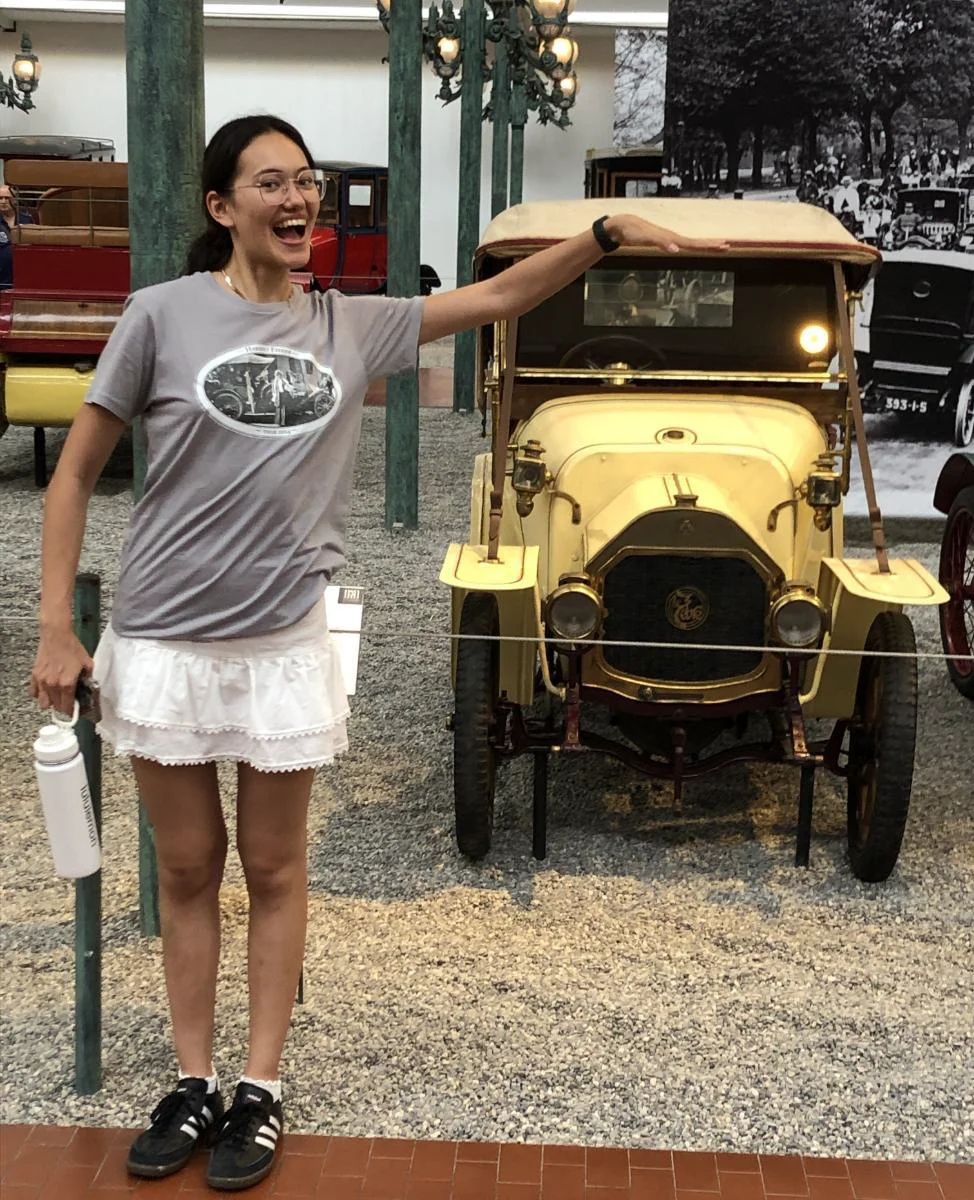
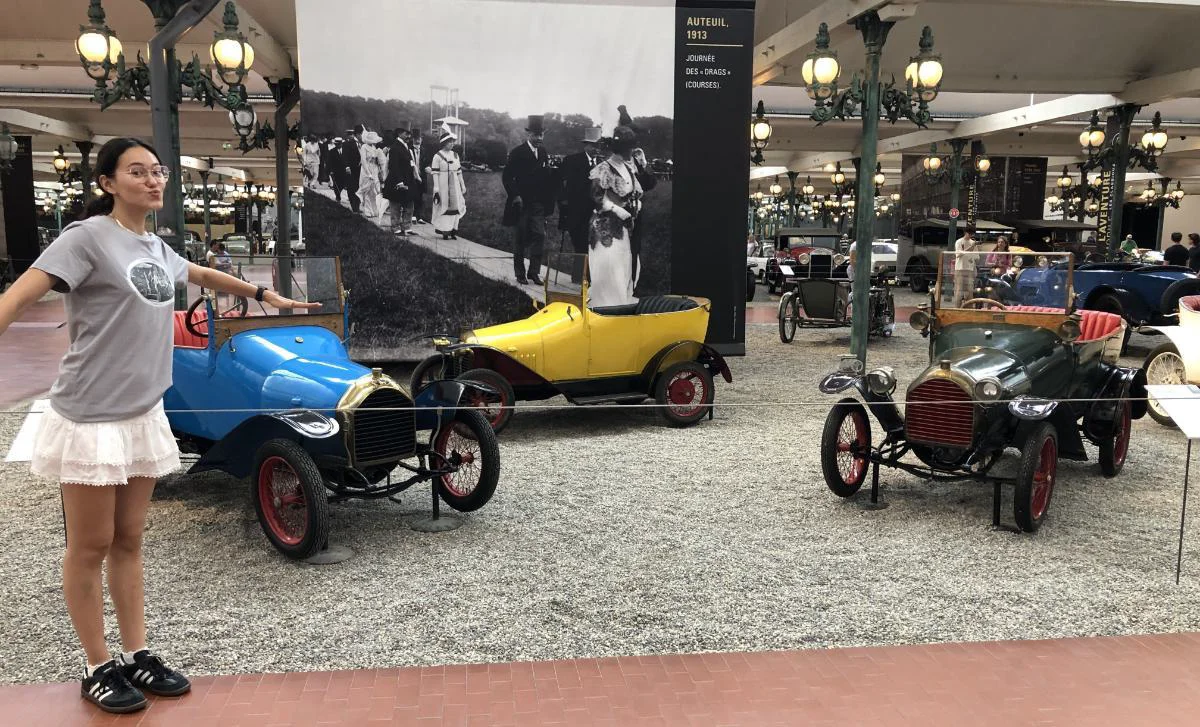
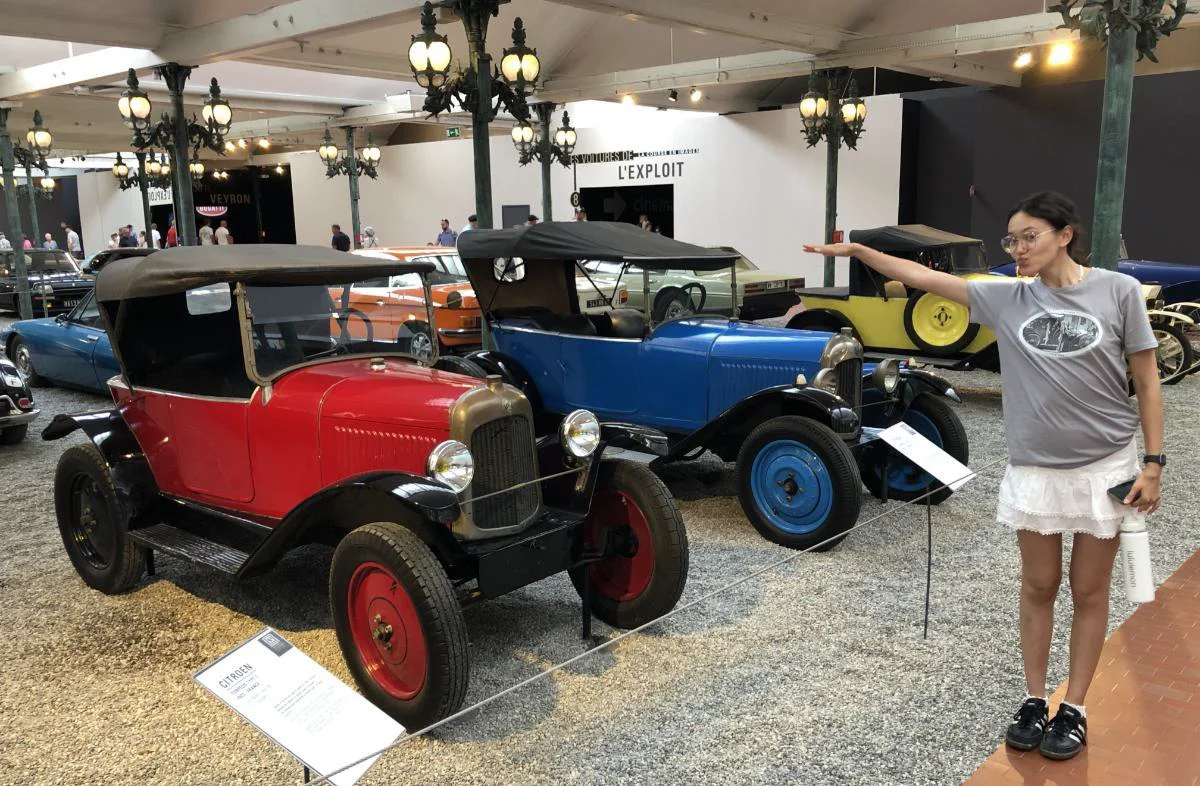
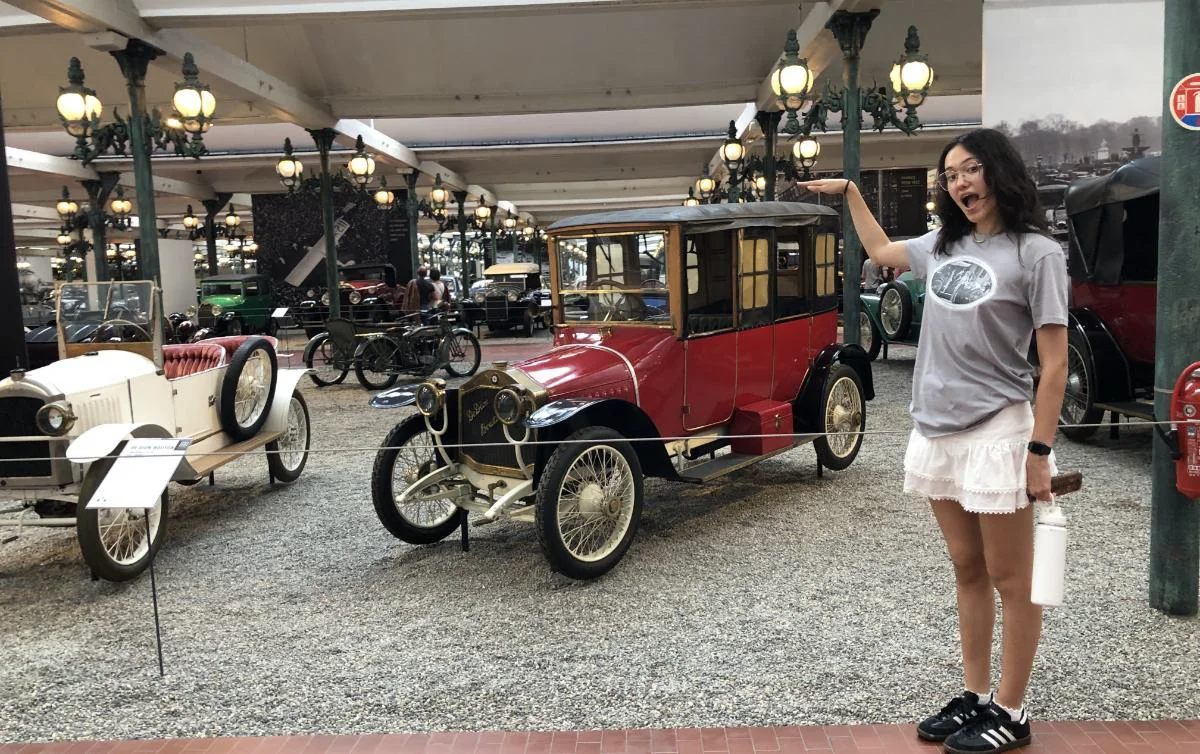
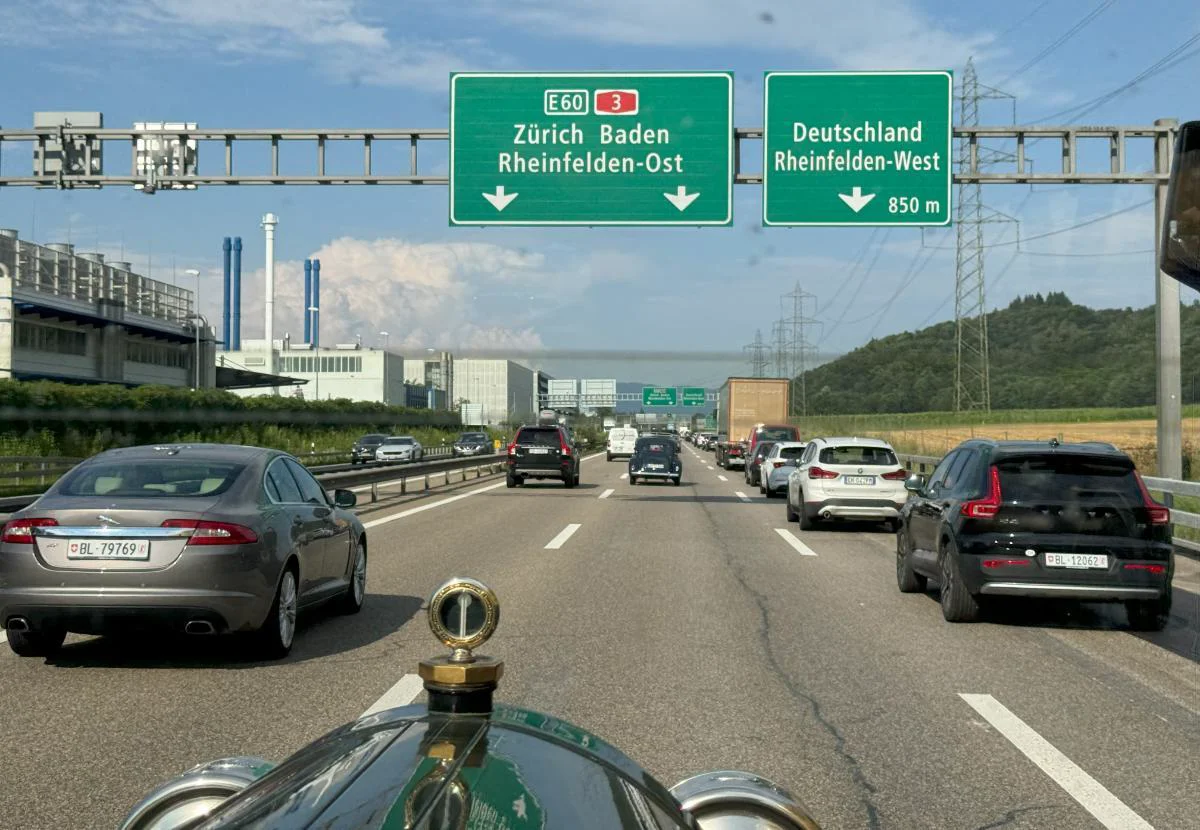
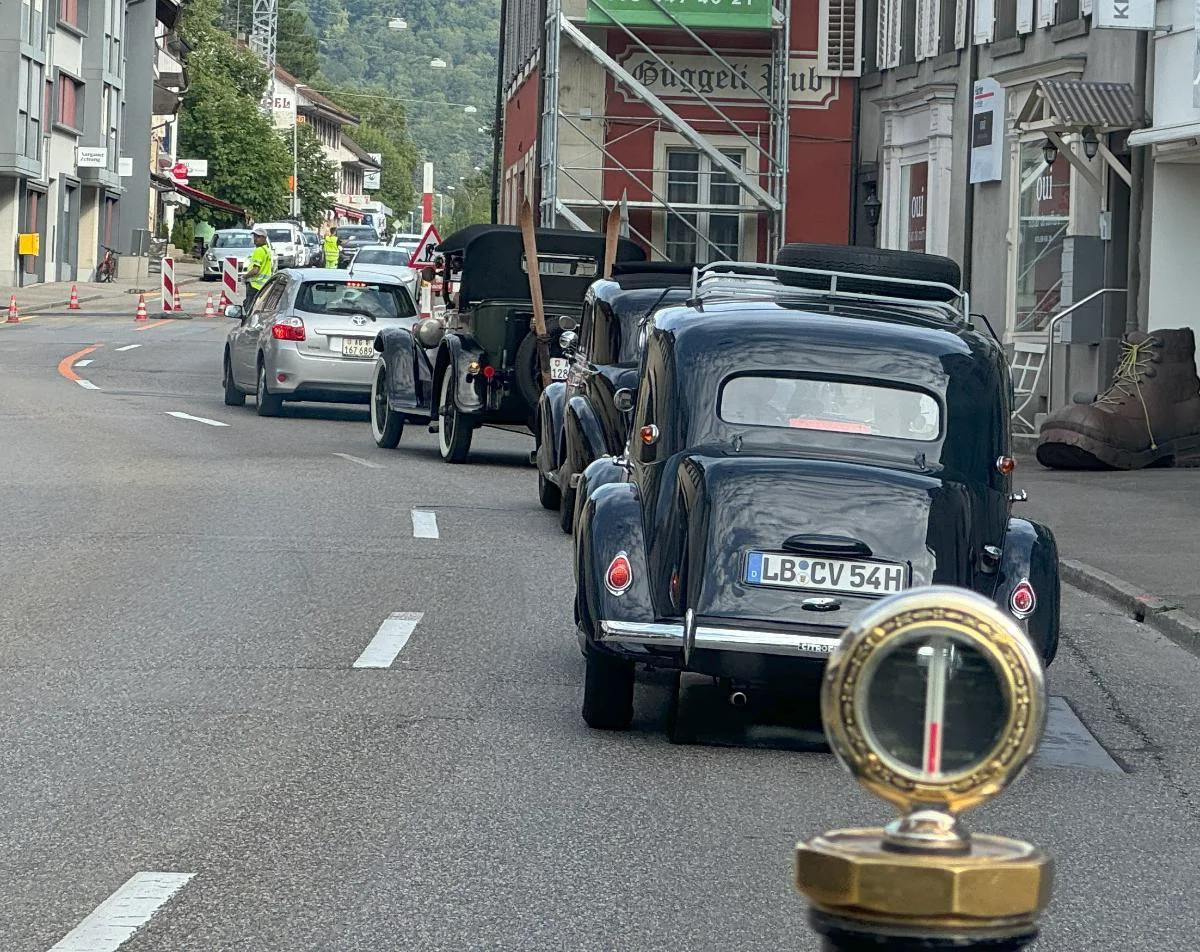
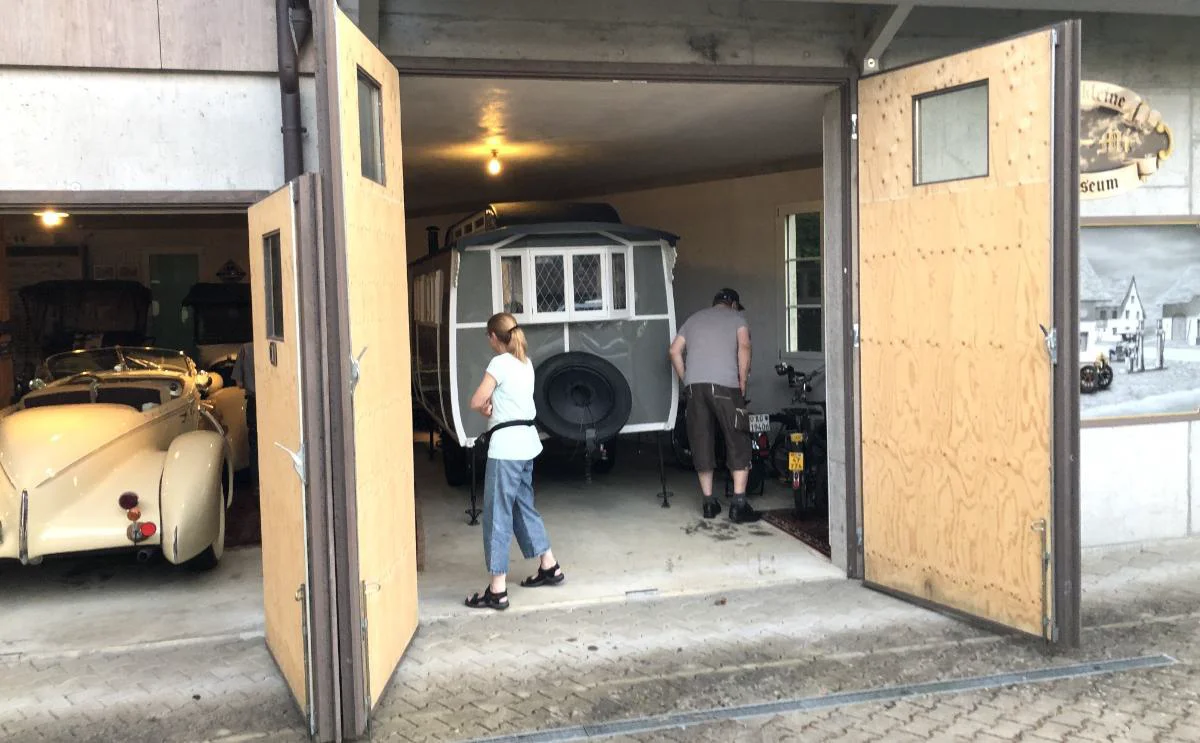
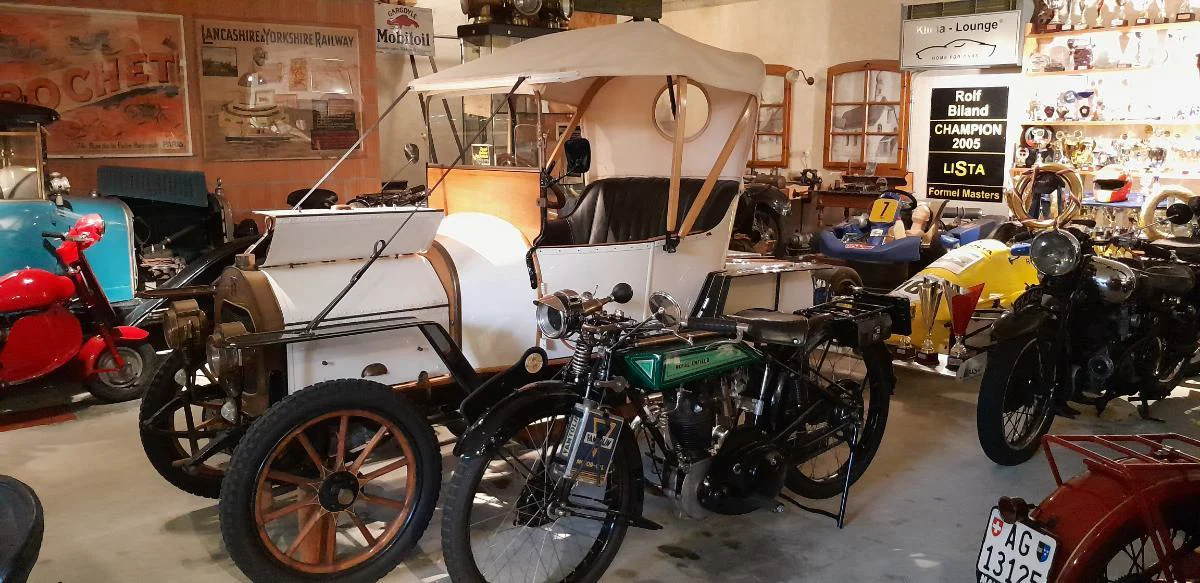
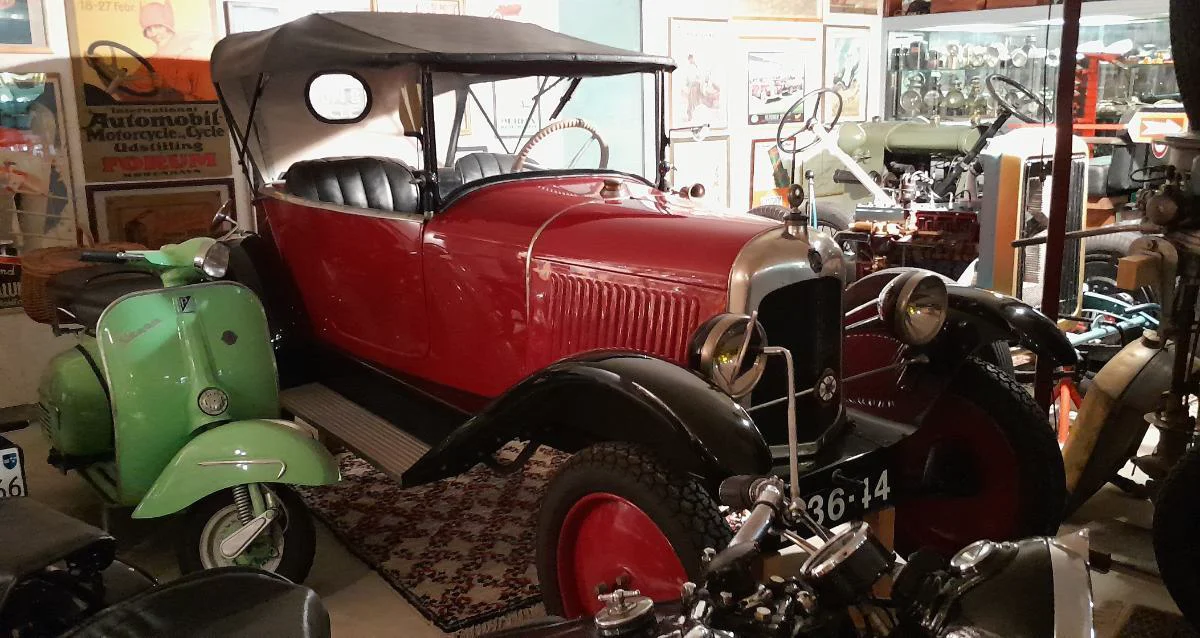
After this impressive visit Juerg and Peter with the Buick led us to our hotel in Gipf (Switzerland), theoretically just 50 miles. But Friday afternoon, rush hour, very hot and crowded, twice we were diverted to the highway, traffic was just terrible around Basel. The Mercedes started overheating, needed a rest. Finally we reached our destination, had a nice dinner, afterwards we were invited to see Juerg's private museum, a real treasure cave: Very well presented with cars, a 1920s caravan (usually pulled by the Buick), motorbikes, scooters, a real race car, bicycles, toys, belt driven drill- and lathe machines, and so much more.
The Loco statistics for day two: 69.5 miles, easy.
Additional information added 2025-2-14: You can see day two's driving on youtube here:
To join in the conversation, you must be a club member.
You’re welcome to read and like every post. Members can reply and start topics of their own.